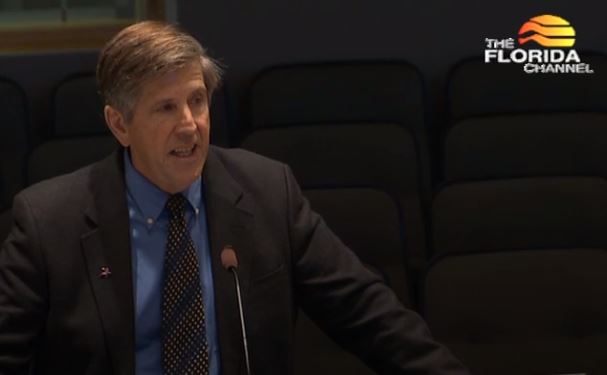
Step Up For Students president Doug Tuthill speaking before the Senate Education Committee
Step Up For Students president Doug Tuthill told a Florida Senate committee today that nearly 70,000 additional students could have been awarded Florida Tax Credit Scholarships had the requisite funding been available.
While nearly 13,000 students were found conditionally eligible for the scholarship and placed on a waitlist, the number of overall applicants was much higher.
“I don’t know what the full demand is,” Tuthill said. “We haven’t kept the application open for a full season the last couple of years because demand is so high.”
Tuthill explained to committee members that Step Up shut down the scholarship application process last June when it became apparent that demand could not meet supply. Had the organization allowed the process to remain open, evaluating and approving every application that was eligible, it would have offered “false hope” that Step Up didn’t think was ethically appropriate, Tuthill said.
Families of all students on the waitlist fall within 185 percent of federal poverty guidelines, qualifying them for a full scholarship. Tuthill vowed that Step Up, which hosts this blog, will be present during the upcoming legislative session to discuss the demand of low-income families fighting for their children.
“We need to figure out ways to address (the demand),” he said.
In response to a question from Sen. Bill Montford (D-Tallahassee) about other issues scholarship families may be facing, Tuthill said transportation is a main barrier for low-income students. He said Step Up is looking for ways to address the issue, perhaps by allowing families to use scholarship dollars toward transportation costs.
Tuthill also referenced the slow start in enrollment to the Hope Scholarship, created by the Florida Legislature in 2018 to give public school children relief from bullying and violence. While Floridians have contributed $14.3 million of their automobile purchase taxes to the scholarship, only 91 scholarships have been awarded.
Sen. Janet Cruz (D-Tampa) said she has heard from principals in her district who are grappling with the Hope application.
“The application process … is very burdensome on everybody,” Tuthill said. “I think we’ve overregulated the principals, the families and the schools. A more streamlined process may help (everyone).”
Proposed changes to the way federal funding flows to public schools have set off a late-session debate in the Florida Legislature.
Proponents of the changes argue money should follow students to whatever school they attend, and school leaders — not district administrators — should decide how the money gets spent.
School districts are fighting to keep their authority to decide where the money goes. They argue the changes would dilute funding intended to help disadvantaged students in schools with concentrated poverty.
In short, it's a state-level version of the national debate over funding "portability."
The Senate Appropriations Committee on Monday approved a major rewrite of SB 1362. It now resembles a bill that's already passed the House.
Among other things, the revised bill would remove caps on high-performing charter schools that want to expand in areas with low-performing public schools and move the deadline for charter school applications from August to February. (more…)
Florida's charter schools would have financial incentives to serve low-income and special needs students, and be barred from using state facilities funding for "private enrichment," under a proposal approved this week by a state Senate panel.
The Senate's plan, which won praise on both sides of the aisle, was unveiled Thursday after the state House of Representatives spent days debating school construction and charter school funding.
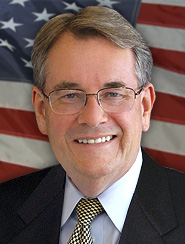
Sen. Don Gaetz
The proposal (starting on page 196) wouldn't necessarily steer more money to charter schools, or change the rules deciding which schools qualify for facilities funding. But it would change the formula for parceling out the money, and place new restrictions on charters that lease private land.
Right now, charter school capital outlay funding is distributed based on factors like when schools opened and whether they qualified for funding in the past.
The Senate has proposed scrapping that formula. Under its plan, all schools that qualify for capital outlay (right now, that's about 535 of the state's more than 650 charters) would receive a base amount of facilities funding.
They would receive extra funding if more than 75 percent of their students qualified for free and reduced-priced lunches, or if more than 25 percent of their students qualified for special education services. Those that met both standards would receive double weight. (more…)
The new school district chief in Palm Beach County has had some interesting things to say since he took the job in June, talking about the appeal of charter schools and his desire to expand in-demand choice programs.
More recently, Superintendent Robert Avossa has become the latest Florida district leader to seek greater freedom from state regulations for schools his district runs. As reported by the Palm Beach Post, he told the school board last week that he wants to seek some of the same autonomy available to charter schools.
His district might be in a position to take advantage of an existing, relatively new and so far unused state program intended to give school districts some charter-like flexibility.
The Post reports:
A key state lawmaker expressed skepticism about Avossa’s plan Thursday, saying that state law already permits school systems to get around many regulations by declaring certain schools “schools of innovation.”
“What’s in the existing statute that doesn’t allow you to do those things already?” said state Sen. John Legg, R-Lutz, chairman of the Senate’s education committee and a charter school operator. “When superintendents ask those questions and we probe a little bit, they’re often not asking for what they pretend to be asking for.”
A state law passed in 2013 allows districts to create Innovation Schools of Technology, which share some features with charter schools. Districts have to apply to the state Board of Education to create them, and they have to enter performance contracts. In exchange, the schools can receive exemptions from a host of state education rules and statutes. (more…)
Across Florida, school districts have created open enrollment policies that allow students to attend traditional public schools outside their neighborhood zones.
Under bills moving through both chambers of the state Legislature, they could soon become ubiquitous. The legislation (SB 1552/HB 1145) would require all districts to create policies allowing students to move to any public school with space available, and to cross district lines if their parents prefer.
A question sits in the background of the ongoing debate in the Legislature, and in recent school board discussions about expanding parental choice in the systems they oversee: What is the right mix of schools of choice, and schools of right?
During the 2013-14 school year, nearly one of every 10 Florida public school students attend schools under some form of open enrollment policy, making it one of the state's most widely used forms of school choice. That number does not include magnet programs, career academies, or other choice programs run by school districts.
The policies give districts a way to offer more choices within their systems, and in some cases, may help them manage rapid growth of their student populations.
Yet the spread of open enrollment has been uneven, and has ebbed and flowed over time.
The map above shows the rates of open enrollment participation in Florida's school districts during the 2013-14 school year. Darker districts reported high rates of participating students to the state Department of Education; districts colored white reported zero students participating.
Of the roughly 272,000 open-enrollment students statewide, more than a quarter live in Lee County. Home to the fast-growing Fort Myers metro area, officials in the Southwest Florida district have found a district-wide system of choice to be more workable than an annual redrawing of school boundaries to accommodate constant influxes of new students.
School districts would have more discretion to manage incoming transfer students under a new rewrite of school choice legislation approved today by a Florida Senate panel.
The revamped public school choice program in SB 1552 would let districts decide which of their schools have room to accept new students, an effort to address some of the logistical issues they have raised. Students would still have more freedom to choose public schools, both within their school districts and across district lines.
While the bill easily cleared the Senate education appropriations panel on a 5-2 vote, the changes did not alleviate every concern. Sen. Bill Montford, D-Tallahassee, said that if the state does not fund transportation for every student, he feared some, especially those from low-income families, might not be able to take advantage of the new options.
"A child should not have an opportunity denied to them because their parents can't afford to get them to whatever school," he said.
Jesse Jackson, the superintendent of the well-regarded charter school system in Lake Wales, spoke in favor of some of the charter school provisions in the wide-ranging bill, including one creating a new charter school institute at Florida State University.
He said the schools in his network provide transportation to their students, sometimes at the expense of their operating budgets.
"There really has to be an effort to look at student transportation as a part of any conversation about choice," Jackson said. "It really does make a difference."
The latest Senate rewrite would clarify that districts have the option of providing transportation to students who take advantage of the expanded choice options, as some districts already do.
By Brandon Larrabee, News Service of Florida
A sweeping education bill that would allow parents to send their children to schools in other counties and demand their children get new teachers in some situations was approved on a party-line vote Wednesday by a key Senate panel.
The 62-page measure (SB 1552) would, among other provisions, give parents the right to have their children attend any school in the state that hasn't reached capacity. And if a student is being taught by a teacher that is out of his or her field, a parent could demand that the student be moved to another classroom. The bill also would make a slew of changes to charter school laws.
Over the objections of Democrats, the Senate Education PreK-12 Committee voted 7-4 to approve the bill. Supporters say the legislation would help parents whose children might otherwise be trapped in classrooms or schools that don't work for them. (more…)
Update, 6:30 p.m.: The Senate Education Committee on Tuesday approved the legislation on a 7-4, party-line vote.
Out-of-state charter school networks could be able to gain a greater foothold in Florida, and charter school boards would have to show their members are "independent of any management company" under a proposed rewrite of school choice legislation a state Senate panel is set to take up later today.
The measure would merge many of the charter school and parental rights provisions proposed this legislative session into a single bill, SB 1552 by Sen. Lizbeth Benacquisto, R-Fort Myers.
Among other things, the proposed rewrite would:
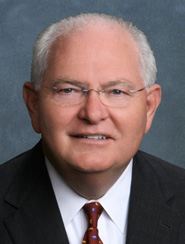
Sen. Bill Montford
People who want to build new nursing homes or hospitals in Florida need to obtain what's known as a "certificate of need," basically showing a growing number of patients in the surrounding area are likely to rely on their care. A bill filed last week by state Sen. Bill Montford, D-Tallahassee, would require proposed charter schools to clear a similar hurdle.
Montford also heads the state’s association of school district superintendents, and is one of the more influential Democrats in the Republican-controlled Legislature. This bill may be a long shot, but it's noteworthy because of the issues it represents.
Charter advocates have noted mounting pushback from school district leaders as charters enroll a growing share of the state's public-school students.
During the 2006-07 school year, charters enrolled fewer than one in 25 public-school students. This year, they enroll nearly one in 11. While charter enrollment more than doubled during that period, enrollment in public schools, excluding charters, has been more or less flat.
SB 1038 opens with a series of editorial comments, proposing that the Legislature find, among other things, that, "The application process for new charter schools is biased toward encouraging unmitigated growth of the charter school industry, rather than focusing on the specific needs of students or the safeguarding of taxpayer dollars." It also laments that Florida, unlike some states, does not set a hard cap on the number of charter schools allowed to open.
The bill would require potential charter school applicants, or existing charters that want to expand, to pay an application fee of at least $10,000 to request a "statement of need" from the state Department of Education, outlining the number of students they plan to enroll and the programs they plan to offer. If the department decides to award them a statement of need, other groups could still challenge the statement before it becomes official. New charters would not be able to open without a statement of need, and for new schools, operating a charter school without one would become a crime.
The ideas underscore the ways districts' attitudes toward charters have shifted as enrollment patterns have changed.
Starting this month, Florida school districts will be able to start their own version of charter schools, which would be bound by performance contracts and freed from a range of state regulations.
The question now is, will they?
Charter school legislation passed last year included provisions allowing districts to create Innovation Schools of Technology. Last month, the state Board of Education approved a process that allowing districts to apply to create the schools. But restrictions on the program could bar most Florida school districts from participating, at least for now.
The original proposal was advanced by Sen. Bill Montford, D-Tallahassee. A former superintendent, he was an early supporter of the charter school movement in Leon County. Now head of the state school superintendents association, he said during last year's legislative session that the proposal would allow school districts "to be able to benefit from the flexibility that the charter schools have used to be innovative and creative in the other public schools."
Though they would still be run by school districts and subject to their collective bargaining agreements, the innovation schools would, in other ways, function a lot like charter schools. They would be exempt from most of the state laws that make up the state's education code. and have the same flexibility charter schools enjoy under the state's class size limits. In exchange for the greater freedom, they would have to enter performance contracts with the state Board of Education.
The legislation ultimately approved by Gov. Rick Scott was also designed to help districts experiment with blended learning. Each innovation school will have to use a system such as the "flex model" or the "flipped classroom," in which students receive a portion of their instruction through a virtual education system, and a portion in-person from their teacher.
To participate in the new option, a district must have been rated A or B in each of the past three school years. Last year’s tumbling school grades shrank the potential pool, leaving 21 districts that meet that requirement.
Nearly half of those districts may not be eligible for other reasons. Districts looking to start innovation schools must have either 5 percent of their students enrolled in charter schools, or a fifth of their students enrolled in schools of choice.
An analysis of enrollment surveys and district grades showed 10 school districts would have qualified based on data from the 2012-13 school year. Two of those - Miami-Dade and Palm Beach - have started other experiments with blended learning in collaboration with Florida Virtual School.

