Last week, as charter school supporters pushed back on an NAACP resolution calling for a moratorium on new charter schools, Chicago's teachers union actually put one in place.
In a new, eleventh-hour labor agreement, reached last week to avert a strike, Chicago Public Schools agreed to a temporary cap on charter school enrollment, the first in the country imposed through collective bargaining with a union.
Teachers unions have backed efforts to limit the growth of charter schools around the country. They're pouring money into a Massachusetts campaign to keep a state cap in place, and the American Federation of Teachers heaped praise on the NAACP resolution over the weekend.
Meanwhile, a new article in the American Prospect connects the Chicago policy to larger trend. Unions, which have been trying to organize charter school teachers, are using labor negotiations to get more say over charter governance.
Conditions in the Windy City may have been especially favorable to a charter school cap won at the bargaining table. (more…)
When he first came on the scene, he was in and out of prison, recording freestyles with his cousins in Southern California. But more than two decades after he first made it big, parents no longer fear him. He's at home in Katy Perry videos and Old Navy commercials.
In this way, longtime school choice advocate Howard Fuller said Snoop Dogg's trajectory parallels that of charter schools, which celebrated their 25th birthday this week during a national conference in Nashville. In the late '80s and early '90s, it may have been hard to imagine them breaking into the establishment, but now, for all the political battles they face, they've become entrenched.
"We're heading towards being mainstream," Fuller said during a discussion of what the charter movement can expect at future big anniversary celebrations. "I hope there's someone out there, selling mixtapes out of the back of their car."
In Florida, there are still educators launching innovative, inner-city startup schools on shoe-string budgets, from Orlando to Overtown. But in many cases, they aren't starting charter schools. They're starting private schools where students rely on school choice scholarships to cover tuition. The barriers to opening a new charter school are getting higher. Startup funding is harder to come by. While they get less funding per student than charters, these private schools are constrained by fewer regulations.
Fuller said charter schools need an "innovation strategy" that embraces entrepreneurial educators looking to break free from conventional schooling models. In that vein, he added, the school choice movement needs to think about all three sectors of public education — four if you count homeschooling — and how they fit together.
(Fuller also gave an opening speech that brought the house down, in which he called for the movement to refocus its energies on "the poor, disinherited, and dispossessed.")
Philanthropy only goes so far
The Walton Family Foundation decided to give charters a massive anniversary gift: $250 million for school facilities.
In a speech announcing the Building Equity Initiative, Marc Sternberg, the foundation's K-12 program director, said the foundation wants to help educators worry less about real estate, so they can focus on the classroom. Eventually, it hopes to create space in high-performing charter schools for 250,000 more students. (more…)
On this blog, we've aired views from current and former teachers who feel collective bargaining creates stifling rules that prop up a centralized school bureaucracy, or that teachers unions would be better off functioning as professional advocacy organizations, akin to the NRA and AARP, rather than industrial-style bargaining agents.
We don't claim this represents the view of all educators, but some education reformers are beginning to point toward a third path.
What if, instead of negotiating wide-ranging, one-size-fits-all labor agreements with a central district office, educators negotiated terms of employment, working conditions, class sizes, and other issues at the school level?
That's an optimistic lens through which some education reformers are starting to view efforts by national teachers unions to organize charter schools.
It's not yet clear how serious national unions are about organizing charter school teachers en masse. But they've made a few inroads, grabbed a few headlines, and hammered out enough contracts in different parts of the country that it's worth asking: What happens when charter schools go union, and could it hold lessons for the school system as a whole?
Eric Lerum of America Succeeds and Pam Witmer of the Illinois Network of Charter Schools did an informal analysis, which they presented this week at the National Charter Schools Conference. They looked at 17 labor agreements in unionized charter schools around the country, and compared them to the collective bargaining agreement in Chicago Public Schools.
They found that, in many cases, charter school bargaining agreements looked a lot like their district counterparts. If teachers could earn tenure, it was typically based on years of service. Teacher pay was often tied to step-and-lane salary schedules based on degrees and experience. Layoffs were typically prescribed in reverse order of seniority.
But in some contracts, they found worthwhile innovations. A few examples: (more…)

Terry Moe
Editor's note: This is the first of four guest posts on the future of teachers unions.
At the heart of any discussion of the unions’ role in American education, whether that role is now or in the future, lies a fundamental dilemma. On the one hand, it is clear that teachers are the key determinants of student achievement, that they are the experts on teaching, and that, if human capital is to be organized in the best possible ways for educating children, teachers need to have systematic input when decisions are made. They also need to be involved in the implementation process as decisions get translated into action. The teacher unions - which represent teachers and provide the key means of coordinating their behavior toward agreed-upon ends - would therefore seem to have very positive roles to play in both the making and implementation of education policy.
There is, however, an on the other hand. And herein lies the dilemma. Teachers join unions to protect and promote their occupational interests as employees: in job security, in better wages and benefits, in restrictive work rules. These job interests - which are the core interests that motivate union behavior - are simply not the same as the interests of children or the requirements of effective organization. Throughout the modern era, as a result, the teacher unions have often used their political power to block or weaken major reform efforts - efforts that would expand school choice, evaluate teachers based on performance, pay teachers with some reference to performance, move bad teachers out of the classroom, and more - because these reforms are threatening to the jobs of their members. Similarly, the unions have used their power in collective bargaining to impose work rules - seniority based layoffs and transfers, restrictions on teachers assignments, onerous evaluation and dismissal procedures, and the like - that are not designed to promote effective organization, and indeed are perverse and counterproductive.
So the dilemma, to state it simply, is that teachers are enormously important to the effective organization of schooling, and their involvement in decision making and reform makes eminently good sense - yet when teachers are organized into unions, the teacher unions use their power to promote the job interests of their members rather than the best interests of children, and this often leads them to undermine effective organization and stand in the way of reform.
That there is a dilemma here is not a secret. Indeed, over the last decade or so, this problem has increasingly become a topic of concern within the reform community, particularly among the growing numbers of liberals, moderates, and Democrats who - while supportive of teacher unions and collective bargaining in general - are now critical of the teachers unions for being obstacles to reform and effective schools.
The widespread view among this crucial group of reformers, however, is that there is a solution to the problem. The solution is reform unionism: which rests on the belief that, with enlightened union leadership (think Randi Weingarten) and sufficient pressure from the outside (think Race to the Top’s “union buy-in” requirement), the unions can be expected to change their behavior - to stop blocking reform, to stop imposing restrictive work rules, and to actively embrace whatever approaches to schooling are best for kids. In a world of reform unionism, then, union power is not a problem and indeed can be welcomed and embraced - because the unions will use their power in the best interests of children and quality education.
This belief is a way of squaring the circle for those who see unions and collective bargaining as essentials of the good society. But in the hard light of reality it is fanciful and misguided, and it prompts reformers to look for solutions where they don't exist. (more…)
Parent trigger. Joe Henderson from the Tampa Tribune on parent trigger: "In my opinion, it started from the flawed premise that it’s always the institution’s fault when a school fails." Tallahassee Democrat: "What we don’t need is to have for-profit corporations lobbying parents to shut down or privatize a public school." The Foundation for Florida's Future isn't giving up, reports StateImpact Florida.
 Bad teachers. Language regarding student placement with unsatisfactory teachers, which had been part of the parent trigger bill, is approved as part of a charter school bill. Times/Herald.
Teacher evals. Lawmakers tweak the new system to ensure teachers are only rated on students they teach. Gradebook.
Teacher merit pay. In a setback for the FEA, a circuit court judge rules that SB736 does not violate collective bargaining rights. Orlando Sentinel, Associated Press, News Service of Florida.
Superintendents. The Palm Beach County School Board should quit worrying about former Superintendent Art Johnson, editorializes the Palm Beach Post.
Mentors. The Sarasota Herald Tribune writes up the mentors who helped Take Stock in Children scholars in Manatee: "A mentor is a mirror. A guide to the big picture. Someone who has walked in someone's shoes and gotten to where they want to be."
It’s an idea gaining momentum in Florida this legislative session: letting a few district schools choose curriculum, lease buildings and enjoy wiggle room when it comes to class size.
Sound familiar?
The concept, coined “district innovation schools,’’ would allow high-performing public schools to operate with some of the same freedom that has helped many charter schools succeed.
Assuming the legislation passes – and its odds look good at this point - it remains to be seen whether the innovation schools can carve out flexible terms during collective bargaining with teachers unions – like, say, having more power over hiring and firing. But even if that doesn’t happen, some observers said, the added leeway still could make a difference.
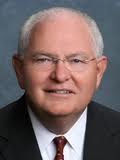
Sen. Bill Montford
“We’ve learned a lot from charter schools,’’ Sen. Bill Montford, a Tallahassee Democrat and the bill sponsor, told redefinED. “They have been able to think outside the box.’’
Montford is a former Leon County superintendent and CEO of the Florida Association of District School Superintendents.
Charters are funded by taxpayer dollars, but have their own governing boards and power over personnel decisions. They also can meet the state’s stringent class-size mandate for core classes on a schoolwide average instead of class by class – something districts must do or pay hefty fines.
The result, some say, is charters can be more innovative, creative – and academically successful. (more…)
My holiday wish is for teacher unions to expand their business model to include all public education teachers, and not just those employed by school districts.
 The industrial model of unionism that teachers borrowed from the auto and steel workers 50 years ago assumes a large number of employees working in a centralized, command-and-control management system. Unions lose money when they apply this industrial unionism to smaller, decentralized employers such as charter and private schools. Consequently, they protect their desired market by opposing all school choice programs that enable students to attend schools not owned and managed by school districts.
But they are losing this fight. Parents like school choice. More than 40 percent of Florida students – 1.3 million - are now attending a choice school, and their numbers are increasing daily. As teachers move with their students and membership losses accelerate, teacher unions will eventually be forced to expand their business model to include services for teachers working for smaller, non-district employers. This expansion might include providing charter, virtual and private school teachers with liability insurance, financial planning, professional development, political advocacy and employee leasing for teachers willing to pay unions for guaranteed employment.
Teacher unions are an important vehicle through which teachers can make their voices heard and impact political decision making, but they have historically been conservative and resistant to change. The National Education Association, the nation’s largest teacher organization, resisted collective bargaining for several years and only relented after losing thousands of members to the AFL-CIO affiliated American Federation of Teachers. Both the NEA and AFT will refuse to embrace a more progressive, inclusive unionism until their membership losses are so severe they have no other choice.
This day is coming. When it arrives, teachers, unions, students and the public will all benefit.
Coming Friday: Two posts. Wishing school choice parents were impossible to ignore. And wishing for more information to help parents make the best choice.

Arza
If the chatter among Florida charter school supporters is any indication, expect to see proposed legislation next spring that calls for equitable funding for charter schools and the return of charter authorizers who are independent from public school districts.
“This is a forced marriage that needs counseling,’’ joked Ralph Arza, a former Florida legislator who now serves as the governmental affairs director for the Florida Consortium on Public Charter Schools.
More than 100 charter school operators and advocates, who met Wednesday during the 16th Annual Florida Charter School Conference in Orlando, also want more streamlined applications and sanctions against districts that drag out the appeals process.
The way it works now, some applications call for thousands of pages of documentation, said Collette Papa of Academica, a charter school management company with about 100 schools in Florida. If a district denies the application, the appeals process can take anywhere from three to six months, Papa said. If the charter school wins approval, often it’s too late to hire teachers, secure a site and recruit students in time to open the same year, she said.
Papa was part of a 7-member panel that included Mike Kooi from the Florida Department of Education’s Office of Independent Education and Parental Choice, Pamela Owens of Charter Schools of Boynton Beach, Marvin Pitts of Mavericks in Education in south Florida, Gene Waddell of Indian River Charter High School in Vero Beach and Tim Kitts, who operates five Bay Haven Charter Academy schools in Panama City.
The panel discussion anchored a town hall meeting that kicked off the two-day conference. It was sponsored by the consortium and led by Arza, who served in the Legislature between 2000 and 2006 and helped pass education laws including former Gov. Jeb Bush’s A++ plan.
Since that time, Arza said, the state has slowly chipped away at the heart of school choice reforms. (more…)
Not according to the Catholic Conference of Ohio. The Catholic Church has long supported school choice measures, particularly for disadvantaged children. But it also has been historically aligned with the labor movement, as evident in this excerpted statement from the Ohio bishops on proposed legislative changes to their state's collective bargaining laws for public employees:
The Catholic bishops of Ohio encourage leaders in government, labor and business to pursue changes that promote the common good without the elimination of collective bargaining ... [Economic] justice places the good of the person at the center of all economic activities ... It challenges society to measure the moral effectiveness of our economic practices by how well they strengthen families and provide for the poor and vulnerable. This social doctrine has long recognized that all people have the right to economic initiative, to productive work, to just wages and benefits, to decent working conditions, to organize and join unions or other associations, and to engage in collective bargaining.
Social justice also reaches public education, as the bishops write in a separate entry on their Web site:
Parents—the first and most important educators—have a fundamental right to choose the education best suited to the needs of their children, including public, private and religious schools. Government, through such means as tax credits and publicly funded scholarships, should help provide resources for parents, especially those of modest means, to exercise this basic right without discrimination.
It's getting harder to find a nuanced conversation about the Midwestern struggle over collective bargaining, but a recent exchange between David Brooks and Gail Collins of The New York Times gets us closer to a more salient level of dialogue.
Brooks does his best to right-size his colleague, who admits she's wandered off "to the land of the insanely angry," but he offers a qualified defense to the Wisconsin governor who started the imbroglio. "He’s right about the budget issues and the need to restrain pensions," Brooks said, "but he’s done it in such a way as to force everybody into polarized camps."
He then directs readers to the Atlantic's Clive Crook, who identifies a need to trim the supersized influence and power that public-sector unions have exercised over public affairs, but who's dismayed that the debate in Wisconsin has been cast only as a zero-sum game, a "winner-takes-all" affair:
The question for states and cities is not whether "collective bargaining" is a basic undeniable right, but how much union power in the public sector is too much. Progressives talk as though it can never be enough -- or at any rate, that no union privilege, once extended, should ever be withdrawn. Conservative supporters of Walker talk as though public-sector unions have no legitimate role at all. To me, the evidence says that the balance needs redressing.
Of course, our blog addressed perhaps a better way to provide a balance of power: by bringing more, not fewer, voices to the table, at least as it pertains to public education. Either way, Crook is right to address the balance in our discourse as well.

