Primer Microschools Leader Fellow Adam Tweet with his wife, Paloma, and their daughter, Harper
Growing up, Adam Tweet loved learning. Until he didn’t.
Kindergarten was amazing, but as he got older, Adam wanted the freedom to pursue things he enjoyed. He loved reading but not books typically found on school reading lists. Comic books and interactive Choose Your Own Adventure books fed his passions.
But teachers told him he couldn’t read those books, even if they sat on school library shelves. He needed to read what they assigned.
“And that just turned me off reading,” Adam said. Now, the former Florida public school teacher and administrator wants to offer a learning environment for kids who were like him, who chafed under rigid rules and found joy by pursuing their passions, which for Adam included soccer and ice hockey.
Adam is one of 50 people across the United States chosen to be part of Primer Microschools’ inaugural Leader Fellowship program.  Likened to an evening MBA program, its goal is to help participants open and run Primer Microschools in their communities. Adam is among 28 fellows across Florida, where universal eligibility for education savings accounts has created a supercharged environment that allows the state to celebrate National School Choice Week with gusto.
A Minnesota native and self-described “average student,” Adam majored in P.E. and health. After graduation, he found few opportunities to teach those subjects. He fell into elementary school teaching after RCMA Immokalee Community Academy, a Florida charter school that serves primarily migrant farm working families, turned him down for the P.E. job but offered him a position teaching third grade. That started an education career that spanned more than a decade, including a year in Brooklyn, New York, and eight years in administrative roles for the School District of Lee County in Florida.
Then he became a parent, and his perspective changed.
“I was going on with my career and I’m like, ‘Public schools, public schools, I love them,’” he recalled. “And then I had my daughter, and it kind of switched.”
Adam and his wife, Paloma, wanted to examine every option to find the best education for their daughter, Harper, who is now 4 and in voluntary pre-kindergarten.
That exploration included research into microschools, which are intentionally small, teacher-led learning environments. They have been called a modern version of 19th-century one-room schoolhouses.
Florida has a plethora of such schools, including Kind Academy of Coral Springs, which began in 2016 and offers full-time and hybrid homeschool programs. Kind’s founder, Iman Alleyne, started her own 10-week training program for aspiring founders in 2022, with a goal of opening 100 microschools in 10 years. About a half-hour south in Davie, Colossal Academy offers middle school students the chance to spend part of their time on a farm. Partnerships with other nearby providers such as Surf Skate Science, which provides a hands-on approach to learning math, science, and design through the pursuits of surfing and skateboarding. Acton Academy has also brought its brand of student-directed learning to Florida, with 15 schools that put students on a “heroes’ journey.”
The National Microschooling Center estimates 95,000 microschools across the United States served more than 1 million students last year. With the passage or expansion of education savings accounts, microschools are expected to grow more in 2025.
When Adam and Paloma discovered Primer Microschools, they liked what they saw: competency-based learning with no age-based groups and with dedicated time for students to pursue passion projects that can range from setting up an art gallery to making and selling lip gloss. As a former P.E. teacher, Adam also liked the emphasis on outdoor activities.
Adam could also relate to Primer founder Ryan Delk’s story growing up as a homeschooler in central Florida. Delk’s mom, a teacher, wasn’t satisfied with the low-rated zoned school after moving to his grandparents’ home in 1996. So, she started a small homeschool for him, his siblings, and a few neighborhood kids. Rather than relying on textbooks, Delk’s mom made learning an adventure. She took them on field trips to historic sites to learn about the American Revolution and created a network of cardboard tunnels for students to crawl through to learn how the human digestive system works.
Adam wanted that experience for his daughter. And himself. Last summer, while his car was being serviced, he decided on a whim to fire off a text to Delk asking about the launch of a new fellowship program to help teachers start their own Primer Microschools.
To his surprise, Delk responded immediately.
“We talked for about 10 to 15 minutes,” while the mechanics worked on his car, Adam said.
Delk was moved by Adam’s sharing his sadness at watching once wide-eyed kids gradually lose their love for learning as they progressed through the traditional model and invited him to apply for the fellowship program.
“I really believed in what he was doing,” Adam said. “Academics are certainly important. Mastering reading, mastering math. But their project-based learning is amazing. Behavior problems are non-existent. Engagement is through the roof.”
Adam applied and was accepted. Primer is funding the program with a $1 million Yass Prize last year and is working to scale its established networks beyond South Florida and Arizona, and into new locations throughout Florida — from the Gulf Coast to the Panhandle — and into Alabama.
Fellows attend weekly live virtual training and work toward key milestones, such as finding a location. A new Florida law that Delk helped get passed last year eases certain zoning rules for those opening in locations such as religious buildings, libraries, community centers, former schools, and even theaters.
Fellows also receive a $500 monthly stipend. Training is held during the evenings to enable participants to continue their day jobs.
When they open their schools in August, they will become Primer employees and receive a salary and benefits.
Adam, who has enrolled his daughter for next year, plans to start his school in Fort Myers. His goal is to enroll 45 students, with three groups, one for kindergarten through second grade, another for grades three through five, and a third for grades six through eight. His school, like other Primer Microschools, accepts state school choice scholarships. Primer also works with qualified families to secure other need-based financial aid.
Now, Adam and the other fellows are working hard to prepare. They are learning from Primer leaders about the school’s proprietary software, its instructional methods, how to recruit students and navigate real estate matters.
Adam said the software program is “very user-friendly” and allows parents to keep track of what their kids are working on and their daily progress. The best thing, however, is being able to ask questions, share ideas, and celebrate wins with other fellows through a Slack group.
“Having the community of Primer has been incredible,” Adam said. “I don’t feel like I’m doing it alone.”
He looks forward to being able to “help other families in our community whose kids are similar to mine – they have passions but where they’re at now is not meeting those passions.”
Adam said he is working to finalize a location and anticipates an August opening.
Mornings will be devoted to core academics, while each afternoon, students will have an opportunity to pursue dreams that could include learning to code, creating podcasts, baking cakes or writing songs.
Adam’s classroom will be well stocked with reading materials, including lots of Choose Your Own Adventure and comic books.
 Editor’s note: This post from Ben Owens, co-founder of Open Way Learning, and Joey Lee, Chief Learning Officer at LiFT Learning, first appeared on Getting Smart.
“The main thing is to keep the main thing the main thing.”
From the time I first read this famous Stephen Covey quote in the late 1980s, I’ve always used it as my litmus test for deciding if an initiative I was considering would be beneficial or a distraction. Its power lies not only in an objective evaluation for strategic planning, but it also forces you or your organization to really come to terms with your why.
This also explains why I believe so many educators are suggesting that now is the time to move away from the old norms of traditional grading and assessment and embrace a competency-based education approach: It better aligns with the “main thing” of true teaching and learning.
While definitions of CBE vary, there are a few core ideas that actually align it much closer to the true purpose of school than a status quo system based on arbitrary time constraints, age-based cohorts, and a fixation with grade chasing. The Aurora Institute is recognized as a leading advocate for CBE and its definition includes aspects such as the following:
· Students have individual learning pathways, with varied pacing based on progress based on evidence of mastery instead of seat time.
· Students learn actively using different schema and varied pacing based on individual needs and goals.
· Students have agency over learning decisions, including they acquire and demonstrate their learning.
To continue reading, click here.
 On this episode, Tuthill talks with a leading expert on the subject of competency-based education, an approach that allows students to advance based on their ability to master a skill or competency at their own pace regardless of the educational setting. Sturgis developed a deep understanding of competency-based education by visiting more than 100 schools in the United States and New Zealand that are leading the way toward a better model that is veering away from the A-F grading system.
Tuthill and Sturgis discuss how more traditional ranking and sorting education models must be reorganized around a more humane system in which students focus on developing strong social-emotional skills such as self-management, empathy, and relationship management.
"I think the No. 1 mistake schools make is not taking enough time to analyze the traditional system, why it was designed, and what the implications are … There is a lot of pressure to keep this system in place."
EPISODE DETAILS:
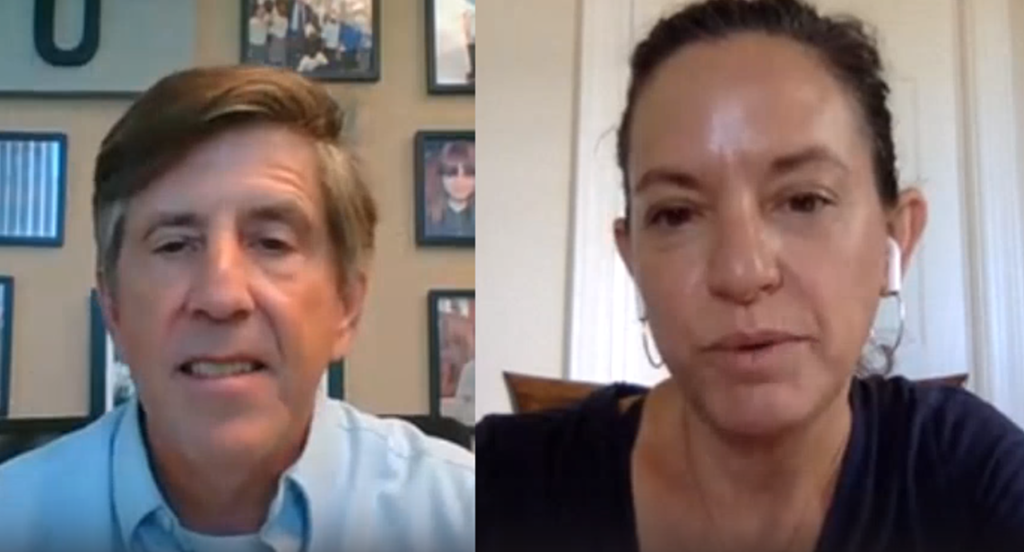 In this episode, Tuthill talks with the leader of a nonprofit organization committed to modernizing public education, creating the conditions for more expansive learning in an evolving society. Put simply, ReSchool Colorado’s mission is to leverage and reorganize existing assets and resources in a purposeful way around the needs of children and families.
The two policy innovators go deep discussing out-of-school learning and the growing inequity between families who can access the “shadow education system” and those who cannot. They also discuss the importance of integrating local communities into a competency-based education system.
Anderson believes that while change in public education can be slow, organizations like ReSchool Colorado can avoid competing with traditional district models by focusing on education outside of traditional brick-and-mortar schools.
"Wealthier families are spending thousands of dollars more per year per kid than lower-income families to access learning that is happening (through) sports, arts, STEM, summer camps, travel. That is where kids develop their sense of self ... Those things have long-term implications on a person's future, well-being, and economic success."
EPISODE DETAILS:
LINKS MENTIONED:
The 74: 5 ways to reinvent school vacation – Amy Anderson and Julia Freeland Fisher
The 74: Cleveland schools consider mastery-based education to stem coronavirus learning loss
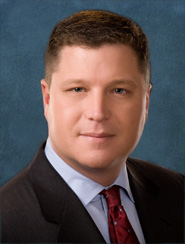
Sen. Jeff Brandes (R- St. Petersburg)
If you ask Florida Sen. Jeff Brandes (R-St. Petersburg) what he thinks the education world will look like in the year 2040, he’ll tell you it will be going back to the past.
“I see us moving back to the one-room schoolhouse where we have students of different capabilities working with each other to help everyone rise,” Brandes says.
The Pinellas County lawmaker pushes innovative education policies every year in the Florida Legislature, but new leadership more focused on education choice appear to be giving his ideas more traction.
His signature education bill this session, SB 226, would expand a mastery-based education pilot program from the three Florida counties currently testing the concept to any district in the state that wishes to participate. The bill wasn’t heard in committee last session but is on track to pass this year with wide bipartisan support. A similar bill is currently awaiting passage in the House.
Brandes firmly believes that the flexibility of mastery-based education and the wide array of options it provides will expand opportunities for students.
“Our goalposts cannot simply be you got an education or degree,” Brandes said. “A job is the goalpost. How do we focus everything that we're doing to line up to professions that are out there for people who complete their education?”
SB 226 is not a mandate. Districts would have to opt in to participate, and there are unanswered questions about implementation, funding and state-mandated testing. But testing certainly would change under a mastery-based education system.
Brandes says this is a good thing.
“The upside is that we get to take the temperature of each individual student in real time … Why do we need to take the temperature once a year if we’re taking it every day?”
Listen to the full interview below or on iTunes.
A Central Florida district was recently credited for its efforts in advancing personalized learning in the classroom as part of a state initiative.
But the district chose to change course abruptly under new leadership.
Even so, personalized learning advocates say there is still hope for their push for personalization, and a state program intended to help it along.
Lake County was one of four districts chosen to become part of a competency-based learning pilot program. Competency-based learning is the foundation of personalized learning. It allows students to advance to higher levels of learning based on their mastery of a topic rather than the amount of time they spend on it.
The Foundation for Excellence in Education, a reform advocacy group, is studying personalized learning and how it is bringing change to classrooms in Florida. It's cited examples of success. And it's stressed that competency-based learning does not clash with one of the foundation's other objectives: Setting high learning standards for every student.
On the contrary, ExcelinEd says it enables all students to work toward the same goals. The foundation hopes allowing students to proceed at their own pace, according to their interests, will ensure all of them actually reach those goals.
Three districts and a lab school are proceeding apace with personalized learning. None has yet applied for a waiver enabled by a state law passed last year, but they're gradually giving students more choices in their learning. In some cases, they're trying to rethink school from the ground up. But no district was further along than Lake County.
So what impact will its abandonment of the state initiative — and a grant backed by national philanthropists — have on personalized learning in Florida? The differing answers to that question help shed light on questions educators and policy wonks keep asking. Is personalized learning just a buzzword? Or can it represent meaningful changes in classrooms?
'Regrettable' move
A 2016 law created a competency-based learning pilot program for the Pinellas, Palm Beach, Seminole County and Lake County school districts, as well as the University of Florida’s P.K. Yonge Development Research School. It allows them to apply to the Florida Department of Education for waivers from state regulations that might stand in their way.
But with a change in leadership in Lake County, the state’s 19th-largest district, Superintendent Diane Kornegay and school board members decided to change course.
“It is regrettable that Lake County has come to that decision,” said Shan Goff, Florida policy director for ExcelinEd. “That is a local decision. We do think it is unfortunate. They were further along in implementation. People can still learn from Lake County. We are trying to give greater focus or support to the remaining districts.”
Meanwhile, officials in the other districts say they’re still making substantial progress. Initiatives vary from one district to another. They range from math acceleration to revamped report cards that embrace “standards-based grading” to an effort to design the high school of the future.
But Lake County School board officials argued personalized learning is just another word for good teaching practices.
A district's diappointment
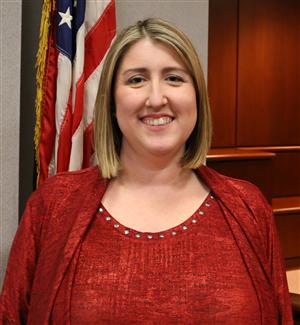
Lake County School Board member Kristi Burns
In 2014, Lake was one of six districts in the nation to receive a three-year, $3.1 million grant from the Bill and Melinda Gates Foundation’s Next Gen Systems Initiative. The money was supposed to help prepare schools for personalized learning.
Lake ranked 44th in student achievement in 2016. Its graduation rate used to be above state average. Now the district is below. Umatilla High School, which carried out the personalized learning program in some classrooms, dropped from a B to a D on its state report card.
School Board member Marc Dodd said results like those prompted the district to pull away from the program.
“We did not see us climbing in the rankings with those methods,” he said. “It is about getting back to the basics about what are the good teaching strategies that we need to see in every single classroom. We were not seeing a return on our investment.”
Lake County School Board member Kristi Burns also raised concerns.
“Competency-based learning will work for some students,” she said. “Our goal is to reach all students and you do it by differentiating education. It is making sure you are teaching to less advanced and more advanced kids in the classroom.”
The problem with competency-based learning is it more student-driven, with less teacher guidance, Burns added.
“It is difficult for young children to initiate all their own learning without as much of a teacher guidance,” she said. “Our goal is to make sure teachers are guiding our students learning.”
Emily Weiskopf, chief of transformation for Lake County schools, said even without a personalized learning program, the district expects all students to master academic content and gives them a choice in how they show mastery.
“With the vision of transforming classrooms for the 21st-century learner to include opportunities for students to collaborate around relevant and real-life problems, students are able to engage in problem-based learning and refine their skills of collaboration and communication,” she said.
Weiskopf added the district is continuing to offer programs that embody the spirit of competency-based learning. Dual enrollment, Advanced Placement classes and industry certifications allow students to take college-level courses or pursue their interests.
Moving forward
Goff said there is much to learn from the early competency-based learning initiatives.
“I think one of the lessons learned clearly was this program can’t be something different and apart from the district in improving the quality of instruction,” she said.
Karla Phillips, ExcelinEd's personalized learning policy director, said the essence of the program is providing flexibility and meeting students where they are.
Competency-based learning gives students the opportunity to completely master a standard. Right now, Phillips said, “We give diplomas based on seat time and grades rather than whether they master the content."
For example, if a student scores 80 percent on a math test, that student is going on to the next level without mastering 20 percent of the material. Online learning guru Sal Khan has memorably illustrated this problem, likening it to building a home on 80 percent of a foundation.
Competency-based learning changes that dynamic. But change does not come easy.
Support is critical in schools, Goff said. Schools need a healthy dose of teacher training.
There is still much to study about this new evolution in learning. But its clear that competency-based learning requires support from school leaders, a fundamental shift in the curriculum and everyone to be on the same page. This certainly has occurred at P.K. Yonge, where the University of Florida’s K-12 laboratory school has shown promise.
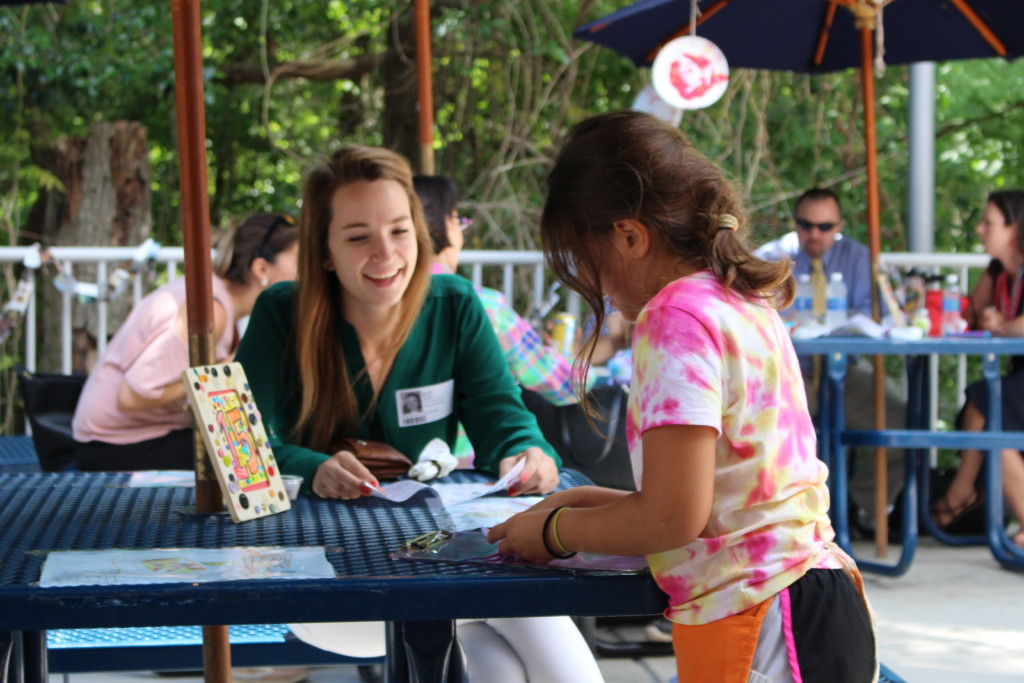
K-1 Learning Community Student Cameron Indarawis takes part in Pizza by the Creek, a six-week project based on personalized learning. Credit: P.K. Yonge
The University of Florida’s K-12 laboratory school has seen promise in a new learning method where students learn at their own pace.
Competency-based learning gives students the opportunity to advance to higher levels of learning based on their mastery of the topic rather than the amount of time they spend in class.
P.K. Yonge Developmental Research School joins three districts in Florida that are test driving the concept.
A 2016 law created a pilot program for Pinellas, Palm Beach, Seminole County school districts, as well as P.K. Yonge, to experiment with competency-based learning, which dovetails with personalized learning. It allows them to apply to the Florida Department of Education for waivers from state regulations that might stand in their way. A fourth district, Lake County, has backed away from the initiative.
Lynda Fender Hayes, director of P.K. Yonge, Christy Gabbard, program development and outreach specialist and communications director Julie Henderson answered several of our questions on the implementation of competency-based learning. We made some minor edits to their written responses for clarity and length. (more…)

Pictured above is an Accelerated Mathematics Class at Del Prado Elementary School in Boca Raton. Photo credit: Jason Nuttle of the School District of Palm Beach County.
Florida students often have a chance to get ahead in math. They can take algebra I or geometry in middle school, and earn multiple college credits by the time they finish high school.
But those opportunities are usually reserved for older kids. In elementary school, acceleration opportunities remain rare.
One of the largest school districts in the country wants to change that. It created a math program that allows students as early as third grade to get a jump start in math. Advanced students who participate can finish three years' worth of coursework in two years' time. That can put them on a path to take highly advanced courses — like higher levels of calculus — before high school graduation.
The Palm Beach School district expanded the program this school year. District officials say students who took part in the Accelerated Mathematics Program in previous years achieved higher learning gains than their peers who were not enrolled in the program. (more…)
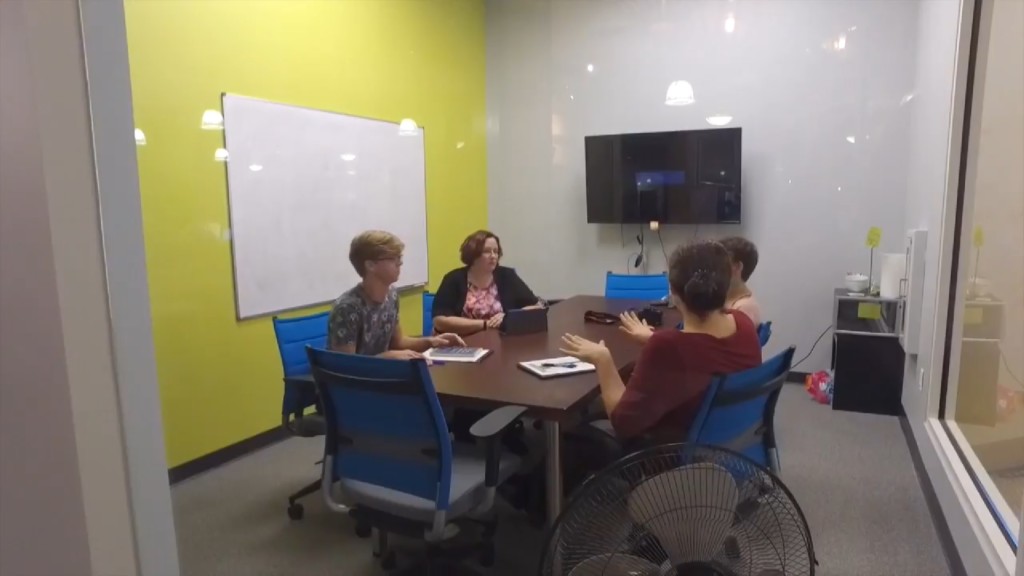
At PSI High, Seminole County Public Schools imagine students will leave conventional classrooms behind, spending more time in conference rooms and small groups. Screenshot from school concept video produced by the school district.
Descriptions make a new elective offered in one Central Florida district sound distinctly different from a typical classroom.
Students work in an environment that resembles a high-tech office. Instead of sitting in rows of desks in front of the teacher and taking tests, they solve real problems in the community.
Seminole County Public Schools call the new class PSI High. Pronounced Sci-Hi, the acronym stands for Problem Solving Incubator. Students apply their skills to make change in the real world.
The elective is part of the school district's push to help students learn at their own pace. Seminole is one of three districts in Florida that are preparing to test-drive the concept of competency-based learning. School officials want students to advance to higher levels of learning based on their mastery of the topic — rather than the amount of time they spend in class.
One district is pulling back from a state initiative intended to help students learn at their own pace.
But the remaining three school districts and a laboratory school at the University of Florida are sticking with a competency-based learning initiative backed by a 2016 state law.
School districts in Pinellas, Palm Beach and Seminole Counties, as well as P.K. Yonge Developmental Research School, say they're exploring competency-based learning. They want students to advance to higher levels of learning based on their mastery of a topic, rather than the amount of time they spend.
The concept dovetails with personalized learning, the broader idea that educators should tailor instruction to students' individual needs and learning interests. (more…)