 Politico has built an impressive audience by bringing intellectual heft to pinched political debates, but Stephanie Simon’s treatment of school vouchers followed a more predictable narrative: left vs. right, public vs. private, us vs. them. Not surprisingly, the result was tendentious.
Though the original headline’s claim that vouchers offer “no proof they help kids” was later amended to allow that “vouchers don’t do much,” the account was infused with the kind of righteous attitude that mars our political discourse. By paragraph three, Simon was presenting the “inconvenient truth,” as if to signal her impatience with complexity.
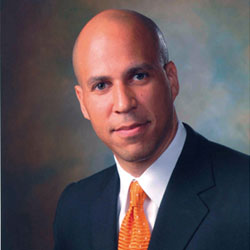
Cory Booker D-NJ
Yes, it is true that “Jindal, GOP allies back vouchers,” but it is also true an increasing number of Democrats are joining the fight. Louisiana's voucher expansion had the support of 19 Democrats (a third of all Democrats) in the state legislature. In Florida, nearly half the Legislature’s Democrats, and a majority of the Black Caucus, supported a major expansion of tax credit scholarships for low-income students in 2010. In North Carolina, a new voucher plan enacted this year was introduced with bipartisan sponsors. One of the Democratic Party’s rising stars, Newark Mayor Cory Booker, came to the vigorous defense of private options when challenged on the issue in his U.S. Senate primary.
Yes, some voucher students have produced what Simon called “miserable” scores on standardized tests, but that doesn’t necessarily distinguish them from some students in traditional public schools. Students who come from impoverished homes face enormous challenges, and their educational success is an obligation we face collectively as a nation. The test is whether each school is helping or hurting that progress, not whether it is run by public or private educators.
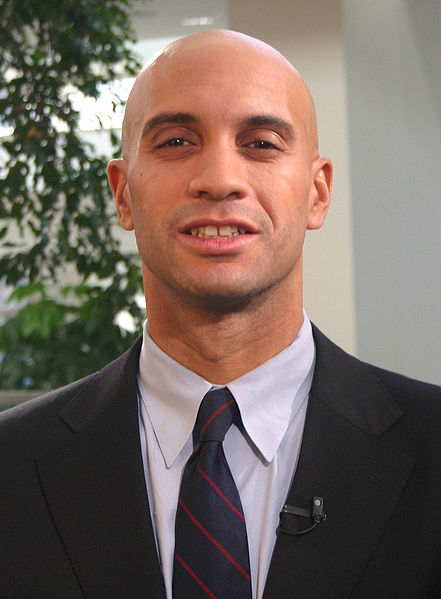
Adrian Fenty D-DC
Yes, voucher students in some states don’t take the same standardized test as district students, but that does not make it “impossible to compare academic results.” In Florida, noted Northwestern University researcher David Figlio has used various techniques – including concordance and regression models – to compare between nationally norm-referenced tests and the state test. In 2010, he wrote of low-income scholarship and public students: “The results are consistent with a finding of small but positive differences between program participants and non-participants.”
By seeing mostly through the lens of good and evil, Simon robbed readers of the kind of nuance that enriches political debate. Her reporting on testing data suffered accordingly. (more…)
Recently I attended the American Federation for Children’s policy summit in Washington, D.C. This event was an exciting, informative, two-day conference filled with panel discussions, keynote speakers such as Lisa Leslie and Mike McCurry, and networking opportunities with education reformers from all over the country. I left D.C. feeling similar to when I left the Foundation for Excellence in Education conference this past November. Invigorated. Energized. Hopeful.
Alberta Wilson: "Parents should be involved. They are the stewards of their children. If we continue to do things as we are doing them, we won’t be successful."
But I also kept thinking these events should be experienced and enhanced, a thousand times over, by one very important, and missing, demographic.
Parents.
My background is important, but not necessarily the reason, why I want to see more parents at education conferences throughout the country. I have been a Democratic activist and community organizer for the last 25 years. I now organize parents for Step Up For Students. Perhaps that does influence my thoughts and opinions.
However, I remember suggesting more parental involvement after attending education conferences as a teacher. I simply expect more now. I expect parents to be included in every substantive event, conference, policy discussion, roundtable, and town hall meeting, and I’m routinely disappointed when they aren’t anywhere to be found.
Of course, many of the participants are parents as well as education reformers. We bring that passion for school choice from personal experiences. I can talk about years spent driving my children out of county to put them in a public school that worked for them and then utilizing scholarships a few years later when a private school better fit their needs.
But we should hear more stories from a diverse population of moms and dads.
At the AFC Conference, Dr. Alberta Wilson, president and CEO of Faith First Educational Assistance Corp. and consultant for Capstone Legacy Foundation, shared my concerns. At several sessions, she spoke from the audience to implore that more parents be included – at every level.
I caught up with her recently and asked her to elaborate. (more…)
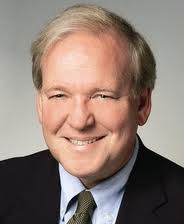
McCurry
In an American political system ripped apart by partisanship, the school choice movement stands out as a rare example of centrism, former White House Press Secretary Mike McCurry said Tuesday. But the movement can build even better bridges if it eases up on the name calling and finger pointing, he continued.
“We cannot demonize our opponents,” McCurry told several hundred people at the American Federation for Children summit in Washington D.C. “I hear too often, as I do the work I do at (the Children’s Scholarship Fund), hear people talk about teachers unions in a way that’s frankly ugly. Those people love our children just as much as anyone in this room. They happen to be particularly wrongheaded about the way … to improve their lives. But it’s not because they are ill motivated.”
“We need to recognize that, and have compassion for the people on the other side,” he continued. “Not everything needs to be mud wrestling on CNN with people calling each other names. … We’ve got to nurture the better angels on that side and understand where they’re coming from.”
McCurry worked for liberal Democratic Sen. Daniel Patrick Moynihan (himself a strong school choice supporter) early in his career and later for President Bill Clinton. He serves on the board of the Children’s Scholarship Fund, which provides privately funded scholarships for low-income students in grades K-8.
The school choice movement’s appeal to all points on the political spectrum is a source of pride, McCurry said. The movement needs to continue doing the hard work of making the center hold, of putting aside differences on other issues to find common ground on kids and education. He suggested it might even model good behavior in other realms. (more…)
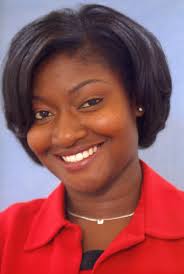
Rep. Morgan
Say school choice and some Democrats say profits, privatization, Republican plot.
Democrat Alisha Thomas Morgan says equal opportunity.
“We’ve got to put policies in place to ensure that how much my parents make or the neighborhood I live in does not determine the quality of education,” Morgan, a state representative in Georgia, says in the redefinED podcast attached below. “And so I think in terms of leveling the playing field, in terms of equal access, in terms of equality. To me, these are very much Democratic values and why I support school choice.”
Morgan is among a new breed of Democrats, many of them younger, many of them minority, who are embracing school choice despite the strains it can put on their relationships with fellow Dems and longtime allies. First elected in 2002 – at the age of 23 – Morgan, a Miami native, said she underwent her own evolution on school choice in part because conversations with parents led her to recognize “a lot of my opposition was really political.”
Now she’s a rising national star in school choice and ed reform circles, a Democrat who hasn’t been afraid to step out front on charter schools and tax credit scholarships in her home state and politely encourage other Democrats to live up to their core principles. “Education is not a Democrat or Republican issue; it’s a kids’ issue,” she said. “But I do think that Democrats should provide leadership here, and not be sort of dragged along as these reforms happen across the country.”
That’s not to say Morgan doesn’t empathize. It can be lonely as a pro-school-choice Democrat, she said. And it can be tough convincing other Democrats when their positions are at odds with Republicans on so many other issues. “What I’ve learned to do is to separate that we agree on this set of issues and these things we can work together; the other things, I’m going to fight you, just like the other Democrats do,” she said. “But I don’t think some of my friends on the Democratic side have been able to make that separation.”
In the interview, Morgan also said:
The privatization argument doesn’t make a lot of sense. (more…)
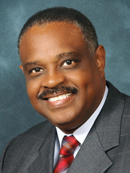 Al Lawson, an iconic Democratic lawmaker who served in the Florida Legislature for nearly three decades, has joined a nonprofit board that oversees state-supported scholarships for low-income schoolchildren.
Lawson was selected last week to serve on the corporate board of Step Up For Students, which is a state-approved “scholarship funding organization” that provides Tax Credit Scholarships this year to 51,000 students whose household income meets the threshold for free or reduced-price lunch. (Step Up For Students also oversees this blog.) The program is fueled by $229 million in corporate contributions that receive a dollar-for-dollar tax credit from the state.
“Throughout my legislative career, I was always concerned about students, especially minority students, who had no option when the regular school wasn’t working for them,” Lawson said. “The most important thing is to give these kids an opportunity to succeed, and this scholarship is one of those opportunities.”
Lawson was praised by Step Up board chairman John Kirtley, a Tampa businessman who helped persuade lawmakers to adopt the law in 2001. “Senator Lawson has been a smart, compassionate leader in Florida for years,” Kirtley said. “We’re thrilled Step Up and our families will benefit from his judgment and experience.”
Two-thirds of the students on the scholarship are black or Hispanic, the majority live in homes with only one parent, and their average household income is only 6 percent above poverty. State research shows they are the lowest academic performers in the public schools they left behind and, on their latest standardized test scores, they achieved the same gains in reading and math as students of all incomes nationally.
Lawson, who initially voted against the creation of the scholarship in 2001, told a newspaper reporter in 2007 that he could no longer oppose a learning option aimed at economically disadvantaged students with desperate needs: “When you have a lot of poor kids in your area that need help, and you have people saying, ‘We’re willing to work with these kids,’ ... it’s hard to say no.” By 2010, he was co-sponsor of a bill that expanded the program and made the closing argument on the Senate floor. (more…)
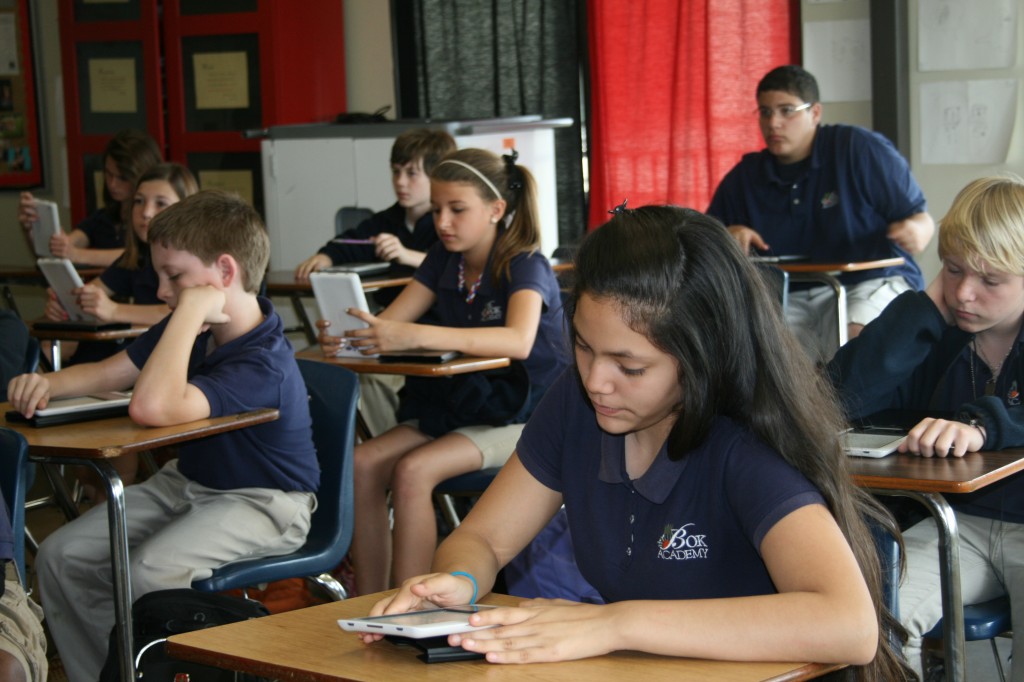
Every student at Bok Academy Middle School in Lake Wales, Fla., uses a Nook, iPad or laptop in class. The school recently was recognized nationally for its efforts to create a 21st Century learning environment.
Five hundred students sat cross-legged on the floor inside Bok Academy Middle School’s cafeteria, where Principal Damien Moses, a gentle giant with a booming voice, greeted them. “Great moments don’t happen by accident,’’ he told them.
They happen, he said, because someone had a vision.
Then he asked all the teachers at the A-rated Lake Wales, Fla., charter school to stand as he announced that Bok Academy was one of 43 schools in the nation to be designated an Apple School of Distinction. The morning celebration focused on the award, which recognized the school’s commitment to providing every student with an iPad, Nook and laptop in the classroom.
But it also marked just how far the Lake Wales Charter Schools system has come.
In 2004, it took over five district schools. Now the system has six schools, a $30 million operating budget, 400 employees and 3,800 students. It’s on the fast-track to becoming a state-designated “high-performing” charter system, meaning its schools are top performers academically and financially.
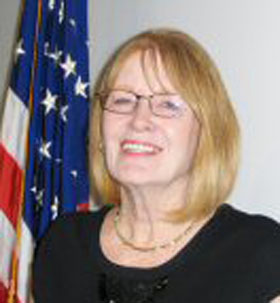
Betty Wojcik
“We are now at a point where we can see the benefits,’’ said Betty Wojcik, executive director of the Lake Wales Area Chamber of Commerce, a city commissioner and one of the charter system’s trustees.
Lake Wales is a worthy stop on the school choice map, even in a state that now boasts 579 charters. It's a story as much about small-town pride as it is about alternative ways to govern schools. Community leaders who launched the effort were motivated by a common fear: that if their schools continued to decline, so would their idyllic city of 14,000 in the rolling hills and orange groves of Central Florida.
Striking out on their own has meant embracing a do-it-yourself attitude from everything to serving hot lunches, to fixing school buses, to lobbying Tallahassee for money. It still presents big challenges. The number of low-income kids in Lake Wales’ schools ranges from 50 percent to 90 percent. But if anybody regrets bushwhacking a path on education’s new frontier, they’re few and far between.
“Having choice and that little bit of competition has made everyone more effective,’’ Wojcik said. (more…)
Editor's note: The Rev. Manuel Sykes is pastor of Bethel Community Baptist Church and president of the St. Petersburg NAACP, an active chapter on Florida's west coast. In this commentary, he responds to a recent Tampa Bay Times column that criticized a federal tax credit scholarship bill offered by U.S. Sen. Marco Rubio. The Times also published a letter to the editor from Rev. Sykes in today's editions.
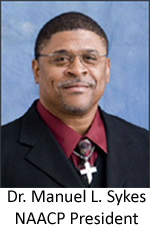 Florida offers the nation’s best lesson on whether private school options can help poor children, but the Tampa Bay Times seems uninterested in what these parents and students are telling us. Instead, it is busy pointing a distinctly partisan finger.
Argue if you want about whether the federal government should provide K-12 scholarships to low-income students, but the tax credit scholarship plan introduced by Republican U.S. Sen. Marco Rubio is not “bankrupt” or “craven.” It is instead a learning option that economically disadvantaged students wouldn’t otherwise have, and to label it as “money laundering” represents the kind of rhetorical excess that cheapens our public debate.
In Florida, more than 50,000 students are on a similar plan, and the results are encouraging to those of us who work with struggling children. The students who use the Florida Tax Credit Scholarship are truly poor – incomes barely above poverty and averaging less than $25,000 for a household of four – and more than two thirds of them are black or Hispanic. State research tells us they were among the lowest academic performers in the public schools they left behind, and testing results show they are making the same academic gains as students of all income levels nationally. Just as encouraging, the traditional public schools that are most impacted by students who choose the scholarships are themselves experiencing higher learning gains.
The educational results don’t seem to matter to those who prefer instead to dismiss scholarships as some kind of Republican conspiracy. Never mind that nearly half the Democrats in Florida’s Legislature also support this option, including a majority of the Black Caucus. Never mind those of us who work in disadvantaged communities in St. Petersburg and see children for whom these opportunities can make the difference between a diploma or a jail cell. Never mind that the Black Alliance for Educational Options, which represents elected black Democrats across the nation, has expressed its support for Rubio’s bill. (more…)
Washington: The new Charter School Commission is attracting candidates from across the state and beyond, including Liz Finne, a lawyer and director of the Center for Education Reform at the Washington Policy Center. The governor and other leaders expect to choose nine volunteers by March 6 (Associated Press). A coalition of educators and community groups filed a legal challenge that questions the constitutionality of Washington's new charter schools law (Associated Press). More from Education Week.
Colorado: With more than 80,000 students enrolled in 190 charter schools, charter leaders try to clear up misconceptions about the school choice option (Reporter-Herald). Douglas County's Choice Scholarship Program does not violate the state Constitution, rules an appeals court. The outcome could have wide-ranging implications for whether vouchers can be used statewide (Associated Press).
 Alabama: Legislators approve tax credit scholarships for students attending failing public schools (Associated Press). More about the "legislative bombshell'' that Republicans called historic and Democrats said was a sleazy "bait and switch,'' at AL.com. And the site offers a primer on the Alabama Accountability Act.
Idaho: Khan Academy will provide math, physics and history classes in 47 public, private and charter schools this fall, making Idaho the nation's first proving ground for statewide implementation of the free online educational content and teaching model (Associated Press).
Michigan: A report measuring charter school performance statewide calls the Eastern Michigan University-authorized schools the second worst system in the state. EMU says the report doesn't take into account that the schools serve some of the state's toughest communities (Ann Arbor.com)

Manatee County middle school students participated in the annual Technology Student Association competition last month, showing off skills that included engineering and design. Photo provided by Manatee schools.
Career and technical education is attracting a lot of attention from Florida lawmakers this year, and an effort to expand it in the upcoming session appears to have bipartisan support.
CTE is the centerpiece of proposed legislation that builds on the state’s Career and Professional Education Act, which created industry-certification programs at the high school level.
Senate Bill 1076, filed last week by Sen. John Legg, R-Lutz, would add more partnerships with business and community leaders to develop similar initiatives in middle and elementary schools. It also would elevate industry certifications to a level that can satisfy certain high school requirements.
Senate President Don Gaetz, a Republican from Destin, told redefinED this week that passage of the legislation would result in historic changes that, ultimately, would make education in the Sunshine State more relevant. He said lawmakers should be able to back it no matter their party affiliations.
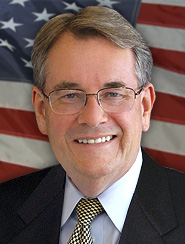
Sen. Don Gaetz
“All of us … want our graduates to walk across the stage and get a degree in their hands that results in a job,’’ Gaetz said. “It’s a sea change in educational delivery.''
Sen. Bill Montford, a ranking Democrat from Tallahassee, said he endorses the bill and the sentiment behind it.
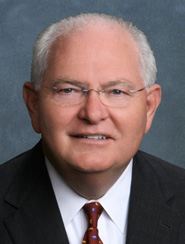
Sen. Bill Montford
“We need a different pathway for a lot of our students,” said the former Leon County schools superintendent, who heads the state superintendents association. “This is not a dumbing down of our curriculum. It’s not a retreat. This is what is best for our children in these schools.’’
Freshman lawmaker Shevrin Jones agreed. The Democratic representative from West Park has co-sponsored a bill that calls for more focus on career education.
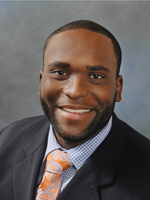
Rep. Shevrin Jones
“Not everyone is going to college,’’ said the former high school educator, who taught Advanced Placement Biology until his election to the House last year. “What this will do is allow us to make sure that our students are prepared to go into the workforce.’’
But expanding career education doesn’t shut the door on a college degree, Montford said. “Most college students work,” he said. “This is a good fit.’’
Legg’s bill is at the forefront of this overhaul, serving as the cornerstone of another bill the lawmaker filed last month that ties education to economic development.
The so-call STEM zone bill would create hubs that invite colleges and universities - as well as K-12 district schools, private schools and charters - to help develop a pipeline of highly-skilled workers for careers in science, technology, engineering and math fields.
Florida industry leaders like what they’re hearing.
“It’s very difficult to connect skilled workers to jobs,’’ Ron Avery, chairman of the St. Augustine-based Ronco Group, which includes industrial, engineering and manufacturing businesses, told lawmakers at a committee hearing last month. “There are 4,000 manufacturing jobs open in Florida. We need to figure out today how to fill these.’’ (more…)
Students would get greater access to online instruction through blended learning opportunities and potentially new providers under a Florida House bill that sailed through a subcommittee Wednesday.
Rep. Manny Diaz Jr.
“This bill is going to be about innovation, access and technology,’’ said Rep. Manny Diaz, Jr., R-Hialeah, a school district assistant principal who introduced the legislation in the Choice & Innovation Subcommittee. “We know that every child doesn’t learn the same.’’
The digital learning bill would create a district “innovation school’’ pilot program that encourages traditional schools to offer students more blended-learning opportunities with a mix of online and classroom instruction.
Districts could use their virtual programs, or courses offered by Florida Virtual School or another online provider. In addition, students could take online courses from another school district.
In return, school districts would be given more freedom in the digital realm in a fashion similar to charters. For instance, class sizes for courses within the innovation schools would be calculated at a schoolwide average instead of class by class.
Florida mandates that district schools limit the number of students allowed in core classes depending on grade level. Violations result in hefty fines, but meeting the law has resulted in students having to wait to take some classes.
The bill would allow districts to offer part-time, online courses to K-12 students in all subjects. Currently, they can only do that for courses that require statewide assessments.
It also would make it easier for online providers to operate in Florida. One provision allows a company without “prior, successful experience” to set up shop. (more…)

