 A bill that would allow all students to take advantage of dual enrollment programs offered by colleges and universities for free won approval from the Florida House of Representatives Appropriations Committee today.
HB 187, co-sponsored by Rep. Ardian Zika, R-Land O’Lakes, Rep. Susan Valdes, D-Tampa, and Rep. Wyman Duggan, R-Jacksonville, provides $550,000 from the state’s general revenue fund each year to help cover the costs of instructional materials for students at private and charter schools. Last year, the Legislature set aside the same recurring amount to cover those costs for students who are home schooled.
The bill also prohibits dual enrollment agreements with colleges and schools from passing along the costs associated with tuition and fees, including laboratory and registration fees as well as instructional materials, to a private school. Costs associated with virtual dual enrollment courses would be borne by both entities, according to a bill analysis.
The bill, which would take effect during the 2020-21 school year, also would expand dual enrollment programs from one to two years to allow more students to earn an associate degree. Currently, the program is open only to high school seniors.
“This bill seeks to expand opportunity to all students,” said Zika, who introduced the bill at the committee meeting.
The bill previously was approved by the House PreK-12 Innovation Subcommittee and now heads to the House Education Committee for consideration.
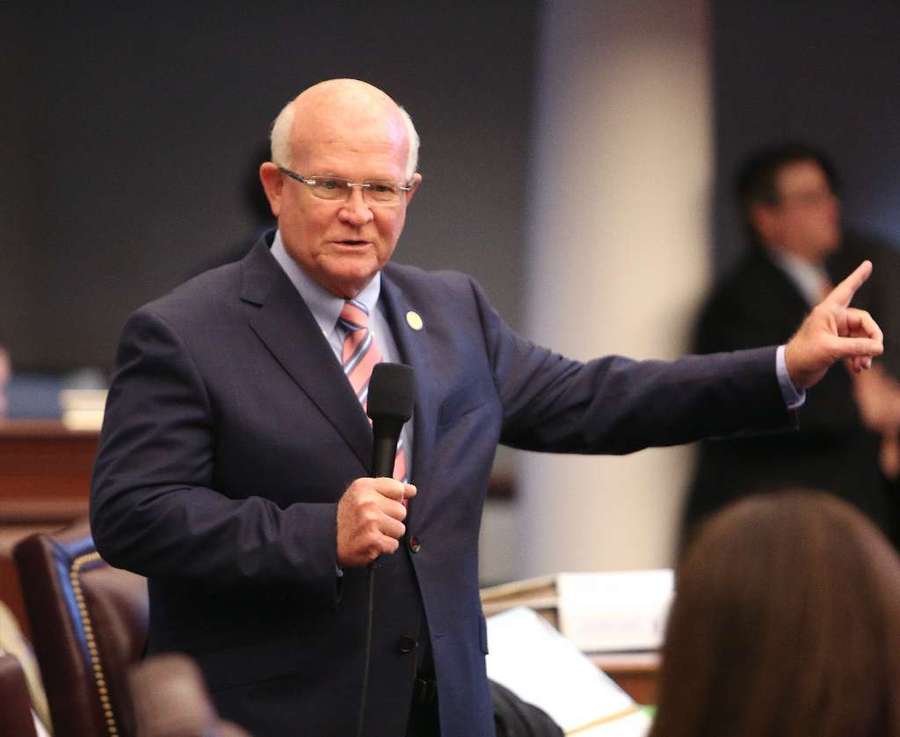
Sen. Dennis Baxley (R-Ocala) hopes to clear up dual enrollment issues during the next legislative session.
A new Florida law intended to eliminate multiple barriers to private and home school students who want to take dual enrollment classes has instead left potentially hundreds of students shut out of taking such courses because their private schools are asked to foot the bill.
Sen. Dennis Baxley, R-Ocala, who wrote the legislation on dual enrollment, wants to mitigate the issue in the upcoming legislative session.
Baxley said he will advocate for a separate pooled fund or cost sharing mechanism that could potentially be used to cover the costs of dual enrollment, removing the financial burden for colleges and private schools.
At the same time, Baxley said he is open to hearing other options from lawmakers about how to address the issue.
“I want to do whatever we can to close the gap so all students have access to dual enrollment,” he said.
Baxley, who was appointed last week by Senate President Bill Galvano to the Education Committee and the Appropriations Subcommittee on Education, said dual enrollment courses are vital to a student’s education.
“It is beneficial to move these students quicker to the finish line on college completion,” he said.
A change in the law in 2013 shifted the cost of dual enrollment programs from colleges to school districts. But it did not address private schools, meaning many of them now must absorb the cost of college courses for high school students.
The new provisions on dual enrollment were contained in a wide-ranging bill, HB 7055, which Gov. Rick Scott signed into law in March. They were expected to address the issue.
One of those provisions removed the requirement that articulation agreements – the documents that allow students to take certain classes at nearby colleges — must specify whether the private schools are responsible for tuition. But educators were not clear on whether that meant that colleges or the private schools would pay the costs of dual enrollment.
Private school officials were waiting this summer for clarification from the state Department of Education, but a recent memo on the bill did not address the provisions. DOE spokesperson Audrey Walden instead cited a memo from Madeline Pumariega, former chancellor of the Florida College System. Pumariega formally oversaw the state’s 28 public colleges, which many private school students attend when they participate in dual enrollment.
Pumariega wrote that even though the new law no longer requires compensation “as a minimum requirement for private school dual enrollment articulation agreements,” it does not prevent colleges from charging a private school for dual enrollment because “previous language (in the law) neither granted nor barred the charging of the private school.”
Dual enrollment by private school students has been declining, even before this year’s change in the law. According to the Florida Conference of Catholic Bishops, the number of students in private schools participating in dual enrollment has fallen by nearly 60 percent in recent years. In the 2011-2012 school year, more than 7,000 private school students participated in dual enrollment compared to only 3,026 in 2016-17.
James Herzog, who works on education policy for the Catholic Bishops Conference, said he is encouraged that Baxley would like to address the issue.
“That means a lot to the schools, the students and the hard-working families we serve,” he said.
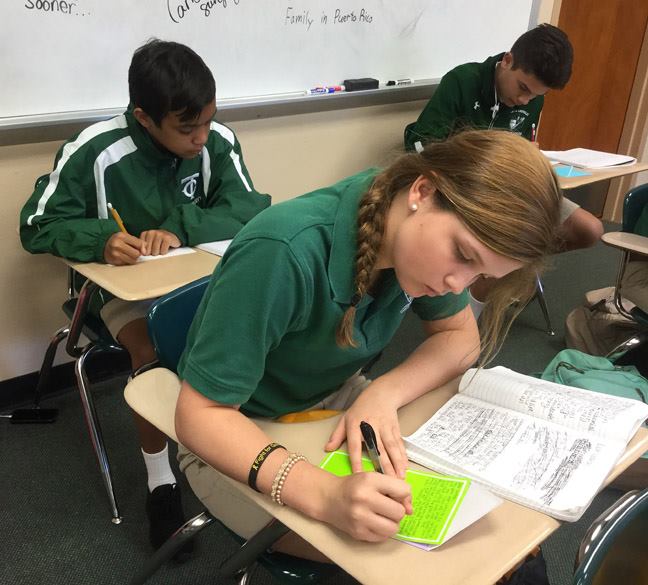
Tampa Catholic High School is one of many private schools where students take dual enrollment courses.
A new law aimed at giving private high school students greater access to college courses appears to be having the opposite effect, according to private school operators. Instead, potentially hundreds of students may be shut out of dual enrollment courses because their private schools are being asked to pay costs they can’t afford.
Tampa Catholic High School is a prime example. Principal Robert Lees said he was recently told that his long-term agreement with Hillsborough Community College, which allowed his school to offer dual enrollment classes at no cost to students, is now going to come with a $40,000 price tag beginning in 2019.
Said Lees: “Absorbing that cost on our end is not an option.”
The new provisions, contained in a wide-ranging law, HB 7055, that was signed into law in March, were designed to eliminate multiple barriers to private and home school students who want to take dual enrollment courses.
One of those provisions removed the requirement that articulation agreements – the documents that allow students to take certain classes at nearby colleges—must specify whether the private schools are responsible for tuition. But educators were not clear on whether that meant that colleges or the private schools would pay the costs of dual enrollment. (more…)
By Lloyd Dunkelberger
News Service of Florida
TALLAHASSEE — State colleges could face higher costs after a new law revamped the dual-enrollment program for students at private high schools who take courses at public colleges and universities.
Dual enrollment is an increasingly popular program that allows students from grades six through 12 to take post-secondary courses that help them complete high school as well as get a head start on college degrees.
More than 60,000 students are using the program to attend state and community colleges and state universities.
During the 2015-2016 academic year, 56,245 dual-enrollment students attended Florida’s 28 state and community colleges, an increase of 12.5 percent over the 2011-2012 year, according to the state Department of Education.
In 2015-2016, 5,842 dual-enrollment students attended Florida’s 12 universities, according to the state Board of Governors.
The program is popular, in part, because dual-enrollment students pay no tuition and the costs of textbooks are covered. (more…)
Mark Heller’s hands were tied.
The head of a private college preparatory school in north Tampa wanted to allow many of his students to dual-enroll in a course at a nearby college. But he knew the school could not absorb the costs.
“We couldn’t approve it,” he said. “You start getting 10 or 15 students, and you are talking" tens of thousands of dollars.
A change in the law in 2013 shifted the cost of dual enrollment programs from colleges to school districts. But it did not address private schools, meaning many of them now must absorb the cost of college courses for high school students themselves.
Since then, there has been a 60 percent drop in nonpublic students taking part in dual enrollment classes.
It has made it hard for schools like Heller’s — Academy at the Lakes — to give their students the opportunity to participate in dual enrollment.
Now, there is renewed hope, but still uncertainty. (more…)
Nathan Heekin, a seventh-grader at Assumption Catholic School in Jacksonville, recently told members of the Senate Education Committee that he hopes to start taking college classes before he finishes high school.
He has a wide variety of interests in subjects including science, engineering, world history and the military.
But a change in the law in 2013 shifted the cost of dual enrollment programs from colleges to school districts, and inadvertently took that option away.
The change created a dilemma for private schools.
The law says colleges cannot pass tuition and most fees for dual enrollment classes along to students. The guarantee of free access to college-level courses has helped make Florida a dual enrollment leader.
While some colleges still allow private school students to take classes free of charge, many private schools now receive bills of $72 per credit hour for students enrolled in college courses. Unlike public schools, they do not receive state per-pupil funding. This leaves private schools with two options: either find a way to foot the bill, or limit dual enrollment options.
Nathan's mother, Susan Heekin, told lawmakers the 2013 law change "has dampened this opportunity for all children and all private school students.”
In the years since the change, lawmakers have discussed measures intended to ensure dual enrollment access for private and homeschool students. But so far, they haven't passed. (more…)
Florida leads the nation in college completion by students who take advantage of dual enrollment, according to a new study from the Community College Research Center.
Dual enrollment enables students to enroll in college courses that also count toward their high school diplomas.
The study tracked more than 200,000 high school students nationally who took at least one community college course in the fall of 2010.
It found 88 percent of those students continued in college after high school. Most ended up earning a degree or certificate or transferred from a two-year college to four-year college within five years. (more…)
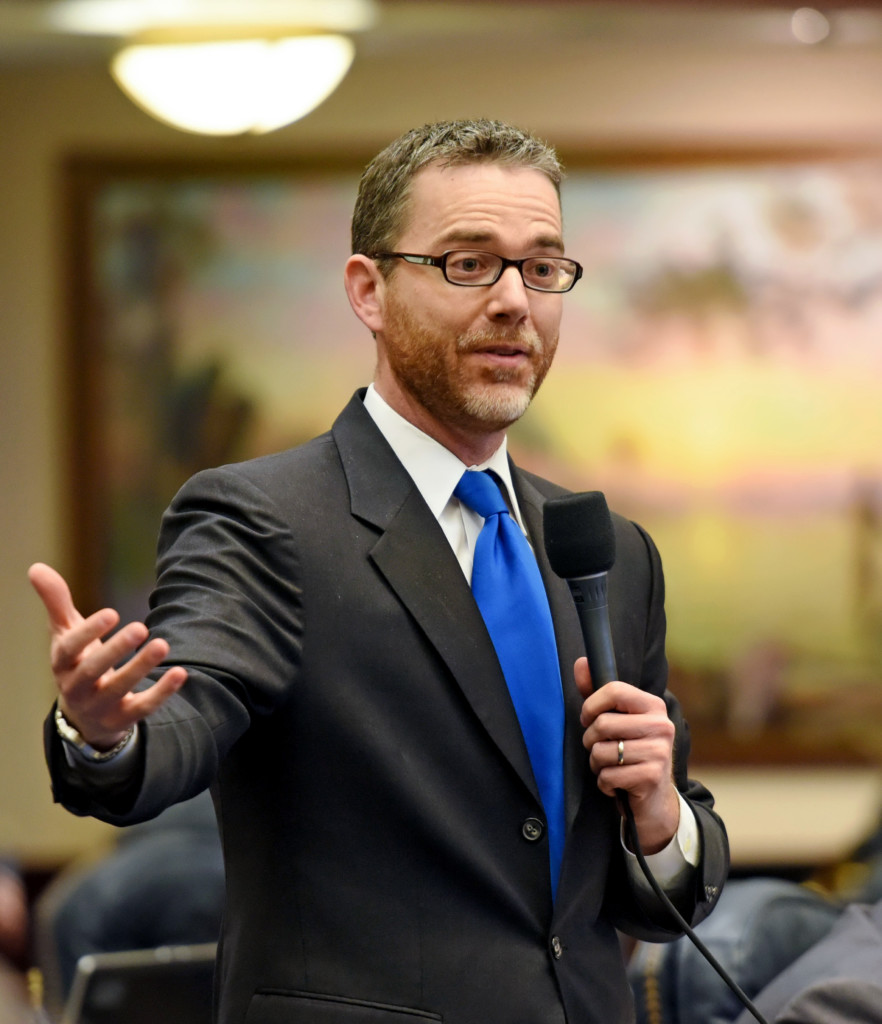
Eisnaugle
Home education students would have more access to college classes and career education programs under a bill approved this morning by a Florida House panel.
HB 1391 would allow homeschoolers to take career education courses offered by school districts. Public schools would be able to receive state per-pupil funding for courses they take.
The bill, along with a counterpart in the state Senate, would also require school districts to accept parents' home education registrations if they meet the requirements in state law.
Several parents told the committee that some districts have begun asking for information — like birth certificates and proof of residence — that go beyond what the law requires.
"They're taking the mindset, as we've tried to resolve this issue locally, that the law doesn't say they can't ask for additional documentation," said David Bosworth, a Broward County parent who's taught six children at home. As a result, he said, families can get stuck in administrative limbo trying to create home education programs for their children, even if they meet the requirements spelled out in state law.
The House bill also included provisions that would create textbook allowances for home school students who take dual enrollment courses at colleges or universities. Bill sponsor Eric Eisnaugle, R-Orlando, took those portions out of the bill today because they required money from the state budget.
But he said hoped the removal would be temporary. He said he wants to put home school students on equal footing with their counterparts in public schools, who don't have to pay for dual enrollment textbooks. (more…)
Florida has long been a leader in offering Advanced Placement, dual enrollment, and other programs that allow students to pursue college credits while they're still in high school.
But some state lawmakers say access to those options remains limited and uneven. Three bills advanced this week would expand access to college courses.
Collegiate high school overhaul
Sen. John Legg
On Tuesday, the Senate Education PreK-12 committee backed a bill by Sen. John Legg, R-Lutz that would stop school districts from limiting participation in acceleration programs offered by local community colleges.
In 2014, Legg authored a bill that required school districts and community colleges to give students in every Florida county access to a public collegiate high school program, which allowed students to complete up to two year's worth of college courses before graduation. But Legg said some districts have limited participation.
"Some of the school districts and state colleges have an enrollment cap of 25-30 kids," he told the committee, which he chairs. "What we wanted to do was make sure there was not an artificially low [limit on participation]."
He acknowledged the college programs can be costly for districts to operate, so SB 1076 would create a bonus system that would offer districts an extra half-student's worth of state per-pupil funding for every student who completes 30 college credit hours in the revamped acceleration programs. (more…)
The three-year push to fix a funding glitch that undermined some Florida students' access to college courses is set to continue in next year's legislative session.
State Sen. Kelli Stargel, R-Lakeland, has filed a bill (SB 824) that would require the state's community colleges to strike agreements with local private schools, allowing their high school students to take some college courses free of charge.
Dual enrollment allows students to take college courses that also count toward their high school diplomas. A 2013 law changed the way Florida funded the courses for public-school students, requiring school districts to foot more of the bill for courses their students took at local colleges.

