A “B” for teacher quality policies. That’s Florida’s grade, according to the National Center for Teacher Quality. That’s higher than any other state, notes the Gradebook.
 Bang for the buck. Florida students made some of the biggest gains in the nation on NAEP despite some of the smallest increases in ed funding, notes researcher Matthew Ladner at Jay P. Greene’s Blog.
Lawmakers’ ties to charter schools. WFTV in Orlando takes a look. The Tampa Bay Times did a similar but more detailed story last year.
Charter school facilities funding. The Fort Myers News Press takes a look at a task force’s recommendation to increase property taxes to pay for building construction and maintenance at charter schools. Redefined covers the Florida Charter Schools Conference where this was a topic yesterday.
Report on charter school growth. Miami Herald. StateImpact Florida. redefinED.
Promising charter on its way to Pinellas. With little comment, the Pinellas school board voted 7-0 Tuesday for a charter school application that dovetails with a legal settlement over black student achievement. Lots of history here; I wrote a bit about this earlier this week.
More questions in special needs student’s death. Tampa Bay Times.
(Image from simplystatedbusiness.com)
 Amendment 8 goes down. Coverage from Tampa Bay Times, Orlando Sentinel, Education Week, Associated Press.
More money for schools. In Miami-Dade, voters approve a $1.2 billion bond referendum for public schools, the Miami Herald reports. In Pinellas, they again approve a property tax increase aimed mostly at boosting teacher pay, reports the Tampa Bay Times.
Legislative races. In Central Florida, pro-school-choice Democrat Darren Soto wins a state Senate seat, while Democrat Karen Castor Dentel – a teacher targeted by that Jerry Sandusky ad – wins a House seat, the Orlando Sentinel reports.
Florida style reformer loses. Indiana state superintendent Tony Bennett, who championed Florida-like ed reforms and was a member of the Jeb Bush-backed Chiefs for Change, lost re-election in a stunner to Glenda Ritz, an elementary school media specialist. Stories here and here.
F-rated charter schools get another chance. Per unanimous votes Tuesday by the state Board of Education. Coverage from Orlando Sentinel, Gainesville Sun, Pensacola News Journal.
Jury awards charter principal $155 million. From the Miami Herald: “The ousted principal of an Aventura charter school has won a $155 million award in a lawsuit claiming her firing was not only without cause, but ruined her health and career prospects.” More from Education Week.
Criticism of tax credit scholarships. A mother complains about education quality at an Orange City private school that accepts tax credit scholarships, reports wftv.com.
 Between 1992 and 2009, the number of public school students nationwide grew by 17 percent while full-time school staff increased by 39 percent, according to a report released today by the Friedman Foundation for Educational Choice. But the extra employees didn't seem to do much good, the report continued, because student achievement nationally is flat.
The report suggests public schools could have saved tens of billions of dollars each year had staffing levels grown more modestly, with the savings plowed into higher teacher salaries, early childhood education or vouchers for low-income students.
Florida's public school student population increased 36 percent over that span, the report points out, while its teaching corps grew by 70 percent.
There's no doubt Florida's class-size reduction amendment, which voters approved in 2002, played a role. Unlike their national counterparts, Florida students have made respectable gains over the past 10 to 15 years, due to many factors that are tough to untangle.
In this era of expanding school choice, the report leaves us wondering: Will public dollars be spent more effectively in a system organized around customization?
More on staff growth in public education at the EdFly Blog and this recent Jay P. Greene op-ed in the Wall Street Journal.
 Having a judge determine how much money to spend on Florida schools and where to spend it is “an exercise in futility, and madness, and a waste of funds,” Florida Board of Education member Roberto Martinez said today.
Martinez’s comments came after a Department of Education attorney updated the board on a high-profile lawsuit that charges the board and lawmakers with violating state constitutional provisions for high quality schools. It was filed in 2009 by eight plaintiffs, including the Orlando-based parents group Fund Education Now. Last month, the Florida Supreme Court refused to block it from going to trial.
Martinez, a former U.S. attorney for the Southern District of Florida, is among the defendants. Here is what he had to say:
So basically they’re asking a sitting trial court judge in a county – in this case, Leon County – to tell 67 superintendents and the Board of Education, for example, how much funding to put into a particular program in a district, correct? Among other things? (The attorney says yes.)
I’ve probably been one of the most outspoken members on the board for more funding for education, funding for effective programs and I believe we need more of it. But to have a court judge, no matter how capable – and this is a capable jurist – be given the responsibility to determine how much money is adequate, in order to fund a particular service or program in a particular district in the state of Florida, is an exercise in madness. It is a ridiculous relief to request because at the end of the day, it cannot be implemented. It cannot. And in fact, a judge does not have the authority to tell the Legislature how much money to appropriate. They don’t make the funding decisions. (more…)
 To allegedly help parents understand Amendment 8, one of Florida's biggest school districts has distributed 69,000 fliers, punctuated by scary claims, in all of its school lobbies and reception areas. "VOTE ON NOVEMBER 6," they say. "Amendment 8 could impact your public school."
The Orange County school district tells redefinED the fliers don't cross the line into advocacy because they're for informational purposes and state, at the top, "IT'S YOUR DECISION." But the fliers are filled with the same misinformation being spread far and wide by the Florida Education Association, Florida School Boards Association and Fund Education Now - and left unchallenged by Florida journalists.
"If Amendment 8 passes, potentially billions of state dollars could be diverted from public schools," the flier says. "If Amendment 8 passes, public funds could be redirected into private hands by funding the education of hundreds of thousands of students in private and religious schools."
Not true. We've detailed why here and here. Amendment 8 would remove the no-aid to religion language in the Florida Constitution, which is a proposition that deserves debate. But to suggest it opens the door to private school vouchers is more than a stretch; it's wrong. Like the same claims made at school board meetings and in press releases, the ones on the district fliers don't offer any supporting evidence - and, as far as we can tell, no reporters have asked for any. In Florida, truth continues to go off the rails.
From the News Service of Florida a few minutes ago:
The president of the state's main teacher's union met Wednesday with Gov. Rick Scott, but said afterward he and the governor are taking it slow in terms of making up for years of ill will between the GOP and the union. "This is like dating – it's a second date," said Andy Ford, president of the Florida Education Association. "Not much has happened yet." Ford didn't discuss specifics in terms of where the union and the governor might find some common ground, but said the issues of money for education – Scott has said he doesn't want lawmakers to cut the schools budget – teacher evaluations, and what to do about the state's lowest performing schools all came up. It's the second meeting between Scott, who has said he wants to make education a priority, and Ford, who said he probably won't know until the legislative session whether the governor and the union may be able to agree on how to improve the education system. " We're always willing to sit down and have some conversation," Ford said. "The test will be during the session, on whether we have some success or not."
 Capping his week-long education "listening tour," Florida Gov. Rick Scott had dinner last night with Florida Education Association President Andy Ford and other teachers union officials. Tucked into this Palm Beach Post blog post about the first-ever get-together was this quote from Scott:
“I believe parents ought to have choice, I believe that’s good for them,” Scott said. “I believe in the public school system. I grew up in the public school system. It was good for me. The teachers had a dramatic, positive impact on the my life….Is choice good? Yeah. But let’s make sure we do it the right way. Is competition good? Sure, but let’s make sure we do it the right way.”
Without further details, it's hard to know what Scott was suggesting, if anything (but who could disagree with being thoughtful about school choice?). For what it's worth, it joins other interesting word choices from Scott in recent weeks, including one about "teaching to the test" and another about working with teachers.
After the dinner, Scott issued a statement saying he wanted to maintain if not increase state funding for education: (more…)
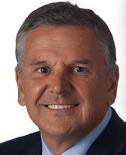
Chartrand
Florida is a national leader in expanding school choice. And the state's new top education official doesn’t see the momentum slowing, especially with low-income children.
“The train has left the station on school choice,” Gary Chartrand, 58, told redefinED by phone this week - his first media interview since being elected chair of the Florida Board of Education on Friday.
“I often say that freedom is abundant in America but it’s not universal. When you’re stuck in a broken system, and you’re poor, and you’re full of despair, and you only have one choice, and that choice happens to be an F school, that’s not freedom. And so I think the school choice movement is bringing more freedom, especially to the most under served children in the state of Florida.”
Chartrand, a Jacksonville businessman, takes a leadership role at an especially sensitive time. Funding, already low compared to other states, has been stagnant. Common Core standards are around the corner. Teacher evaluations are in flux. Criticism of the state’s accountability system is as loud as it’s ever been (which, after the Jeb Bush years, is saying a lot.) And now the board is looking for its fifth education commissioner in eight years.
At the same time, Florida has been a pace setter in academic gains for most of the past decade. Those shaping state ed policy have no plans to ease up on the gas.
Chartrand touched on a number of issues in the interview, which is attached below. Some highlights:
On his priorities as chair: “I am not proud of the fact that America is 17th in reading, 25th in math and 30th in science in the world. We used to be No. 1. And I believe that if this continues, we’ll undoubtedly lower our standard of living … And so I just have one goal: and that’s a quality education for all. We can do better. We must do better. We got to prepare our kids for a very rapidly changing world.”
On the best way to raise standards: “We’ve got to raise standards incrementally. I get a little concerned at times, and I always use the analogy of, if you can jump on a high bar six feet, you don’t raise it to seven feet and try to get over it. Because you’re not going to get over it. You raise it from 6 to 6-1, to 6-2, 6-3, and that’s how you incrementally improve, to continue to excel. And I think that’s what we need to do at the Department of Education.” (more…)
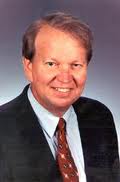 Former Florida House Speaker Jon Mills (pictured here) will now get his day in court, representing a group that has sued the state over both the funding and quality of public education. But the state Supreme Court’s decision on Tuesday to let the suit move forward also invites a more enticing legal debate: Does the constitutional requirement of “a uniform, efficient, safe, secure, and high quality system of free public schools” mean that every school must look the same?
That question may sound facetious, but unfortunately has judicial grounding. In 2006, the state high court invalidated Opportunity Scholarships by rejecting “separate private systems parallel to and in competition with the free public schools.” And the court didn’t stop there. It went further, arguing that “uniformity” calls for consistency in school accreditation, teacher certification and education qualifications, background screening for employees, academic standards, and curriculum in reading and history.
The question of school variety and choice might not sound like fodder for a case that’s primarily about money, but give Mills credit for being open to all interpretations of high quality. “The mission,” he said when the case was first filed in 2009, “is for students to have a good educational opportunity and to succeed, and it seems to me we need more options and not less.”
That is clearly the direction in which Florida is moving. (more…)
From the News Service of Florida:
THE CAPITAL, TALLAHASSEE, September 11, 2012..........A trial court will decide whether state lawmakers are adequately funding public education after the Florida Supreme Court turned aside a last-ditch effort by Senate President Mike Haridopolos to block the suit.
The Supreme Court's decision Tuesday largely hinged on a procedural issue. In November, the 1st District Court of Appeal issued a divided ruling, with eight judges voting to allow the case to go forward, though one of the judges differed with the other seven on the basis for that ruling. The other seven judges said the lawsuit should end.
Lawyers for Haridopolos, R-Merritt Island, said the Supreme Court should immediately step in and declare that the issue wasn't one the trial court should take up.
"The Court should clarify that the adequacy of the public school system is a political question outside the courts’ subject matter jurisdiction," said a brief filed in the case.
But even lawyers for House Speaker Dean Cannon, a Winter Park Republican who is also a defendant in the suit, said that wasn't necessary.
"The issue will undoubtedly be resolved by this Court eventually, but at present, the case is not ripe for review because of the District Court of Appeal's failure to reach a majority decision," lawyers for Cannon argued. (more…)

