 In the Legislature: Sen. Alexis Calatayud introduced legislation to create a Teachers Bill of Rights aimed at changing the rules around how teachers are certified, disciplined and investigated by state officials. SB 244 creates the Teacher Apprenticeship Program, introduces new eligibility criteria for the state's Dual Enrollment Educator Scholarship and creates new requirements for the state Department of Education's Board of Governor's to administer the new scholarships it made. It also provides new regulations for teachers mentorships. WFLA.
Around the state: Video of a brawl in Broward has stirred debate over filming fights, graduation rates declined in Leon and Collier, a lawsuit was filed against Saint Stephen's Episcopal School in Bradenton and an Escambia board member wants to revisit how the superintendent is chosen. Here are details about those stories and other developments from the state’s districts, private schools, and colleges and universities:
Miami-Dade: Pastor Lorenzo Johnson Sr. recalled when Miami-Dade schools were desegregated. Johnson and his siblings were among the first Black students to enter what was then an all-white elementary school — Earlington Heights in Northwest Miami-Dade. "I want Black kids to realize and understand the history, and where we came from," he said. CBS Miami.
Broward: When video of a brawl at Pembroke Pines High began to circulate, the principal let parents know that anyone involved could face discipline, including those who filmed it. But students have used videos to report incidents or provide evidence to administrators, authorities or their parents, and some question if punishing students sends a message to keep problems at school quiet. South Florida Sun-Sentinel.
Palm Beach: The school district here pays more than $70 million each year in salary supplements to teachers and staff members for things that include coaching athletics or holding advanced degrees. But a review of the system that tracks some of the payments found a lack of records of who approved them and a large number of people with access to the payroll. A preliminary review by the district's audit committee also found that people were overpaid thousands of dollars and that schools did not keep records of which employees were approved for supplemental pay. The Palm Beach Post.
Hillsborough: Rumors abounded among Hillsborough's Black community that an erased cemetery was on the southern edge of King High School's campus. In 2019, ground-penetrating radar found 145 of the nearly 270 graves that belonged to what was once marked as Ridgewood Cemetery, and nearly all were Black residents. On Monday, the school district unveiled a memorial marking the cemetery again. Tampa Bay Times.
Duval: A substitute teacher in Florida who posted a viral video of empty bookshelves in a school's library was let go from their job. Insider.
Brevard: The state released a report on student mental health awareness and training and found that as of last summer, only 24% of of more than 8,000 Brevard Public Schools personnel completed mental health training required for staff since the Parkland shooting in 2018. WKMG.
Volusia: The school district here announced that the Volusia United Educators instructional bargaining unit has ratified the proposed agreements with the district regarding supplements and salaries. About 96% of personnel who voted approved the ratification of the agreements, and the school board will vote on the agreement during an upcoming meeting. If approved, the agreement would be submitted to the Florida Department of Education for final approval and release of funds. Yahoo News.
Sarasota: Two proposed changes to school district policies here caused a stir at a school board meeting last week, with several people opposing the changes due to safety concerns. Sarasota Herald-Tribune.
Manatee: A lawsuit filed recently against Saint Stephen's Episcopal School in Bradenton accuses the private school's administration of negligence that resulted in the injury of a student. The suit, filed on Feb. 10, alleges that a resident's granddaughter was bullied, assaulted and strangled by another student while attending a Saint Stephen's aftercare program. Bradenton Herald.
Escambia: District 1 Board Member Kevin Adams announced he has plans to resurface a longtime debate over how the district's superintendent is chosen. Adams said he plans to bring a resolution to a school board meeting next month seeking a referendum that would decide if the superintendent is elected or appointed. The school board would need to vote in favor of asking to have the question put on the county ballot by the Escambia County Board of Commissioners. Pensacola News Journal.
Flagler: Superintendent Cathy Mittlestadt's future in the district is now less certain after the school board's latest discussion of her contract, which expires at the end of June. Flagler Live.
Graduation rates: Graduation rates for both Collier and Leon counties went down this year, according to data released by the Florida Department of Education. Naples Daily News.
Student charged: A 17-year-old boy accused of punching and kicking a Flagler county school employee unconscious over a Nintendo Switch last week will face charges as an adult. Brendan Depa will be transferred to adult court, where he faces an aggravated battery charge after the attack last week at Matanzas High. He is being held on $1 million bail, according to the Flagler County Jail. WKMG. Daytona Beach News-Journal.
Student loan debt: The Supreme Court is set to hear challenges to President Joe Biden's attempt to cancel student loan debt. NPR.
Opinions on schools: The ways college faculty think and feel about transfer students can hinder their success and contribute to education inequity. More generally, what professors and administrators think about students transferring between their colleges can provide a window into how faculty shape higher education in the U.S. Dr. Alexandra Logue, The 74th.
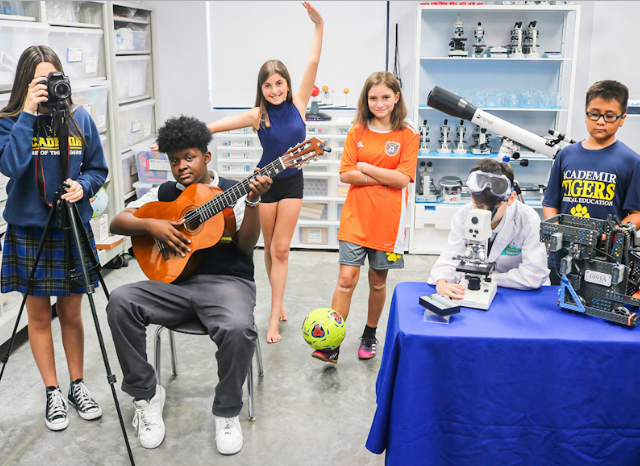
Ninety-eight percent of the 361 students at AcadeMir Charter School Middle in Miami, designated a National Blue Ribbon School, are Hispanic. The school promotes self-motivation in all subject areas, especially mathematics, science, reading and technology.
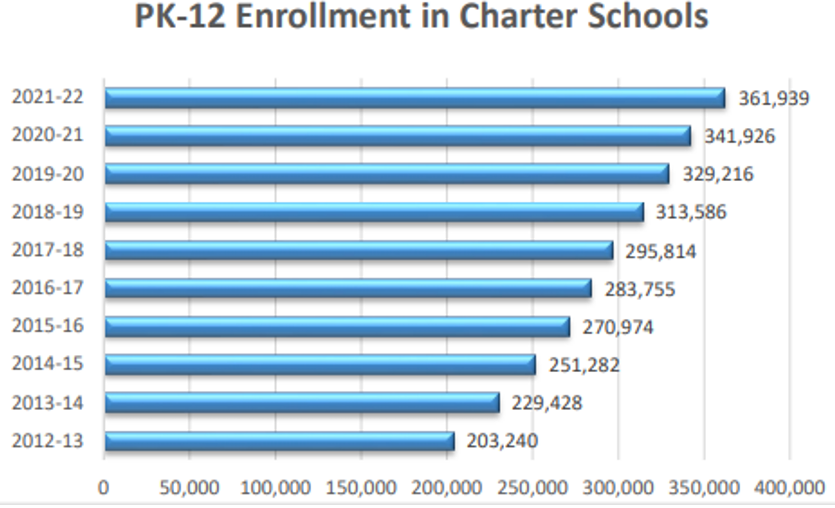
Charter school enrollment in the Sunshine State increased by 20,013 students in the 2021-22 school year according to data released by the Florida Department of Education.
More than 360,000 students enrolled in one of 703 charter schools, a growth of 5.8% over the prior year.
Unlike private schools, which suffered the first enrollment declines in a decade during the COVID-19 pandemic, charter schools, which are privately run tuition-free public schools, never saw a dip during that time, growing by 3.8% in the first year of the pandemic while home education grew by 35.2%.
 The Department reports that of the 51% of charter school students who qualify for free or reduced-price meals, 45.1% are Hispanic, 29.6% are white, and 18.8% are Black.
Like district-run public schools, charters are subject to state A-F grades. Forty-five percent of charter schools earned an “A” grade, 32% earned a “B,” and 26% earned a “C”. Only eight schools earned an “F” grade.
Unlike district-run public schools, charters can be shut down for consecutive “F” grades.
In 2021, 80 organizations applied to start a new charter school. Only 51.3% of those applications were approved according to Department. Charter schools are approved by their competing school districts but may appeal to the State Board of Education.
 Florida’s private school enrollment bounced back from the pandemic stronger and healthier than ever according to the Florida Department of Education’s latest annual report on private schools.
The report shows that after suffering the first enrollment declines in a decade, the number of students, staff and schools all increased significantly in the 2021-22 academic year. Last year’s staggering 33,500 student decline was erased as private school enrollment grew by more than 51,000 and reached 416,084 students, the largest private school enrollment reported by FLDOE in 30 years and likely the highest in Florida history.
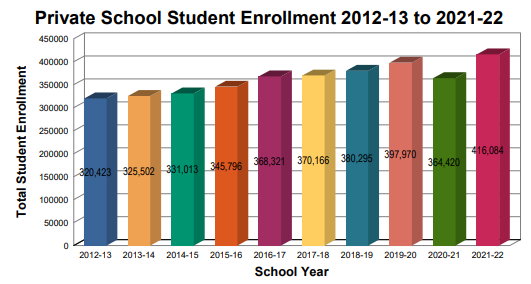
Private school enrollment grew by 14.2% this year, compared to 1.5% growth for public schools.
Private school students made up 12.8% of PK-12 students enrolled in public (including charter school and virtual schools) and private schools. This figure does not include students enrolled in home education.
Historic data show private school students made up 9.3% of PK-12 public and private school students in 1991-92 and peaked in 2002-03 at 12.9%.
The Department noted that private school enrollment exceeded 10% or more of public-private enrollment in 32 districts. The enrollment percentage was highest in Martin (40.6% of students), Jefferson (36% of students) and Miami-Dade (19.9% of students) and smallest in Calhoun (0%), Union (0.2%) and Sumter (1%).
Miami-Dade enrolled the most private school students (81,639), followed by Broward (45,493) and Orange (29,546).
Meanwhile, the Department reported private school employment increased from 43,553 instructional staff and administrators to 49,187, a growth of 12.9%.
The number of available private schools also bounced back, rising from 2,739 to 2,848 schools.

The Florida Board of Education unanimously confirmed South Florida state senator Manny Diaz Jr. as the state’s new education commissioner. Diaz, R-Hialeah, began his tenure June 1.
Editor’s note: This guest commentary, an exclusive to reimaginED, comes from James Herzog, director of legislative services at the Florida Association of Academic Nonpublic Schools.
On June 1, the first day of his tenure as Florida’s Commissioner of Education, Manny Diaz Jr. convened via video more than 20 education policy leaders to express his sincere gratitude for their hard work and signal his firm commitment to a renewed push for school choice.
The meeting, dubbed “A Conversation with Commissioner Diaz,” included representatives from independent, faith-based, charter and virtual schools along with key officials from the Florida Department of Education.
“We are going to keep our foot on the accelerator,” Diaz said. “There is no reason to try to think that we should rest on our laurels.”
Members of the Florida Association of Academic Nonpublic Schools who attended the meeting were greatly encouraged by the Commissioner’s remarks. Michael Barrett, Associate for Education at the Florida Conference of Catholic Bishops, was among those who expressed gratitude.
“Commissioner Diaz was a fantastic advocate for Florida’s education system during his time in the Legislature, and we look forward to continuing to work with him during his time at FLDOE,” Barret said.
Howard Burke, executive director of the Florida Association of Christian Colleges and Schools, observed that the meeting signaled Diaz’s desire for further expansion of parental choice for all children.
“The importance of including nonpublic school association leaders and key persons in an introductory meeting on his first day in office was to express his anticipation and assurance we will have a place at the table in fulfilling such goals,” Burke said.
Adam Emerson, newly appointed executive director of the Department’s Office of Independent Education and Parental Choice, served as moderator for the webinar. Joining Emerson was Jacob Oliva, Senior Chancellor at the Department, who assisted in facilitating the meeting.
Emerson sought to amplify earlier remarks from Diaz, reminding attendees that he has been “immersed” in the school choice movement for the last dozen or so years.
“The school choice movement as you have just heard is near and dear to my heart,” Emerson said.
He encouraged participants to contact him if they encounter barriers to school choice and student-centered policies.
Daniel Aqua, executive director of Teach Florida, which represents Jewish day schools in Florida, praised Diaz for his longstanding commitment to promoting school choice.
“Commissioner Diaz was the voice for nonpublic school students in the state Legislature for the past decade, and we are ecstatic to have him leading our state’s educational system,” Aqua said. “The fact that he included the nonpublic school coalition on his day one agenda gives us confidence that our children will be considered by the state’s educational infrastructure moving forward.”
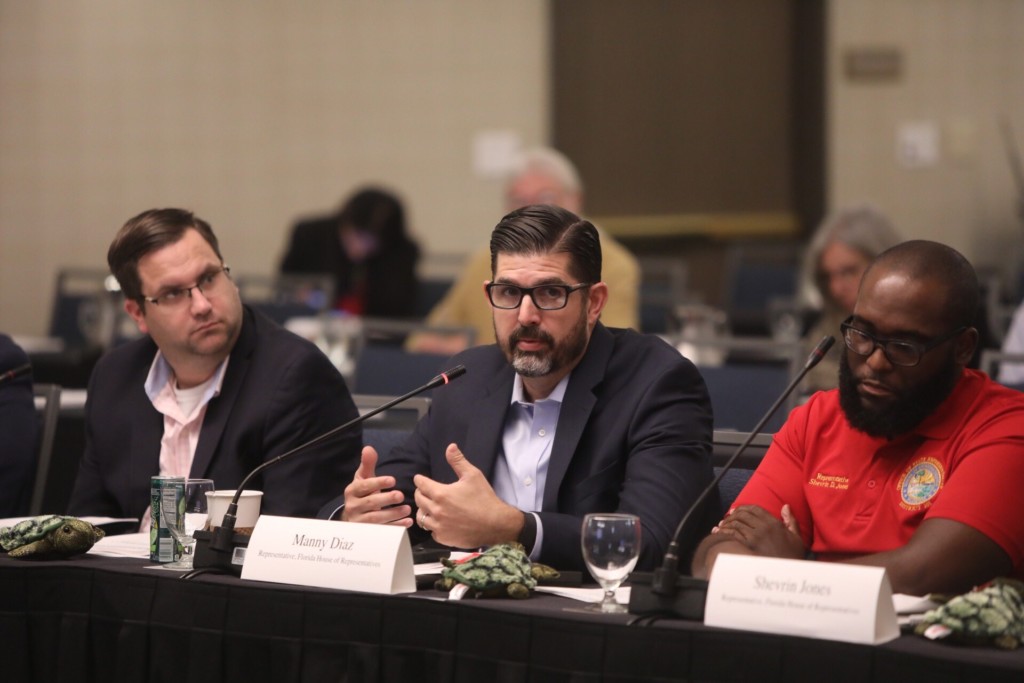
Editor's note: The Florida state board of education unanimously confirmed State Sen. Manny Diaz Jr., an education choice champion, as the state’s next Commissioner of Education on Friday. Diaz, R-Hialeah Gardens, has served in the Florida Legislature since he was elected to the House of Representatives in 2012. He won election to the Florida Senate in 2018 and has served as chairman of the Education Committee and as vice chairman of the Senate Education Appropriations Committee. During his service, Diaz has sponsored bills such as HB 7045 to expand existing education choice programs and supported the creation of new programs such as the Hope Scholarship. During the state Board of Education held to vote on Gov. Ron DeSantis’ recommendation of Diaz for the job, board chairman Tom Grady noted the lack of public opposition to Diaz’s confirmation. One of the speakers in support of his confirmation was former state Sen. Bill Montford, a Democrat who now heads the Florida Association of District Superintendents, called Diaz “a man of great integrity” who listens to opposing sides of an issue. After listening to accolades from the public, the board got to hear from the nominee. Here are excerpts of his remarks:
I’m so grateful to Governor DeSantis for his confidence and his recommendation to be here today. I appreciate the opportunity of having the chance to follow in the giant shoes that (Commissioner Richard Corcoran) leaves in this office, and I really appreciate all the kind words and those who traveled a long way and a short way to say those kind words in front of this esteemed board. It’s a great opportunity that I look forward to having spent my entire career in education. My approach to anything in life, whether it be work or anything else is a team approach…This is not about me. This is about the students in our state, the parents in our state and the governor’s thrust to keep education in the forefront. We can’t be complacent. The best defense is to go on offense, and we should always be on offense looking to improve the lives of the students of this state, and you can’t rest on your laurels. Things are constantly changing, especially in today’s day and age. And we’ll continue to be aggressive. I look forward to keeping my foot on the pedal. I don’t know any other way to function.
Diaz is set to start his new job on June 1.
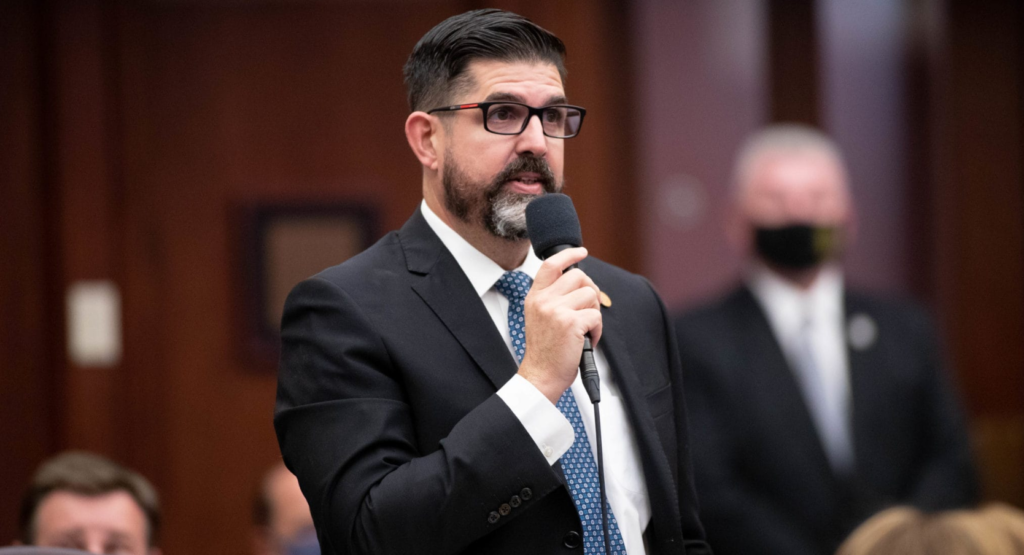 Florida Gov. Ron DeSantis has recommended education choice champion Manny Diaz Jr. to succeed Richard Corcoran as the state’s next education commissioner.
In making the announcement, DeSantis praised Diaz for his commitment to education issues ranging from teacher pay to parental rights and choice.
“Manny Diaz has done a great job in the Legislature fighting for educational choice and keeping indoctrination out of our schools,” DeSantis said in a released statement. “I am confident that he will serve our state well as the Commissioner of Education.
Diaz, R-Hialeah Gardens, has served in the Florida Legislature since he was elected to the House of Representatives in 2012. He won election to the Florida Senate in 2018 and has served as chairman of the Education Committee and as vice chairman of the Senate Education Appropriations Committee.
During his service, he has sponsored bills such HB 7045 to expand existing education choice programs and created new programs such as the Hope Scholarship.
In the most recent legislative session, Diaz sponsored Senate Bill 758, which is awaiting the governor’s signature. The bill would establish a statewide institute for charter school innovation and a statewide commission to review charter school applications. The bill also would prohibit the closing of charter schools “without cause” and exempt properties that allow charter schools to use their space from additional land use requirements.
Last year, Diaz introduced Senate Bill 48, which would have converted the state’s traditional scholarship programs to education savings accounts. The Legislature chose to adopt the House version of the bill, which nevertheless proved to be the nation’s largest expansion of education choice.
“Senator Diaz has long been a champion for using well-designed education choice programs to help public education fulfill the promise of equal opportunity,” Step Up For Students president Doug Tuthill said. “We’re looking forward to working with him in his new role.”
You can listen to a podcast with Tuthill and Diaz here.
The governor’s announcement drew praise from Senate President Wilton Simpson, who called Diaz as “a tremendous choice” and said his experience as an educator would serve him well in that role.
“I am confident Senator Diaz is the right leader as we continue to implement historic school choice initiatives that will increase competition within our public school system,” said Simpson, R-Spring Hill. “Senator Diaz is a proven leader with a track record of success. The Senate’s loss would be Florida’s gain with Senator Diaz as our commissioner of education.”
A native of South Florida, Diaz, now an administrator at Doral College, earned a bachelor’s degree in human resources in 1994 from St. Thomas University. He received a master’s degree in educational leadership in 1998 from Nova Southeastern University.
In 2006, Diaz completed a general education development program from the Harvard Graduate School of Education’s Summer Urban Principal’s Institute.
He and his wife, Jennifer, have four children.
Diaz must secure a vote from the Florida Board of Education before taking the position.
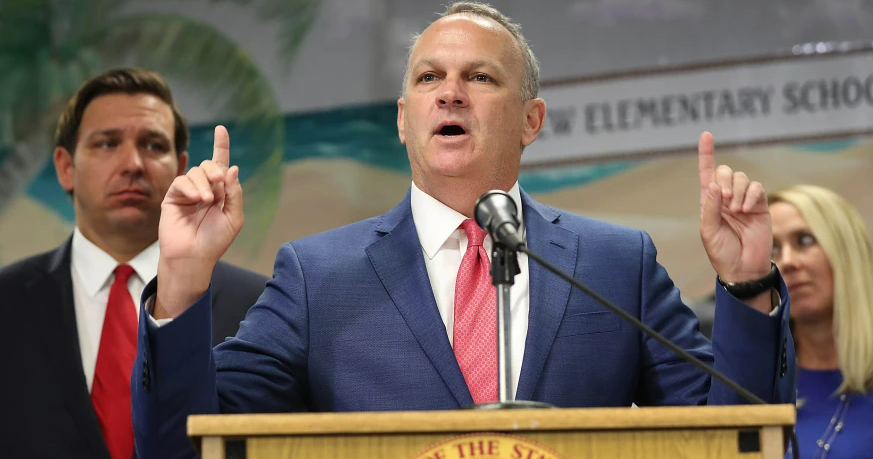 Editor's note: The following announcement was released earlier today by the Florida Department of Education's Communications Office.
Today, Commissioner of Education Richard Corcoran announced he will be stepping down from his position at the end of April. He has served as the Commissioner of Education for more than 3 years since his appointment in December 2018, and he has served the state continuously since 2010, including his time as a member and as speaker of the Florida House of Representatives. During his public service, Commissioner Corcoran has overseen historic education reforms in Florida that expanded school choice, eliminated common core, and invested record funding in students and teachers. Following his departure from the Department, Commissioner Corcoran will return to private life and looks forward to spending more time with his wife Anne and their six children.
“Richard has been a champion for students and families, and a great leader of the Department of Education,” said Governor Ron DeSantis. “He is driven by his principles and has never shied away from making the difficult decisions needed to improve the quality of education in Florida. During his tenure, both in the House and at the Department, our state has become an education juggernaut and national leader for innovation. We wish him well and thank him for his service.”
“Like the rest of the nation, Florida’s school districts have had to weather some of the greatest difficulties they have ever experienced over the past two years, and I couldn’t think of a better governor to serve,” said Commissioner Corcoran. “Governor DeSantis has been the governor Florida deserves – he has unquestionably been the right leader, at the right time, in the greatest state in the nation, and I thank him and the members of the State Board of Education from the bottom of my heart for the faith they have put in me. Florida’s students will unquestionably continue to thrive under Governor DeSantis’ leadership.”
Over the course of the last four momentous legislative sessions while at the helm of the Florida Department of Education, Florida has been the most student, parent, and teacher-friendly state in the nation – solidifying its position as the “Education State.”
Under the leadership of Governor DeSantis and Commissioner Corcoran, Florida has passed the most massive and historic education reforms in Florida’s history with the help and support of the Florida Legislature. During the tenure of Commissioner Corcoran, Florida has:
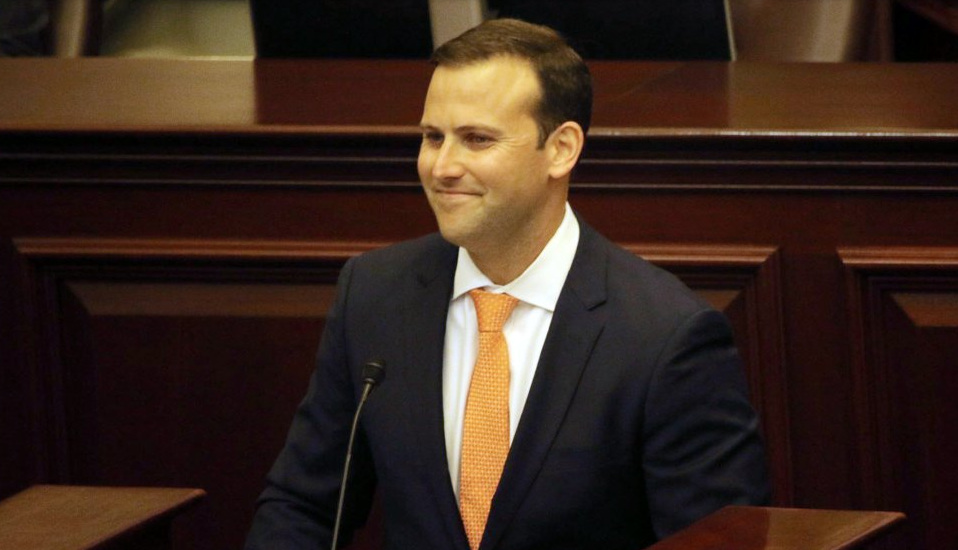 Editor’s note: Throughout the week, the Florida Department of Education is recognizing the 14th annual Celebrate Literacy Week, Florida! Florida House Speaker Chris Sprowls, R-Palm Harbor, joined Gov. Ron DeSantis and Florida Education Commissioner Richard Corcoran at a news conference at a Wakulla County elementary school to highlight the New Worlds Reading Initiative, a statewide book delivery system that sends one free book each month to students in kindergarten through fifth grade. More than 81,000 students have signed up for the $200 million program approved during the 2021 legislative session. Here are excerpts from Sprowls’ remarks. To see the news conference, click here.
The power of getting a new book and getting a child excited about reading, excited about learning about the characters inside the pages they are going to discover, is the reason the Florida House came up with the New Worlds Reading Initiative at the beginning of the last legislative session … Our principals and our teachers and our schools like this one have done such an amazing job in making sure our children are learning to read.
We’re proud to be fourth in the nation in fourth grade reading and making sure that we’re making those strides, but what really makes a state like Florida not just good, but great, is about our ability to acknowledge when we can be even better. And I think that’s what this initiative is all about.
When Education Commissioner Corcoran and the governor and I and others sat down and looked at the statistics in reading across our state, we found some alarming things. We realized that 88 percent of individuals who didn’t graduate from high school were struggling readers in third grade. We realized that 43 percent of kindergarteners were not reading at proficiency when they started in elementary school.
We realized that even though we’re doing better than so many of our national peers, it’d be 250 years if we kept on current trends to get to where we needed to be in reading proficiency in the state of Florida. And none of us thought that was good enough. Which is where you get the New Worlds Reading Initiative. It’s all designed because, if a child can read, they can learn. If they can learn, then anything is possible.
What we are doing in the state of Florida no other state has undertaken. No other state is taking a moon shot like the New Worlds Reading Initiative. And prioritizing the fact that we believe that every child has the opportunity to learn, to be successful, and to be on a pathway to prosperity.

More than $662 million in tax credit scholarships was awarded during the 2020-21 school year according to an enrollment report released by the Florida Department of Education.
The Florida Tax Credit Scholarship program enrolled 106,112 low- and middle-income students during the pandemic.
Step Up For Students, which hosts this blog, helped administer 104,143 scholarships, 98.1% of the total last year.
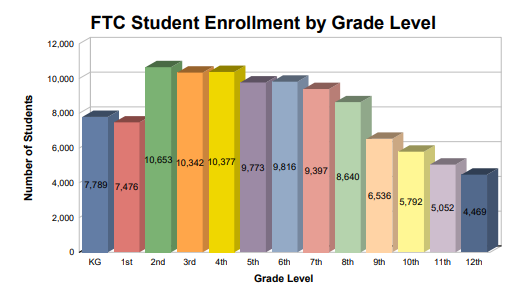 Miami-Dade County was home to 24,502 Florida Tax Credit Scholarship students, the largest enrollment of Florida’s counties.
Of all tax credit scholarship students, 73.4% were non-white and 67.6% were either Black or Hispanic. Hispanic students made up nearly 39% of the student population, while Black students made up 29%.
Florida Tax Credit Scholarship students attended 1,945 private schools in 64 of Florida’s 67 counties. Of those schools, 1,278 (65.7%) were religious. Nearly 82% of FTC students attended a religious school.
The Florida Tax Credit Scholarship was created in 2001 and served 15,585 students in 2002-03, the first full school year for the program. The scholarship was Florida’s third private school scholarship program and the first to be funded through private, tax-credited contributions.

