Testing for “voucher” kids. The Orlando Sentinel editorial board concludes tax credit scholarship students should take the same standardized tests as their public school peers: “Comparing apples to apples, scholastically speaking, will enhance transparency and accountability.”
 From Florida with love: A Florida education advocate named Lowell Levine gets extended mention in the latest Rick Hess column, a follow-up to a piece about the unfortunate politicization of Newtown. Levine tells Hess, in part: You just do not want to hear the truth ---it is writers like you who are in denial and contribute to violence in schools. You are a shame to your profession. Good by and have a great life------A$$@#%&!!!!!... I’m not sure if it’s the same guy, but a Lowell Levine in South Florida applied to be Florida ed commish and, according to the Palm Beach Post, founded an anti-bullying foundation.
Education funding. From a Miami Herald year-end-wrap-up editorial: “Investments in education pay off. That’s a lesson Gov. Rick Scott seems to be learning as he pushed to restore some of the K-12 funding that he previously cut.”
“Lower ed.” Former Florida Education Commissioner Gerard Robinson makes the year-in-review from Tampa Bay Times columnist John Romano.
Class size. Do districts need more flexibility? asks Gradebook. SchoolZone looks at compliance in Central Florida districts.
The year’s biggest education stories. According to StateImpact Florida. Amendment 8 is in there.
End of course exams. DOE will study the possibility of concordant scores for the Algebra I test, reports SchoolZone.
More Newtown repercussions. Armed deputies may be patrolling Alachua County elementary schools when students return Jan. 3, reports the Gainesville Sun.
Vouchers and accountability. Gov. Rick Scott’s call for “voucher” students to take the same standardized tests as public school students is long overdue, editorializes the Tampa Bay Times: “Voucher proponents can't have it both ways,” it concludes. “They can't claim they are a good bargain for taxpayers but then be unwilling to prove it.”
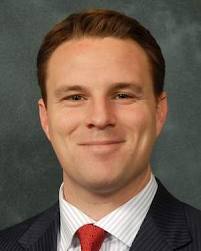
Weatherford
“Yes we are!” House Speaker Will Weatherford gives Tony Bennett a thumbs up on Twitter after a critical Tampa Bay Times column says the selection shows the state is doubling down on Jeb Bush ed reforms. Gradebook. A look at Bennett’s re-election upset in Indiana. Tampa Bay Times.
Home-schooled or truant? A Flagler County dad faces a criminal charge after not following requirements for home-schooling, reports the Daytona Beach News Herald.
Sex abuse lawsuits. Involving a former middle school teacher. Miami Herald.
Florida education officials recently posted a frank internal report about what led to the standardized testing flop that has consumed the ed reform debate for the past two months and sparked the biggest backlash yet against the state’s accountability system. Unfortunately, it received virtually no media coverage (one exception here), which is a bit head-scratching considering both the context and contents.
It essentially says, “We messed up.”
“The decision to make a significant change in scoring FCAT Writing in one year was flawed,” the report says. “Throughout the lifetime of the FCAT, there has never been such a dramatic change in scoring criteria in such a short time.”
Led by former Education Commissioner John Winn (pictured here), the just-the-facts review contrasts sharply with the bomb throwing from critics who fought change every step of the way and now deny progress, particularly for low-income and minority students. It is also, in a way, a good sign for the future – a reflection of leadership that is willing to admit mistakes and find remedies.
The report is humbling. It says the state moved too far, too fast in ramping up scoring criteria. External communication with school districts wasn’t strong enough. Internal communication with new Education Commissioner Gerard Robinson was lacking. Also, department staff didn’t move soon enough to determine potential impact of raising the bar: “Had this been done, perhaps the committee members and the Department would have changed the decision to move forward in less than a year.”
Robinson and other education officials have acknowledged some of these mistakes in general terms. But the report goes into more detail. It references confusion in a key July 5, 2011 memo to superintendents, and a year-long span in which the state Board of Education did not receive briefings about the changes. It points out that budget cuts forced the state to whittle away at a more optimal test design, and says transition at the top may have contributed to the communication problems. (After Gov. Rick Scott forced out former Commissioner Eric J. Smith, Winn stepped in as interim until the board hired Robinson.)
There’s no doubt the mistakes have undermined confidence in the state’s education system. It will require time and care to repair that. But it’s also true that many critics have gone beyond the kind of legitimate beefs soberly recounted in the report to flirt with demagoguery. (more…)
 Beginning Monday, we have a special treat for you at redefinED - commentary about how far we've come with school choice in Florida, and where we may be headed.
The prompt for this came at an April meeting of the Florida Alliance for Choices in Education, which includes many of the state’s choice groups. An alliance member noted the national spotlight had shifted in recent years to states like Indiana and Louisiana. Had Florida, so long on the cutting edge of the choice movement, lost some of its mojo?
Clearly, Florida remains a national leader and a national model. But the comment made us wonder. What will school choice in Florida look like in five or 10 years? How do we best continue expanding options so students benefit?
We turned to former Florida Gov. Jeb Bush, Education Commissioner Gerard Robinson and other leading voices for choice and asked. Graciously, they offered their thoughts and visions, which we’ll be running all next week.
Individually, the contributions are thoughtful and thought provoking. Collectively, they offer the outlines of a bigger picture – not just of the future of school choice in Florida, but of the future of public education.
First up on Monday: Commissioner Robinson.
 Florida: State Education Commissioner Gerard Robinson responds to newspaper questions about charter schools and vouchers. (Tampa Bay Times Gradebook blog) He suggest school choice critics have a double standard. (redefinED)
Wisconsin: Vouchers have become an issue in the Democratic primary for governor between candidates Tom Barrett and Kathleen Falk. (wispolitics.com)
South Carolina: Jeb Bush talks education reform and school choice at a summit for educators, lawmakers and business leaders. (Associated Press) Parents rally for choice as Legislature considers several proposals. (The State)
Connecticut: Public school choice lottery leaves thousands of Hartford-area students without the school of their choice. (Hartford Courant)
Virginia: State Board of Education approves the state's first full-time virtual school. (Richmond Times-Dispatch) (more…)
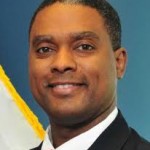 Do critics have a double standard when it comes to scrutinizing school choice options like charter schools and vouchers? Florida Education Commissioner Gerard Robinson suggested as much in an interview published today by the Tampa Bay Times’ Gradebook education blog.
In response to a question from the Times editorial board, Robinson noted that charter schools that struggle academically and/or financially can be shut down (in Florida, that has happened many times) but that same ultimate penalty is rarely leveled at traditional public schools (off hand, we can’t think of any examples in Florida). “For the bad charter schools that aren’t working, they should close,” Robinson said. “But for the traditional schools that have also failed a number of our kids, we don’t see the same level of righteous indignation.”
Robinson has deep roots in the school choice movement, having once served as president of the Black Alliance for Educational Options. And interestingly enough, the editorial board's questions focused mostly on choice options. Here are some other excerpts:
On testing accountability in voucher schools: “The private school curriculum isn't aligned to what we test on the FCAT (the Florida Comprehensive Assessment Test). So you're comparing apples to oranges. At the same time, there are the Stanford tests, there are Iowas, there are other tests you can take. So I'm not against assessment. What I am saying is, simply saying because they don't take the FCAT therefore they're not accountable is not correct.... “
On charter schools vs. magnet schools: “Charters and magnets both are theme schools. Charters and magnets both are public. And charters and magnets both take money. You often find magnets cost more than charters. But yet people say charters take money from public schools. People say charters are creaming the best and brightest kids. I can tell you from looking at the scores, that's not the case. And yet the magnet schools … are taking the best and brightest students … Magnet schools historically have been the largest public school choice program in the country, but also been more exclusive than other programs. And yet, all the angst we put on charters.”
On closing the achievement gap: “I've often said what you don't have is a political gap problem as much as you have a political crap problem. … If white kids are reading better than black, Latino, Hispanic or Native American kids, that's not a reading problem. We know what it takes to get kids proficient in reading. The question is, are we willing to make the tough decisions, political decisions, to get the right resources - human and financial - into the schools or after-school programs … to make it happen?”

