 Henry Fortier, superintendent of Catholic schools for the Orlando Diocese in Florida, offered a comeback today to a column by Orlando Sentinel columnist Scott Maxwell.
In his piece, entitled "Like zombies, school vouchers rise from dead," Maxwell wrote that the tax credit scholarship bill now awaiting Gov. Rick Scott's signature "isn't about reform."
"It's about taking money from public schools, shifting it to private ones — and not even making sure it's being spent properly or that kids are learning anything. And just like "Night of the Living Dead," that's darn scary."
In his response, Fortier highlighted Artayia Wesley, a scholarship student who attends Orlando's St. Andrew Catholic School, which is designated a Blue Ribbon School by the U.S. Department of Education. He also noted how the education landscape is changing in response to parental choice, and how those parents do hold private schools accountable. Here a few choice graphs:
Today's public-education students enjoy an expanding menu of options, including open enrollment, magnet programs, career academies, online courses, International Baccalaureate, charter schools and scholarships for disabled students.
There is no reason to view any of these options as being in conflict with one another, or any of them as an attack on the traditional neighborhood school. We know from numerous independent financial evaluations on the tax-credit scholarships that they save tax money that can be used to enhance district schools. We know from academic research that the public schools most impacted by the loss of scholarship students are themselves achieving commendable test-score gains for low-income students.
While the private schools that participate in the scholarship don't follow all the same rules and tests and grades as public schools, they are indeed held to account for how they spend their money and how well their students perform. (more…)
 Alabama: Cameron Smith, vice president of the Alabama Policy Institute, shows readers the students who benefit from the Alabama Accountability Act (AL.com).
Arizona: Gil Shapiro, a spokesman for FreeThought Arizona, says parents can't be trusted to home-school or choose a good school for their child (Arizona Daily Star). Linda Thomas, a member of the Oracle School Board, says parents can be trusted to pick a good school (Arizona Daily Star).
California: Larry Aubry at the Los Angeles Sentinel says charter schools are civil rights failures because they are more segregated than traditional public schools. Avery Bissett, a student at Chapman University, says vouchers would provide the state an inexpensive experiment on how to improve public education (Orange County Register).
D.C.: Scott Pearson, director of the D.C. Public Charter Schools Board, says charter schools have helped to improve public school performance (Washington Post).
Georgia: During a debate among Democratic candidates for the open state school chief position, state Rep. Alisha Thomas Morgan said she will "buck the Democratic party for the best interest of children" and supports charter schools and tuition tax-credit scholarships (Atlanta Journal-Constitution).
Florida: Denisha Merriweather, a former tax-credit scholarship student, tells her story (redefinED). Ron Matus, the editor of redefinED, dispels the myths surrounding the tax-credit scholarship program (Pensacola News Journal). Scott Maxwell, a columnist for the Orlando Sentinel, says public schools lose when students are allowed to transfer to private schools. Chris Guerrieri, a middle school teacher in Jacksonville, opposes private school vouchers because students aren't forced to attend private schools (St. Augustine Record). Jac Wilder VerSteeg, a journalist based in Palm Beach County, says parents don't know best when it comes to their own child's education (Sun-Sentinel). The Orlando Sentinel reaches out to readers and finds 51 percent support expanding school vouchers. Two private schools have been barred from receiving McKay vouchers for reporting students that never enrolled (Miami Herald). Virtual learning labs become more popular in Lee County (NBC 2). Education leaders in Miami-Dade approve what may become the state's largest charter school (Miami Herald). (more…)
Editor's note: This post originally ran as an op-ed in today's Pensacola News Journal, in response to this op-ed.
 Last week, parental choice in Florida reached a milestone, with the number of low-income students starting applications for tax credit scholarships this fall reaching 100,000.
The program’s popularity speaks to an untold story: how Florida parents are demanding more learning options for their children, and how the state, school districts and other providers are obliging them.
It is a sea change, and it brings complications worthy of scrutiny. But too often what we get, instead, are op-eds with so many distortions, it’s impossible to respond in 600 words. Here are basic points I hope readers will consider when criticisms surface.
The need for options. Florida public schools are making strides, especially with low-income students, but they need help. In 2013, low-income fourth-graders in Florida were number one among all states in reading, after being among the lowest-performers in the 1990s. Public schools deserve far more credit than they get for gains like this. But being number one still means only 27 percent are proficient.
The cherry picking myth. Scholarship students are required by law to take standardized tests (though few take the FCAT), with the results analyzed by Northwestern University researcher David Figlio. Contrary to statements in a recent op-ed, Figlio found those students “tend to be among the lowest-performing students in their prior school,” a trend that is “becoming stronger over time.” In other words, if private schools are out to cherry pick, they’re doing a lousy job.
Results. Figlio’s conclusion was also mangled in the op-ed. Here are his words, straight from his report: “… a cautious read of the weight of the available evidence suggests that the FTC Scholarship Program has boosted student performance in public schools statewide, that the program draws disproportionately low income, poorly-performing students from the public schools into the private schools, and that the students who moved perform as well or better once they move to the private schools.”
The draining myth. The scholarships don’t hurt public school funding. Many think they do, and in a state that ranks low in per-pupil spending, that’s a killer. But the truth is, taxpayers pay about half as much per scholarship as they do per student in public school. The scholarship is $4,880 this year; it’ll be $5,272 next year. Seven different analyses conclude the program does not drain public school funding. Not a single one concludes it does. (more…)
Arizona: Amy Silverman, a journalist at the Phoenix New Times, says charter schools lead to segregation for special needs students (note: the state has two private school scholarship programs for special needs students).
California: All candidates seeking to fill a vacant school board seat in Los Angeles agree on the value of public charter schools (LA School Report).
Florida: Sherman Dorn, a professor at Arizona State, ponders why there has been no constitutional challenges to the Florida Tax Credit Scholarship Program or the state's other voucher programs. The American Civil Liberties Union is filing a complaint to stop single gender schools (redefinED). State Impact looks at some of the research on single gender schools. U.S. Rep. Dan Webster, R-Orlando, explains why he supports charter schools (Sunshine State News). The Duval County School District may lose up 3 percent of its total enrollment to charter schools over the next decade (Florida Times-Union).
The Legislature sends the tax-credit scholarship expansion bill to Gov. Rick Scot (Heartlander). The teachers union asks the governor to veto it (Orlando Sentinel, Tampa Bay Times). A record-setting 100,000 students have started applications for tax-credit scholarships (redefinED). Chris Guerrieri, a public school teacher and education choice opponent living in Jacksonville, makes many negative claims about parental choice and Step Up for Students (which co-hosts this blog) (Gainesville Sun, Pensacola News-Journal).
Georgia: The Atlantic Public School District is negotiating a compact with local charter schools to encourage collaboration (WABE Public Radio). The number of charter schools that must hold admission lotteries grows as waiting lists increase (The Telegraph).
Louisiana: A bill to allow students in low-performing public schools to transfer to higher-performing schools advances (Associated Press). Traditional public and charter schools in New Orleans look to expand the use of technology in the classroom (Hechinger Report). U.S. Sen. Mary Landrieu, a Democrat, supports charter schools and believes every child should have the right to attend one if they wish (CNN). Two bills that would negatively impact charter schools fail to pass out of committee (The Advertiser). Kenyatta Collins, a high school student attending a charter school in New Orleans, says her school focuses too much on discipline and not enough on academics (Time). (more…)
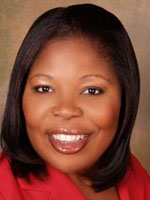
Rep. Campbell
Editor's note: Florida state Rep. Daphne Campbell, D-Miami, was the only House Democrat to vote this month for a school choice bill to strengthen and expand tax credit scholarships. In an op-ed over the weekend for the Miami Herald, she writes that the Florida Democratic Party pressured her to vote against it. She asks, "If not for these desperate underprivileged families, for whom does my party expect me to fight?" Here's some of Rep. Campbell's piece:
Florida offers a scholarship just for low-income children, and my party this year insisted that I vote against it.
Never mind that it gives these children some legitimate learning options. Never mind that the beneficiaries are mostly black or Hispanic and live barely above poverty. Never mind that I’m a Haitian-American nurse and lawmaker who represents a North Miami district that is almost 90-percent black and Hispanic.
My vote recently to strengthen Tax Credit Scholarships for these students was treated as an act of defiance by the state House Democratic Caucus. The whole episode makes me wonder: If not for these desperate underprivileged families, for whom does my party expect me to fight?
This scholarship is an alternative for the children who tend to struggle the most in education, and it is serving 59,765 students in 1,425 private schools this year. The news about the program is uniformly good: Their standardized scores show us they are achieving the same gains academically as students of all incomes nationally; the public schools most affected by the loss of students to the scholarship are themselves showing impressive academic gains; and the scholarship is small enough, $4,880 this year, that it saves tax money that can be spent on traditional public schools.
In my own district, I have seen some of these schools turn around the lives of children who were headed in the wrong direction, and I proudly helped Ebenezer Christian Academy build a new facility that furthers its mission in the community.
None of this seemed to matter to the party this session. Nor did it matter that Democrats have routinely voted for the scholarship in the past, including nearly half the caucus for a major expansion in 2010. Instead, I was accused of being anti-public education. The reality is that I was parting ways with the Florida Education Association, which threatens Democrats with primary opponents if they support any school option that is not under the union’s collective bargaining agreement.
This is most unfortunate, because parents don’t care so much about who runs the school or whether the teachers are union members. They’re simply looking for options that work best for their own children and, in this environment, there is no conflict between public and private.
Read the full op-ed here.
Despite the efforts of private schools and some lawmakers, the Florida Legislature this spring didn’t resolve concerns that more private schools could end up paying for their high school students’ dual enrollment courses.
Last year, the Legislature changed the way the state funds dual enrollment courses, requiring school districts to pick up the tab for courses their students took on college campuses. That led to concerns that private schools could face similar charges, potentially reducing their students' access.
Potential remedies were floated during the recently concluded session, but didn’t stick.
The House, for example, proposed adding language to state law ensuring private schools would be exempt from any of those payment provisions.
Private-school supporters spent the final week of the session emailing and calling legislators. But in the end, the plan to exempt private schools from the payment requirement did not prevail, nor did separate
legislative efforts by Sen. Kelli Stargel, R-Lakeland.
The final legislation did make some tweaks, though. It provided, for example, that the Legislature could cover the cost of dual enrollment courses taken over the summer.
While it's not clear what the impact will be for private school students, James Herzog, the associate director for education at the Florida Conference of Catholic Bishops, said he was worried it could create a "chilling effect" if more colleges start billing private schools for the costs of dual enrollment courses.
Howard Burke of the Florida Association of Christian Colleges and Schools said parents of private school students should be able to enroll their children in the same college-credit courses as their public school peers.
"They're paying the same taxes the public school child's parents are paying that have dual enrollment," he said. "They should have equal access."
While school choice in Florida has continued to mature, the array of options - and the information parents receive - can vary greatly from one school district to the next.
That's one of the findings from a recent report produced by the state Department of Education, which is intended to measure school districts' compliance with state school choice policies.
The data can be surprising. The proliferation of charter schools might get a lot of ink in Florida's seven largest urban districts. But as a percentage of enrollment, they play a larger role in a handful of rural areas and exurban enclaves.
In Franklin County, a single charter school serves nearly half the district's students. In Glades County, a K-8 devoted to preserving the traditions of the Seminole Tribe serves nearly 15 percent of the student population - a larger proportion than urban Miami-Dade (where charters serve about 13 percent of students) or Palm Beach (7 percent).
The enrollment figures are from last fall, and they're derived from the last enrollment survey of the 2012-13 school year. They paint a nuanced picture of a state where more than a million students take part in some kind of educational choice program.

In 13 Florida school districts, charter schools make up 10 percent or more of total school enrollment - an example of the variation in school choice options from one county to another. Source: DOE 2012-13 survey 5, choice access report (2014).
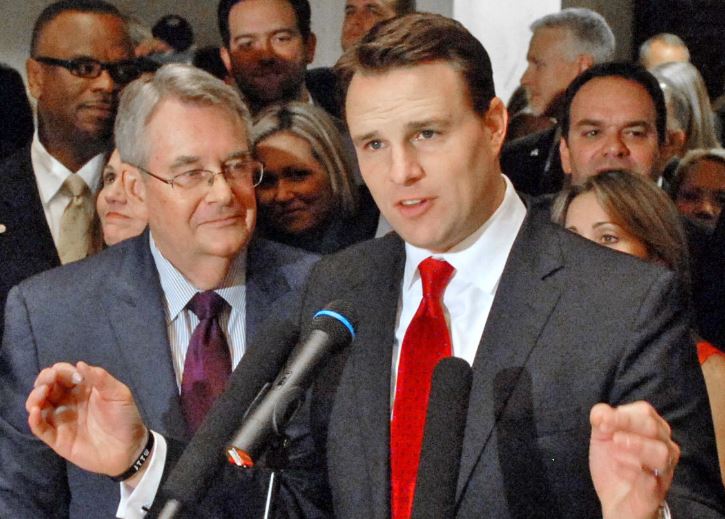
President Gaetz (left) and Speaker Weatherford
One called for more expansion. The other, for more accountability.
This spring, intentionally or not, Florida legislative leaders highlighted twin themes for the state's parental school choice programs that not only marked the session that ended last week, but will define many more to come.
It was House Speaker Will Weatherford who stressed the former. He touched off one of the most rancorous debates of Florida's 2014 legislative session when, more than a month before it began, he called for a "massive expansion" of education options for parents.
And it was Senate President Don Gaetz, halfway through the session, who offered the yin to Weatherford’s yang, explaining the Senate's push for new accountability measures for the tax credit scholarship program.
“The program has grown to a place where it is no longer an experiment,” he told the Associated Press. “It is no longer a pilot. It is an accepted way for families to exercise choice in education.”
Whether they're talking about charter schools or private-school scholarships, that's been the reality for the past two legislative sessions under Gaetz and Weatherford: School choice is no longer an experiment. It’s now mainstream. It will continue to grow. But as it does, questions have shifted from whether parental choice programs should be allowed to expand to how best to regulate them, how to create more attractive options in the traditional public school system, and what the next phase of experimentation should look like.
These are questions that will increasingly emerge in other states, but Florida is ahead of the curve. It ranks at or near the top in enrollment for charter schools, virtual schools and private schools via vouchers and tax credit scholarships, and there are no signs of slowing.
The shifting focus cuts across all sectors. Take charter schools.
This year, the Senate opted not to pass a major charter school bill. Sen. John Legg, R-Trinity, the chairman of the Senate Education Committee, said that was in part because lawmakers were waiting to see the effects of changes they passed last year, including a bill requiring the Department of Education to create a model charter contract for school districts.
Last year's law also brought charters under more financial scrutiny. The effort was supported by some charter school advocates who wanted to prevent cases, like a handful of high-profile ones from Central Florida, from damaging a movement that is getting more attention as it takes on a larger share of Florida's school enrollment.
"I think the growth of charter schools is going to bring more scrutiny to the charter schools themselves," Wayne Blanton, executive director of the Florida School Boards Association, said in an interview. "They're going to come eventually under the same microscope that we are."
 We followed a number of school choice issues during the course of Florida's 60-day legislative session, and most of them were resolved during the last few days. Here's a look at which choice-related bills and ideas are making their way to Gov. Rick Scott's desk, and which are not.
Personal learning accounts: Florida could soon become the second state in the nation (after Arizona) to offer students an account-based school choice option. The state budget sets aside $18.4 million for scholarship accounts, which would be aimed at special needs students and administered by scholarship funding organizations like Step Up For Students, which co-hosts this blog. The accounts could be used to reimburse parents for therapies or other educational needs for their children.
Tax credit scholarships: The same piece of legislation that would create personal learning accounts, SB 850, would expand eligibility for tax credit scholarships by creating new partial scholarships for students with household incomes up to about $62,000 for a family of four. It would also create new accountability requirements for scholarship funding organizations.
Collegiate high schools: SB 850 would also expand collegiate high schools, which allow students to complete up to a year's worth of college credits though dual enrollment. Community colleges would be required to offer a collegiate high school program through each school district in their service area.
Career education: The same legislation would also do away with the $60 million statewide cap on bonuses for schools where students earn industry certifications, increasing the financial incentive for school districts to expand career academies. It also expands industry-certification opportunities for students in elementary and middle school.
Digital learning: This year's education funding legislation would overhaul the way the state plans and pays for school technology. It would require school districts and the state to come up with five-year technology plans, which will be tied to student performance and used to guide their spending of a new $40 million "digital classrooms allocation" - an amount that could increase in future years.
Single-gender schools: Lawmakers approved legislation creating requirements for single-gender school programs, and provided some seed money to help them train teachers and prepare for an expansion around the state.
Charter schools: This wasn't the year for a bill aimed at requiring standard charter-school contracts and bolstering efforts to attract new charter operators from outside the state. It passed the House but not the Senate. The bill foundered in part because some lawmakers in the Senate wanted to give the state more time to implement last year's charter school bill.
Dual enrollment: Last year's push to overhaul the way the state funds dual enrollment courses created a financial dilemma for private schools. Efforts to address that issue by exempting private schools from payment requirements did not make their way into law.
Virtual school: A proposed overhaul of Florida Virtual School's funding model did not make its way into law, and no bill passed this session would address the funding of virtual courses taken by students with McKay scholarships. Virtual schools are expected to receive a slight funding increase in next year's budget.
Extracurricular activities: A House bill opening more school district extracurricular activities to home-school, private school and virtual school students did not pass the Senate.
Early learning: Legislation creating tighter regulations for early learning providers died in the waning hours of the session after volleying between the House and Senate, despite passing both chambers unanimously at different points. Voluntary prekindergarten - the state's largest private school choice program - did receive a slight funding increase, its first in nearly six years.
Editor’s note: Legislation to expand and strengthen the Florida tax credit scholarship program, and to create education savings accounts for special-needs students, cleared the Senate Friday on a 29-11 vote and is now headed to Gov. Rick Scott. Three Senate Democrats voted yes for parental choice, despite tremendous pressure this year to tow the party line: Sen. Jeremy Ring, D-Margate; Sen. Gwen Margolis, D-Miami; and Sen. Darren Soto, D-Kissimmee. In his remarks on the Senate floor, Ring noted the pressure but said he was proud and thrilled to support the bill. Here are his remarks in full. (The scholarship program is administered by Step Up For Students, which co-hosts this blog.)
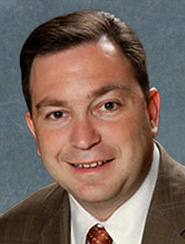
Sen. Ring
So I’m going to take this a little bit out of Republican versus Democrat discussion, and talk a little bit about generational issues. Some of us in this room are at that age where we have young children. And we’re seeing an epidemic that I think hasn’t been addressed on the cure and why, that some of us older probably couldn’t imagine what our world can be like today. Some of you have grandkids and you can understand it from that standpoint. But as parents today, young children, their life is very different. Fifteen, 20 years ago, autism in this country was 1 in 15,000. For whatever reason, and this is not part of the debate, today it’s down to 1 in 50 on the spectrum. That doesn’t include kids with Down syndrome, cerebral palsy … ADHD, and any other development disorder that has become prevalent and epidemic in our society.
We’re at a point where things change. And the word voucher is such an ugly word but it doesn’t need to be. Because it’s not about that. It really isn’t. It’s about where we are in our world today, or what we as parents of young children have to face every single day. You know, to me, progressive means we change with the times. And changing with the times is being realistic of what we as parents have to face daily with our kids and these sorts of challenges.
I can’t, no matter what the political ramifications may be, the thought of going home and voting against a bill that puts these children on a path for equalization, for normalization, to get a degree – no matter what the political ramification is, to me this is where policy outstrips politics every single time. You know, my first year here I voted against a corporate income tax (scholarship program). And I got home, and I was invited by a number of the schools to come visit. Come see. Not spend a lot of time like you do in the public schools, but come visit our school.
And I went to visit a lot of schools. And I saw a lot of these kids. Many of them had, you know, profound developmental disabilities. Many of them came from, weren’t developmentally disabled, but they came from terribly impoverished backgrounds. And all of these kids were at one point in the public school system. And as far as I could see, every kid I saw was thriving.
I came back after that, and vowed I’d never vote against the corporate income tax (scholarship program) again. And I haven’t. And I’ve had a couple elections since then. It’s not been an issue. Hasn’t been an issue one bit for me. (more…)

