 Beginning Monday, we have a special treat for you at redefinED - commentary about how far we've come with school choice in Florida, and where we may be headed.
The prompt for this came at an April meeting of the Florida Alliance for Choices in Education, which includes many of the state’s choice groups. An alliance member noted the national spotlight had shifted in recent years to states like Indiana and Louisiana. Had Florida, so long on the cutting edge of the choice movement, lost some of its mojo?
Clearly, Florida remains a national leader and a national model. But the comment made us wonder. What will school choice in Florida look like in five or 10 years? How do we best continue expanding options so students benefit?
We turned to former Florida Gov. Jeb Bush, Education Commissioner Gerard Robinson and other leading voices for choice and asked. Graciously, they offered their thoughts and visions, which we’ll be running all next week.
Individually, the contributions are thoughtful and thought provoking. Collectively, they offer the outlines of a bigger picture – not just of the future of school choice in Florida, but of the future of public education.
First up on Monday: Commissioner Robinson.
 Florida: State Education Commissioner Gerard Robinson responds to newspaper questions about charter schools and vouchers. (Tampa Bay Times Gradebook blog) He suggest school choice critics have a double standard. (redefinED)
Wisconsin: Vouchers have become an issue in the Democratic primary for governor between candidates Tom Barrett and Kathleen Falk. (wispolitics.com)
South Carolina: Jeb Bush talks education reform and school choice at a summit for educators, lawmakers and business leaders. (Associated Press) Parents rally for choice as Legislature considers several proposals. (The State)
Connecticut: Public school choice lottery leaves thousands of Hartford-area students without the school of their choice. (Hartford Courant)
Virginia: State Board of Education approves the state's first full-time virtual school. (Richmond Times-Dispatch) (more…)
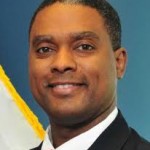 Do critics have a double standard when it comes to scrutinizing school choice options like charter schools and vouchers? Florida Education Commissioner Gerard Robinson suggested as much in an interview published today by the Tampa Bay Times’ Gradebook education blog.
In response to a question from the Times editorial board, Robinson noted that charter schools that struggle academically and/or financially can be shut down (in Florida, that has happened many times) but that same ultimate penalty is rarely leveled at traditional public schools (off hand, we can’t think of any examples in Florida). “For the bad charter schools that aren’t working, they should close,” Robinson said. “But for the traditional schools that have also failed a number of our kids, we don’t see the same level of righteous indignation.”
Robinson has deep roots in the school choice movement, having once served as president of the Black Alliance for Educational Options. And interestingly enough, the editorial board's questions focused mostly on choice options. Here are some other excerpts:
On testing accountability in voucher schools: “The private school curriculum isn't aligned to what we test on the FCAT (the Florida Comprehensive Assessment Test). So you're comparing apples to oranges. At the same time, there are the Stanford tests, there are Iowas, there are other tests you can take. So I'm not against assessment. What I am saying is, simply saying because they don't take the FCAT therefore they're not accountable is not correct.... “
On charter schools vs. magnet schools: “Charters and magnets both are theme schools. Charters and magnets both are public. And charters and magnets both take money. You often find magnets cost more than charters. But yet people say charters take money from public schools. People say charters are creaming the best and brightest kids. I can tell you from looking at the scores, that's not the case. And yet the magnet schools … are taking the best and brightest students … Magnet schools historically have been the largest public school choice program in the country, but also been more exclusive than other programs. And yet, all the angst we put on charters.”
On closing the achievement gap: “I've often said what you don't have is a political gap problem as much as you have a political crap problem. … If white kids are reading better than black, Latino, Hispanic or Native American kids, that's not a reading problem. We know what it takes to get kids proficient in reading. The question is, are we willing to make the tough decisions, political decisions, to get the right resources - human and financial - into the schools or after-school programs … to make it happen?”
The St. Petersburg Times' education blog, The Gradebook, just landed what looks to be the first interview with Florida's newly appointed education chief, Gerard Robinson, the former president of the Black Alliance for Education Options and secretary of education in Virginia. The Gradebook noted that Robinson's support of charter schools and school vouchers has created some early buzz, but Robinson urged his critics to look at the issue of school choice more broadly:
When we think about it, we only think about it in terms of charters and vouchers. We don't accept the fact that the largest school choice programs in the country are parents that put their children in good public schools that work. Magnet schools have been in place a long time before charters and that. So I don't want to allow the school choice issue to be pigeonholed into just one issue, vouchers and charters. What I am for is quality education.
The work in Virginia expanded beyond charters. The work in other areas expanded beyond vouchers. For me, I am interested in making sure that parents, or taxpayers and others, have access to great public school systems. Florida has a great private school sector. It also has a great virtual school perspective. Guess what? Those are all aspects of school choice. But when we talk about the issue, we try to focus on what someone said about a contentious aspect of it, as surely there are. But there are contentious aspects of the traditional system that long preceded vouchers and charters.
Every good leader knows how to spot an individual capable of transformational change, and Howard Fuller saw that in Gerard Robinson nearly 10 years ago. Robinson displayed the conviction to empower poor families with the education options long enjoyed by wealthier households, and he had the fortitude to challenge the status quo that would resist him. Fuller and the Board of Directors of the Black Alliance for Educational Options eventually picked Gerard to lead their burgeoning advocacy organization, a decision that had a profound effect on the politics of school choice. Elected officials of different ideological stripes from across the nation who would have shunned the prospect of publicly funding private school options were now being courted by a charismatic young man who implored them to put the parent and the child first.
The years that followed would result in rapid growth for BAEO, which established seven state chapters during Robinson's tenure and would partner with Harvard University's Program on Education Policy & Governance to develop an annual gathering of elected officials to talk about bringing parental choice back to their states and districts. The first meeting could have been held in an elevator, but that gathering now brings several hundred officials together. And choice has become a bipartisan cause with legislators who now see that the poorest among us are those who have the fewest options.
Today, Robinson was picked to replace Eric Smith as Florida's next education commissioner, affirming the state's role as a national leader in redefining the way we deliver a public education in the 21st century. But, just as importantly, low-income families have an advocate in Florida's top educator. Gerard could be convincing with governors and lawmakers, but he could also be relentless in his push to provide opportunities for disadvantaged children.
Virginia saw how he helped to redirect the conversation of school choice in that state. While Robinson was secretary of education earlier this year, Virginia lawmakers introduced a proposal to award tax credit scholarships to low-income children. And the same black elected officials whom Robinson wooed years ago were the same ones standing before the commonwealth legislature to urge the adoption of the Education Improvement Scholarships. A senate committee may have killed the proposal after it passed the Assembly, but one Florida Democratic lawmaker who joined Gerard in fighting for its passage believes they have begun to change the debate. "Everybody wants to do the right thing," said Terry Fields, a former state representative in Jacksonville, Fla. "But I think they're a little afraid of what the right thing is."
We may have surmounted many of those fears in Florida, but it will take someone like Gerard Robinson to remind us why those fears were unfounded.
Gerard Robinson, the education secretary for Virginia and one of the nation's most stalwart advocates for school choice and parental empowerment, was picked just minutes ago to replace Eric J. Smith as Florida's education commissioner. The vote from Florida's Board of Education was unanimous.
Robinson had been Virginia's education secretary for about 15 months under Gov. Bob McDonnell and had joined nine other state education secretaries, including Smith, in the Chiefs for Change coalition brought together by Jeb Bush's Foundation for Excellence in Education.
He also served as president of the Black Alliance for Educational Options for nearly three years, a tenure that followed years of work with Howard Fuller in BAEO and in Fuller's Institute for the Transformation of Learning at Marquette University.

