Parents need access to quality educational options. But, as several school choice advocates said during an education reform gathering in Orlando on Thursday, they will define quality based on their children's needs.
Hergit Llenas is the director of local engagement for the Nevada School Choice Partnership. Her state is home to a new tax credit scholarship and education savings account programs. When parents come to her wanting to know about school options, she said, she usually asks: "Why do you want to leave the school you're in?"
Some are looking for academic rigor. Others may be looking for faith-based education. Still others may be looking for safety, or to avoid bullying, or to find educators who can relate to their culture — a factor that resonated at the Hispanic Council for Reform and Educational Options' gathering in Orlando.
States looking to set up school choice programs, and deciding how to regulate them, need to consider parents' diverse needs, said Myles Mendoza, the executive director of One Chance Illinois.
"The goal of this is to open up high-quality schools," he said, but excessive testing requirements can be counter-productive. "If you make it too bureaucratic, you're going to lose some of the participation" from good schools wary of regulation, he said. (more…)
Editor’s note: This is the sixth post in our school choice wish series. See the rest of the line-up here.
by Jason Crye
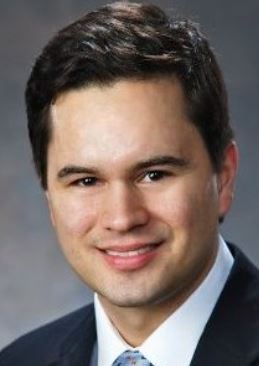
Jason Crye
My school choice wish is more children, particularly Hispanic children from low-income and working-class families, have access to educational options that will help them flourish. Unfortunately, statistics show there is a lot of rocky ground to plow before my wish is granted.
Hispanics lag behind their counterparts in nearly every meaningful education statistic. For example, recent figures show the Hispanic graduation rate has improved to 76 percent, while the Hispanic dropout rate is the lowest it has been in decades at 14 percent. It is mildly encouraging that these numbers are heading in the right direction, but they are clearly not where they should be.
To achieve my wish, the education reform community, including organizations like my own, school leaders, elected officials, and other advocates, must continue to help parents engage in the public square. They must continue to stand up for the reforms that poll after poll shows are supported throughout the country.
This is exactly what I saw earlier this month at the Hispanic Council for Reform and Educational Options conference in Miami. It was so heartening to see education advocates, community activists and business leaders from around the country all focusing on the crisis we are facing, and standing together for common-sense solutions. It was also gratifying to see how partisan political differences have been put to the side when it comes to policies that work for our children.
I heard Republicans and Democrats, conservatives and liberals, all supporting the expansion of school choice programs like charter schools, vouchers, tax credit scholarships and education savings accounts. One of them, Assemblyman Marcos Crespo of New York, a Democrat, spoke at a press conference after a student named Valentin movingly told us how a school choice scholarship changed his life.
Said Crespo: “I hope that as the rest of this conference progresses that we can continue to build this network and demonstrate that there are a lot of us who believe in real success and not just our own interests, or partisanship, or labels. Our goal is to be judged by the Valentins of the world, and not by you know, who our traditional political friends are, or how much they’ve invested in our campaign. It’s not about that. It’s about Valentin.”
There is a sleeping giant in American politics. It’s the parents, who, when armed with the facts, demand excellence from the schools their children attend; who, when necessary, will march to show their strength in numbers; and who will vote to change the status quo. Many of those voters are Hispanic. Indeed, 66,000 Hispanics turn 18 years old every month, and an increasing number of them have been affected positively by various education reforms.
I look forward to a future when voters are more informed about the positive impact of school choice. I look forward to a future when parents are made aware of their educational options and have the freedom to choose the school where their child can succeed.
In the meantime, I know it is my responsibility, and the responsibility of all education reform advocates, to do everything possible to engage parents and educators. We must help children today so we can achieve that brighter future together.
Jason Crye is executive director of Hispanics for School Choice.
Coming Monday: Wevlyn Graves, Florida parent of a tax credit scholarship student.
Editor's note: This post originally ran as an op-ed Sunday on VOXXI, in response to an op-ed by Dr. Rosa Castro Feinberg. Julio Fuentes is president and CEO of the Hispanic Council for Reform and Educational Options and a member of the board of directors for Step Up For Students, the nonprofit that administers Florida’s tax credit scholarship program and co-hosts this blog.
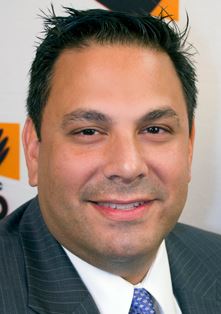
Julio Fuentes
In Florida schools, there is no doubt that English language learners, many of them Spanish speakers, are the most vulnerable and most struggling of our students.
To offer but one sad fact, only 11 percent of ELL (English Language Learners) students last year passed the 10th grade FCAT in reading, the test they must pass in order to graduate from high school. Let me repeat that so the gravity of the number sinks in: 11 percent. That’s compared to 54 percent of students overall, 41 percent of low-income students and 21 percent of students with disabilities. To be sure, standardized test scores should often be taken with a grain of salt. But it’s clear they wave a bigger red flag with ELL students than with any other group. And there is no doubt we must move with greater urgency to do all we can to ensure a brighter future for those students.
Given that backdrop, I must respond to Dr. Rosa Castro Feinberg’s April 24 op-ed, “Students learning ESOL with vouchers might be getting shortchanged.” I have the utmost regard for Dr. Feinberg. I appreciate the expertise she brings to the subject of ELL and ESOL students. And I do think there are some issues involving those students and tax credit scholarships (aka “vouchers”) that are worthy of fair-minded debate. But in this case, I must respectfully say that Dr. Feinberg’s concerns are misplaced, and that she is unfairly tarnishing a tool that can help ELL students.
At the end of the day, what tax credit scholarships do is simply give parents more options. Why in the world would we limit options for students who need help wherever they can get it? Dr. Feinberg listed a slew of things that public schools are required to provide ELL students, including extra funding and extra training for teachers. Many of those policies are well-intentioned and helpful. But the statistics show they’re not helpful enough.
This year, 35 percent of the nearly 60,000 low-income students using tax credit scholarships are Hispanic. Many were not satisfied with public schools, and so they used the scholarships to find something that works better for their children. If the ELL families among them felt their needs were being met in public schools, they wouldn’t have left. There are endless reasons for their frustration, but I have no doubt that the cultural barriers they sometimes face in public schools are among them.
Sometimes Spanish-speaking parents can’t communicate well with the staffs at public schools. At some public schools, there is no one who can help the family because no one at the school speaks their language. I don’t mean this as a knock on public schools, which are too often burdened with the impossible task of being all things to all children. But it’s a fact. It’s also a fact that many private schools serving Spanish students go to great lengths to ensure that even their written communications are in Spanish. I wish I could say the same about public schools, but unfortunately I know more than a few examples where that is not the case.
Perhaps unintentionally, Dr. Feinberg made a case for school choice and parental empowerment in her own op-ed. She suggested to parents, “Visit the school’s ESOL or bilingual classes. Do you think the children are learning English? If the school doesn’t offer these classes, think twice about changing schools.”
We couldn’t agree more. But it’s not in the best interest of ELL students for the parents to limit their visits to public schools. Why not explore all options? (more…)
Brown v. Board of Education opened many doors of opportunity, but too many remain closed. School choice can open some more.
Longtime school choice advocate Howard Fuller and a high-profile panel will reflect on that theme tonight at a National School Choice Week event in South Florida. To watch it live, just come back and view it here at 6:15 p.m.
You can also keep tabs via Twitter @redefinedonline. Search for #SCW and #FLschoolchoice.
In the meantime, here are some more thoughts on the links between Brown v. Board and school choice from some of the panelists you'll be hearing from.
T. Willard Fair, former chairman, Florida Board of Education; president, Urban League of Greater Miami:
While we were victorious in fighting for school choice nearly 60 years ago, the struggle continues. Choice is still an issue for many low-income children who come from the wrong side of the tracks. The Urban League of Greater Miami has made education and school choice the focal point of its work for over 50 years because access to quality education is still one of the most pressing civil rights issues of our times. This is not to sound somber or overly critical of the great strides we have made with Brown vs. Board of Education. However, we cannot be ignorant to believe that the victory of 60 years ago assuaged all of our “Black or Brown” educational issues. The need to access quality education is still alive and evident in Florida with more than 60 percent of Black children reading below grade level. (more…)

Howard Fuller
In the 60 years since the landmark Brown v. Board of Education decision, the mission to offer every student equal access to a free and quality public education has made great strides. But there’s more work to do, say education advocates gathering this week for National School Choice Week.
More than a dozen groups representing everything choice - from charters to religious schools to district virtual schools – will meet Jan. 30 in Coral Springs, Fla., for a panel discussion reflecting on the historic Supreme Court ruling and whether its vision is being fulfilled.
Brown was an important part of the struggle to end legal discrimination but today "we have a different problem," longtime school choice supporter Howard Fuller said in an email to redefinED. "Children of low income and working class Black families are trapped in schools that are not providing them with a quality education. Integration is not the lever of power that is needed at this point in history."
The Florida event is one of 5,500 taking place during the fourth annual celebration of educational opportunity.
Speakers include Fuller, a distinguished professor and board chairman of the Black Alliance for Educational Options; Georgia Rep. Alisha Morgan, a Democrat and school choice supporter; T. Willard Fair, a civil rights activist and the youngest chapter president in the history of the Urban League; Julio Fuentes, president of the Hispanic Council for Reform and Educational Options; Rabbi Moshe Matz, director of Agudath Israel of Florida; Vincent Boccard, mayor of the city of Coral Springs; and Jonathan Hage, founder, president, chairman and chief executive officer of Charter Schools USA.
The event is hosted by Florida Alliance for Choices in Education (FACE), a roundtable of school choice and parental empowerment organizations that work to expand and strengthen educational options. Partners include Step Up For Students, the nonprofit that administers the Florida Tax Credit Scholarship (and co-hosts this blog); Florida Charter School Alliance; PublicSchoolOptions.org; Charter Schools USA; Coral Springs Charter School; Florida Virtual School; McKay Coalition; HCREO; Agudath Israel of Florida: StudentsFirst; Pasco eSchool; National Institute for Educational Options; and K12 Inc.
The event will be held at the Coral Springs Charter School, 3205 N. University Drive, Coral Springs, 33065. The reception starts at 5:30 p.m. with the discussion at 6:15 p.m. For more information, email FACE director Wendy Howard, [email protected]
You’ll be able to watch a live webcast of the event here on the blog. You can also follow via Twitter @redefinedonline. Search for #SCW and #FLchoice.
Editor's note: Julio Fuentes is president and CEO of the Hispanic Council for Reform and Educational Options. This is the fifth post in our #schoolchoiceWISH series.
Julio Fuentes
K-12 education is one of the hottest issues during every state’s legislative session. But when it comes to ed reform, bipartisanship does not come easy. Too often, when that reform bill hits the floor, whether it’s on accountability, choice or funding, civility goes out the door and the mentality of “us against them” takes over.
The nasty and insulting remarks that are hurled would send any child in school straight to the principal’s office. But bickering over whose agenda is more robust won’t get things resolved. And at the end of the day, we all want the best for our children.
So this is my school choice wish for the year 2014: I wish legislators across the country would work together to approach education reform with a bipartisan mindset. I wish for them not to let their party’s viewpoints blind them from making the best decisions that are beneficial for our children.
It’s clear that’s what the public wants.
According to the Pew Research Center’s recent policy survey, “Overall, 66% [of Americans] say either that the education system in this country needs to be completely rebuilt (21%) or that it requires major changes (45%).” When the findings are narrowed down to political parties, they show “about two-thirds of Republicans (65%), Democrats (67%), and independents (67%) agree that the education system needs at least major changes.”
Our legislators need to react to these numbers. They represent us. We elect them and rely on them to make decisions that will ensure a better future for our students. Education reform is not just a Republican agenda; Democrats too want to see changes in America’s neighborhood schools. Instead of all this fighting on the floor, our leaders need to change to make real transformation. (more…)
This week, we posed that question to many of you on Twitter and got an amazing response: more than 1,000 tweets!
In the meantime, we also posed it to some stalwarts in the school choice movement, and asked them to write a short blog post in response. Next week, we’ll begin publishing their fun, thoughtful and provocative answers.
Here’s the all-star line-up:
Monday, Dec. 23: Jon Hage, founder and CEO of Charter Schools USA.
Tuesday, Dec. 24: Robert Enlow, president and CEO of the Friedman Foundation for Educational Choice.
Thursday, Dec. 26: Joe McTighe, executive director of the Council for American Private Education
Friday, Dec. 27: Dr. Howard Fuller, board chair, Black Alliance for Educational Options
Monday, Dec. 30: Julio Fuentes, president and CEO, Hispanic Council for Reform and Educational Options
Tuesday, Dec. 31: Peter Hanley, executive director, American Center for School Choice
We hope you enjoy the posts as much as the #schoolchoiceWISH event. It was a hit! (more…)
In the spirit of the holidays, the Hispanic Council for Reform and Educational Options, the Black Alliance for Educational Options and the redefinED blog are partnering on something a little bit different this year to raise awareness: A fun, one-day Twitter campaign.
We need you to help us. All you have to do is tweet.
Just think of one thing you wish would change to help the cause of vouchers, or charter schools, or parental empowerment, or anything else related to parental school choice. Then, on Wednesday, Dec. 18, tweet it out with #schoolchoiceWISH as a hash tag.
It can be personal. It can be political. But whatever it is, make it heartfelt.
If you’d like, attach a photo. We might even put it up on our facebook page.
We’ll be following everyone’s #schoolchoiceWISH tweets all day, and retweeting and replying. Please join us. Happy tweeting!
On a related note, we’ll soon be running a series of special guest blog posts on the wish list theme, too. More details soon.
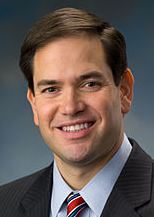
Sen. Rubio
America’s long-running, state-by-state battle over parental empowerment in education may be going national.
In what could be the most far-reaching school choice legislation in U.S. history, Sen. Marco Rubio, R-Fla., is proposing that low-income parents anywhere in the country be able to choose private schools through a federal initiative similar to the tax credit scholarship program in Florida.
“It’s not about unions. It’s not about school administrators,” Rubio told the Miami Herald for a story published Tuesday night - just after he delivered the Republican rebuttal to President Obama's State of the Union address. “This is about parents. The only parents in America who don’t have a choice where their kids go to school are poor parents.”
Rubio is certain to face headwinds in a Democratically-controlled Senate, but the bill he plans to file would give low-income families options in states that have yet to offer them private school alternatives. The fight in many states has pitted teachers unions and school districts against low-income parents who might benefit. And though state constitutions sometimes speak to the use of vouchers, the U.S. Supreme Court has ruled in two separate landmark opinions (here and here) that such programs are constitutional.
Politically, the bill gives Rubio – a potential Republican contender for president in 2016 – a vehicle to barrel into a Democratic vacuum over parental school choice, and to make inroads with black and Hispanic families who increasingly demand such options.
His proposal isn’t a complete surprise.
The Herald notes he called for it during his Senate campaign in 2010. He suggested it again in a December speech at the Jack Kemp Foundation. And as House Speaker in Florida, he helped pave the way for a major expansion of the country’s biggest such program.
The Florida program is funded by corporations that receive dollar-for-dollar tax credits in return for contributions. It serves more than 50,000 students – 68 percent of whom are black or Hispanic - and has won backing from a solidly bipartisan legislative coalition, including a majority of the Legislative Black Caucus. (It’salso administered by Step Up For Students, which co-hosts this blog).
The federal school choice proposal has already garnered the support of three progressive-minded parental choice groups – the Black Alliance for Educational Options, the Hispanic Coalition for Reform and Educational Options, and Agudath Israel, a Jewish advocacy organization. (more…)
 Editor's note: Julio Fuentes, president of the Hispanic Council for Reform and Educational Options, sent this email blast out earlier today.
Governor Rick Scott made the right call in declaring "unacceptable" the race-based achievement goals outlined in the Florida Board of Education's recently released five-year strategic plan.
The Hispanic Council for Reform and Education Options (HCREO) believes that the Board's plan is not merely unacceptable; it is insulting and counterproductive to the education needs of all Florida children. Just as politics should not drive our education system, race and ethnicity should not determine the expectations we set for our students. Education reform - including the choices we give to students and their parents - is about the capacity of our youth to achieve when given the proper classroom tools and instruction.
The state's plan outlines that by 2018, 90 percent of Asian students, 88 percent of white students, 81 percent of Hispanic students and 74 percent of black students should be reading at or above grade level. For math, the goals are set at having proficiency levels of 92 percent for Asian students, 86 percent for white students, 80 percent for Hispanic students, and 74 percent for black students.
To set these different bars for students is to say, effectively, that we believe one group is capable of achieving more simply because of their skin color and ethnic background. That approach might have reigned back in the days of segregated classrooms, but it has no place in today's classrooms.
In case the Board of Education isn't aware: We are living in 2012. The nation's first black President is running for re-election. Louisiana's governor is Indian. The mayor of San Antonio, Texas made history this summer when he became the first Hispanic to give the keynote address at the Democratic National Convention. These successful leaders did not achieve because of, or in spite of, the skin color and families into which they were born. They succeeded because they had education and support from teachers and others who believed in their abilities.
Every student in every Florida classroom today deserves the same. (more…)

