Despite the efforts of private schools and some lawmakers, the Florida Legislature this spring didn’t resolve concerns that more private schools could end up paying for their high school students’ dual enrollment courses.
Last year, the Legislature changed the way the state funds dual enrollment courses, requiring school districts to pick up the tab for courses their students took on college campuses. That led to concerns that private schools could face similar charges, potentially reducing their students' access.
Potential remedies were floated during the recently concluded session, but didn’t stick.
The House, for example, proposed adding language to state law ensuring private schools would be exempt from any of those payment provisions.
Private-school supporters spent the final week of the session emailing and calling legislators. But in the end, the plan to exempt private schools from the payment requirement did not prevail, nor did separate
legislative efforts by Sen. Kelli Stargel, R-Lakeland.
The final legislation did make some tweaks, though. It provided, for example, that the Legislature could cover the cost of dual enrollment courses taken over the summer.
While it's not clear what the impact will be for private school students, James Herzog, the associate director for education at the Florida Conference of Catholic Bishops, said he was worried it could create a "chilling effect" if more colleges start billing private schools for the costs of dual enrollment courses.
Howard Burke of the Florida Association of Christian Colleges and Schools said parents of private school students should be able to enroll their children in the same college-credit courses as their public school peers.
"They're paying the same taxes the public school child's parents are paying that have dual enrollment," he said. "They should have equal access."
The Florida Senate has proposed taking a new path on legislation that would create individual accounts for special-needs students.
Under a rewrite approved this morning by the Education Appropriations panel, the legislation would create "enhancements" of the existing services for children with disabilities.
Earlier versions of the bill would have created education savings accounts based on the state's core per-pupil education funding. The new proposal would create a Florida Personal Learning Scholarship Accounts program, overseen by the Agency for Persons with Disabilities and paid for by $18.4 million in separate funding.
The program would be open to students with conditions like autism and cerebral palsy who participate in home-education programs, or attend public or private schools.
Like the original proposal, it would give their parents a way to pay for additional instructional materials, private school tuition, or certain kinds of therapy. They could also use the money to save for college or pay for services provided by school districts.
"To me it's very simple. It's about more money to kids who need it the most," said Senate Education Chairman John Legg, R-Trinity, who noted some of the bill's initial opponents were concerned about funding the accounts in the state's education budget. "This is additional money for additional services for all kids."
"What it begins to recognize is that our public schools cannot be health-care providers for everyone," he added.
Advocates for students with disabilities, including Robyn Rennick of the Coalition of McKay Scholarship Schools, spoke in favor of the bill. Representatives for the statewide teachers union, which opposed the original legislation, withdrew their opposition after the changes were approved. (more…)
The push to create individual accounts for students with disabilities picked up bipartisan support in its first Senate committee hearing Tuesday.
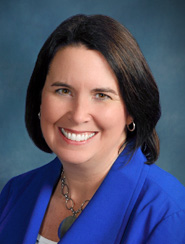
Sen. Stargel
But the bill to create "personalized accounts for learning" that parents could use to pay for tutoring and therapy for their children also attracted opposition from groups like the Florida PTA and the statewide teachers union.
Sen. Kelli Stargel, R-Lakeland, said the proposal would be confined to "a very small population of our students" with conditions like spina bifida and cerebral palsy, which would qualify them for a high level of accommodations in the public school system.
"It's just very difficult for our system to meet all their needs," she said during the Senate Education Committee hearing. "This gives them another option for their parents to decide the best approach to get their child the best education."
Several public school teachers spoke against the bill. Joy Jackson, a teacher at Robert Renick Educational Center in Miami-Dade County, said the program could compete for scarce resources with the accommodations made by school districts.
"This is currently a very small population, but if history with these programs has shown us anything, it is that as soon as these programs are made available, they become quite large, quite fast," said Lynda Russell of the Florida Education Association.
The bill received support in previous hearings from parents who educate their special-needs children at home. They were joined Tuesday by Elias Seife, a Miami-Dade parent who said his daughter has received "excellent support" in the public school system.
(more…)
Florida’s parent trigger bill is headed to the Senate floor after another predictable party-line committee vote. But odds are rising that this year’s model will bring as much last-minute drama as its predecessor did last year, when several Republicans broke rank to kill the measure.
In the Senate Appropriations Committee on Tuesday, bill sponsor Sen. Kelli Stargel, R-Lakeland, said a recent amendment giving school districts - and not the state - the final say in a school’s turnaround plan likely would be modified.
Proposed by Sen. David Simmons, R-Altamonte Springs, the amendment altered the original bill’s final arbiter, the state Board of Education, and made it more acceptable to parent trigger critics. But parent trigger supporters said it watered down the bill’s intent, which is to let parents have a bigger role in determining the best way to improve their children’s schools.
Stargel said Tuesday that neither she nor Simmons – nor the majority of the education appropriations committee that passed it April 11 - really wanted that language in the bill.
“We would not want parents to come together to work so hard to get 50 percent of the parents (to support a turnaround plan), and just have their voices taken under advisement, if you will,’’ she said.
Still, she said, any changes would happen after Tuesday's vote. That raised concerns among some committee members, most notably Sen. Jack Latvala, R-Clearwater.

Sen. Jack Latvala
“So that would lead me to conclude that you’re going to remove that exemption at some point in time – or attempt to remove it,’’ he said.
Answered Stargel: “We’re going to modify this bill going forward, but we’re not sure in what way.”
The committee voted 12-6 in favor of the measure, with Sen. Lizbeth Benacquisto absent. The Fort Myers Republican had filed an amendment the day before, calling for the state to remain the final arbiter, but Stargel withdrew the proposal. (more…)
Florida lawmakers made a big change to the parent trigger bill Thursday, passing it on another party-line vote but only after diluting the initial proposal to give parents more power to improve struggling schools.
The Senate Appropriations Subcommittee on Education approved an amendment that gives school boards – not the state - the final say on a school turnaround plan.
The original wording in Senate Bill 862 made the state Board of Education the final arbiter if parents and school boards didn’t agree on the best way to improve a school.
Among a list of options is converting the district school into a charter school, a plan that might have more support from parents and the state board than district leaders.
The amendment comes at the request of Education Commissioner Tony Bennett, who asked sponsors of the House and Senate parent empowerment bills to hold elected school board members accountable.
“School boards should not have the ability to push the decision to the state,’’ Bennett wrote in a recent letter. “They owe it to parents to consider what they have to say without being able to avoid the tough decisions.’’
Bennett also suggested the turnaround process was “overly burdensome’’ with formal notices, votes and petitions required to kick-start a plan. He said the school board should have to explain at a public hearing why it didn’t think the parents’ approach was best.
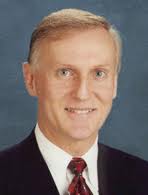
Sen. Simmons
The amendment, introduced by Sen. David Simmons, R-Altamonte Springs, made that a requirement.The final outcome should be determined locally, not in Tallahassee, Simmons said. He also said parents are as culpable as school boards when it comes to so-called failing schools.
Sen. Bill Montford, a Tallahassee Democrat and head of the state superintendents association, said he supported the amendment and might be able to support the bill if “we continue to move the way we are now.’’ For now, he joined three other Democrats on the subcommittee in voting against it.
The eight Republican senators present at the meeting voted in favor. The next stop for SB 862 is the Senate Appropriations Committee, which is expected to consider the bill on April 18.
The House version of the parent trigger bill, which passed earlier this month, still gives the Board of Education the final word.
 Halfway through this year's Florida legislative session, here's a brief look at the school choice related bills that are still moving. To compare to the bills at the beginning of the session, click here. Things are changing fast. Several bills, for instance, are up for a House vote today.
Career Academies:
CS/CS/SB 1076 by Sen. John Legg, R-Lutz. On Senate floor, on Special Order Calendar
April 4. Creates funding incentives to increase innovation in public school programs to better prepare students for future careers; provides for the development of industry certifications at the middle school level; requires financial literacy to be included in high school graduation requirements; revises the funding for industry certifications earned in high school and at postsecondary institutions; and requires the development of multiple pathways to meet high school graduation requirements.
Charter Schools:
The Senate Education Committee conducted a workshop March 18 to discuss the charter bills that were filed. The committee took input from the workshop and proposed a substitute for SB 1282, related to charter schools, during their next meeting April 1.
CS/SB 1282 by Sen. Kelli Stargel, R-Lakeland. Committee Substitute favorable by Education Committee on April 1. Includes financial and accountability requirements for charter schools; prohibits a governing board under deteriorating financial condition, financial recovery plan, or corrective action plan from applying for a new charter school; requires a charter agreement to immediately terminate when the charter school closes; requires the use of standard charter and charter renewal contracts; clarifies that members of a charter school board may not be an employee of the charter school; prohibits a charter school that closes from spending more than $35,000 unless the sponsor approves in writing or previously approved.
CS/SB 1390 by Sen. Bill Montford, D-Tallahassee. Committee Substitute favorable by Education Committee on April 1. Includes a mechanism through which a school district may establish one innovation school within its district to enhance high academic achievement and accountability in exchange for flexibility and exemptions from specific statutes; exempts facilities leased by the district from ad valorem taxes; and provides that the class size calculation be changed to the school level for district schools or schools of choice.
CS/CS/HB 7009 by Choice and Innovation Subcommittee. On House floor, on 3rd reading. Provides for increased charter school accountability by prohibiting a charter school, upon termination of the charter, from expending more than $10,000 without prior written permission from the sponsor; requires the DOE to develop a proposed statewide standard charter contract by consulting with school districts and charter schools; and requires that a district board-owned facility that has previously been used for K-12 educational purposes be made available for a charter school’s use, with the charter school responsible for the costs to bring the facility into compliance with the Florida Building Code. (more…)
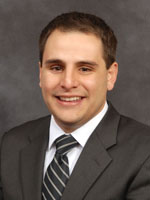
Rep. Trujillo is a co-sponsor of the House parent trigger bill
The parent trigger bill is back in the Florida Legislature this year and, judging by the spirited 8-5 party line vote it got in its first committee stop Thursday, perhaps as contentious as ever. But unlike last year, some Florida parents and child advocates not only voiced support, but drove to Tallahassee to tell lawmakers in person.
Former Marion County teacher Karen Francis-Winston trekked 200 miles from Ocala with her daughter to testify in favor of the bill sponsored by Republican Reps. Michael Bileca and Carlos Trujillo.
Pastor Alfred Johnson came from Tampa,where he said he serves a low-income community.
“I don’t understand what’s the matter with empowering parents to make a recommendation,’’ he told the Choice & Innovation Subcommittee. “We’re doing nothing but recognizing they have a voice, a say in the process.’’
House Bill 867, with an identical version filed by Sen. Kelli Stargel, R-Lakeland, allows parents with children in an F-rated school to petition the school district to consider a turnaround plan that could include bringing in a charter school operator. The petition would need signatures from a majority of parents. (more…)
 Editor's note: Another year, another legislative session, another stack of school-choice bills in Florida. Here's a roundup of choice legislation that lawmakers will consider in the annual session that begins today.
Career Academies:
SB 1076 by Sen. John Legg, R-Lutz. Expands the "Career and Professional Education Act (CAPE)," revising requirements for high school graduation and accelerated high school graduation, and allowing students to earn and substitute certain industry certifications for certain course credits. Also requires districts to make digital materials available to students and to use the Postsecondary Industry Certification Funding List in determining annual performance funding distributions to school districts and Florida College System institutions, etc.
Charter Schools:
HB 373 by Rep. Joe Saunders, D-Orlando. Provides that a contract for a charter school employee or service provider may not extend beyond the school’s charter contract, and that the employee or service provider is not entitled to compensation after the school’s closure. (Identical to SB 780 by Sen. Geraldine Thompson, D-Orlando.)
HB 453 by Rep. Victor Torres, D-Orlando. Requires the compensation and salary schedules for charter school employees to be based on school district schedules. (Identical to SB 784- Charter Schools by Sen. Geraldine Thompson, D-Orlando.)
SB 744 by Sen. David Simmons, R-Altamonte Springs. Requires charter school applications to demonstrate the applicant is financially qualified to open and maintain a high-quality charter school, requires the charter to set forth detailed reporting of the financial operations of the school to ensure employees are not paid unreasonable compensation, and requires that the term of the charter must provide for cancellation of the charter if the school becomes insolvent, fails to provide a quality education, or does not comply with applicable law. The bill also clarifies that a charter school system shall be designated a LEA solely for the purpose of receiving federal funds if certain criteria are met.
SB 828 by Sen. Rene Garcia, R-Hialeah. Grants school districts the ad valorem tax exemption given to charter schools, and restricts the use of capital outlay funds for property improvements if the property is exempt from ad valorem taxes. It restricts charter schools or technical career centers having financial problems from certain activities, and grants flexibility to high-performing school choice districts.
HB 1001 by Rep. Karen Castor Dentel, D-Maitland. Prohibits charter schools from requiring, soliciting, or accepting certain student information before student's enrollment or attendance. Also requires charter schools to submit attendance plans to the school district for students enrolled in school; provide funding to the school district in event of student transfers; and report to the school district certain student enrollment and wait-list information.
SB 1092 by Sen. Geraldine Thompson, D-Orlando. Requires charter school to submit attendance information for each student to the school district, and requires the charter school to provide a prorated portion of per-student funding to the school district if a student transfers to another public school in the school district before the last day of the school year.
SB 1164 by Sen. Kelli Stargel, R-Lakeland. Revises the eligibility criteria for extracurricular activities to include students in charter schools, and revises the criteria for bylaws, policies, or guidelines adopted by the Florida High School Athletic Association. (Compare to HB 1279 by Rep. Larry Metz, R-Groveland.) (more…)
Parent trigger. Sen. Kelli Stargel, R-Lakeland, files a bill similar to last year's, drawing immediate fire from the Florida Democratic Party. News Service of Florida. More from the Tallahassee Democrat.
 More tutoring oversight. The U.S. Department of Education is disturbed by what the Tampa Bay Times found with Florida's state-mandated tutoring program, reports Gradebook. Pinellas Superintendent Mike Grego asks Education Commissioner Tony Bennett to scrap the program completely, Gradebook also reports. The Miami-Dade school district also wants the mandate repealed, reports the Miami Herald. A tutoring company owner in Miami-Dade pleads guilty to 47 counts of fraud and grand theft and is sentenced to five years probation, the Herald also reports.
Charter schools. South Florida Sun Sentinel columnist Michael Mayo writes about the money feud that's pitting the successful Pembroke Pines charter school system against the Broward school district.
More Rubio vouchers. StateImpact Florida logs it in.
Teacher absenteeism. Florida teachers collectively have one of the lowest absentee rates in the country, according to a new Center for American Progress report, notes Gradebook. But with 29.1 percent missing at least 10 days in a 180-day year, it is still high.
Teacher evaluations. The Florida Times Union objects to the Florida Education Association's request to intervene in the newspaper's suit against the Department of Education for withholding teacher eval data. (more…)
The most contentious education bill in last year's Florida Legislature is back this year.Sen. Kelli Stargel, R-Lakeland, filed a "parent trigger" bill Wednesday that is similar to last year's.
Senate Bill 862 would give more power to parents in struggling schools that are mandated by state accountability rules to implement a "turnaround" strategy. A majority of parents could petition the school board to pursue one of several turnaround options, including conversion to a charter school. The school board would not be required to follow the majority's wishes, but the state Board of Education would ultimately determine whether the parent option or district option is pursued.
Last year's parent trigger bill drew national attention. It cleared the House along mostly party lines, but died in the Senate on a dramatic 20-20 vote. It has been widely assumed that the bill would get another shot this year.
Stargel's bill would also require school districts to notify parents when their children are assigned out-of-field teachers or teachers with poor evaluations. The notice would let parents know that virtual instruction with a higher performing teacher was available. The bill also bars districts from giving a student a low-performing teacher two years in a row.
So far, there is no House companion to Stargel's bill.
More from Gradebook and SchoolZone.

