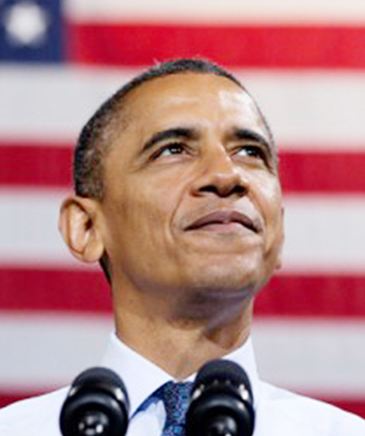
 President Obama has often called on us to be true to who we are as a people, as Americans. And in his second term, he has the opportunity to transform the education system back to our core - to where parents are primarily in charge of children’s educations.
We have paid a price for transferring authority and responsibility for educating children from parents to government entities. With mostly though not always good motives (remember Brown v. Board of Education), we allowed the dream of the government-owned and operated common school to live on despite overwhelming evidence that, in reality, it wasn’t working. A child’s educational destiny continues mostly to be a function of his/her zip code and the competence of strangers who sit on local school boards.
For more than three decades, a long, slow correction of this anomaly in American society has been underway. First, intradistrict and interdistrict transfers began to appear that allowed limited parental choice within some parts of the public school system. Then magnet schools surfaced, offering options such as vocational, talented and gifted, and language immersion programs, and responding to more demands. In 1992, charter schools emerged. Today they account for almost 6 percent of all public schools, approaching 6000 total, and the number grows steadily each year because the demand from parents so far is insatiable.
Thanks to my colleague at the American Center for School Choice, Gloria Romero, a new tool has appeared. The parent trigger empowers parents to make changes to their school when they are not satisfied. Already 20 states have considered the approach and seven have adopted laws.
Private school choice programs continue to gain support, too. And they have done so despite fierce opposition from forces that want to defend market share over a parent’s right to choose. Today, 32 such programs operate in the country. And in recent years, many school choice bills have either been passed by legislatures with Democratic majorities or signed by Democratic governors. Just as important, once enacted, these programs have only grown. No state has repealed a program or decided choice does not serve the public well. Moreover, the doomsday scenarios that opponents consistently forecast for public education systems have never happened.
It’s said you can’t argue with a river; it is going to flow. Parents are going to take back the authority and responsibility for educating their children. The river has been flowing for more than 20 years and the current is gaining speed. It’s time for more Democrats to stop arguing as families assert their fundamental and universally accepted American value that they know the best choice for their children. Democrats need to work in positive ways to transform our system. We need good schools and there’s plenty of room for all types - public, charter, and private.
President Obama has the life experience, as well as the political skills and credentials, to lead this transformation, and to make it less jarring and less confrontational. (more…)
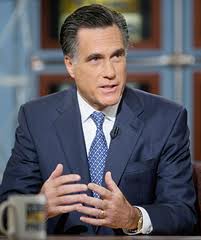 Mitt Romney’s white paper on education, “A Chance for Every Child,” offers laudable support for increased parental choice and for other changes, such as tenure reform, that must occur to improve education in America. Like Obama, Romney wants to leverage federal dollars to move states in the right direction on public school choice, especially the removal of charter school caps and the adoption of open enrollment policies. He also advocates for private school choice “where permitted by state law.”
But is his plan viable? And will he lead to implement it?
Romney would remove most of No Child Left Behind’s accountability standards in favor of expanded reporting on how schools are different. He would allow states to set their own standards and tests, but print the state’s National Assessment of Educational Progress (NAEP) outcomes on school and district report cards. NAEP brings much value to the discussion of education performance in America, but none to how an individual school district or school is performing because it does not test sufficient numbers or in every school and district. Implicit in this move - away from accountability by achievement measures towards improved information about schools - is that such information is lacking today. But parents are actually quite knowledgeable about local schools’ pluses and minuses and can access sites such as www.Greatschools.org for more detailed information.
So, for this information to be vastly more empowering than it is today, Romney recognizes that school choice would have to be dramatically expanded. That’s especially true for public school choice where, frankly, most of the schools will be for the foreseeable future.
The Romney plan seeks to expand choice primarily in two ways. First, he would convert Title 1 and federal special education (IDEA) funds that go to schools serving economically disadvantaged students. They would become vouchers that the eligible Title 1 and special ed students could take to any other school, including a private school, or even to a tutoring provider or digital school. Second, he would require states, as a condition for receiving these funds, to adopt open enrollment policies and eliminate caps on charter and digital schools.
The Title 1 and IDEA proposal is worthy of consideration. (more…)

