Florida school districts will have to come up with a detailed strategy for using technology in their classrooms under a bill Gov. Rick Scott approved today alongside the state budget.
The governor approved the $77 billion spending plan that sets aside additional funding for "digital classrooms," as well as legislation that could set the stage for increases in the coming years.
Requests for money to help school districts upgrade their technology infrastructure and train their teachers to use the devices has varied widely in recent years, from a request of more than $400 million last year to the $40 million the state Board of Education sought this year.
Key lawmakers, including Senate Education Chairman John Legg, R-Trinity, said one reason for the variation is state officials often don't have reliable information on school districts' digital learning needs.
For that reason, Legg sponsored a bill requiring districts to set specific digital learning goals tied to improving student achievement, and allowing them to receive dedicated funding tied to those goals. That legislation made its way into a larger education funding package Scott signed today. In a statement responding to Scott's signing of HB 5101, Legg said the governor "understands the vital need for a continued focus in digital education in the classroom."
The first round of district digital learning plans is due to the state Department of Education in October. Those plans will then be tied to funding in the budget. The amount is $40 million in the spending plan that takes effect July 1, but it could increase in future years once the plans are in place. The legislation sets an annual funding target of about $100 million.
Scott took a light touch with line-item vetoes, approving most of the education-related projects in the budget. However, he rejected $300,000 in funding that would have gone to help train teachers at single-gender schools in Duval and Broward counties.
All-boys and all-girls education may get a push from the Florida Legislature.
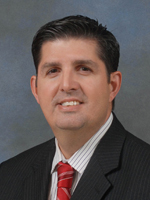
Rep. Manny Diaz Jr.
A bill filed by Rep. Manny Diaz Jr., R-Hialeah, would establish a statewide pilot project, allowing up to five large Florida school districts to designate an elementary school as a single-gender school in its core classes. The academic outcomes would then be tracked to see if the concept is worth expanding statewide.
“This is to incentivize some of the districts to create another choice option for parents,’’ Diaz said.
House Bill 313 would help districts by giving them more support and flexibility to be innovative, said Diaz, a public school administrator. Districts would apply to receive extra dollars to train teachers, organize schedules and offer specialized instruction. They also could move attendance boundaries for each gender-specific school to draw students from the whole district like a magnet school.
School districts across the country are experimenting with single-gender classrooms. The idea, borrowed from parochial and private schools, is some boys and girls learn better among same-sex peers. There’s plenty of research that supports that thought, and plenty of critics, including the ACLU, who believe the structure does more harm than good.
Florida has 33 schools in 16 districts that offer single-gender courses, and five single-gender schools in three districts. There are also nine single-gender charter schools statewide.
Under the bill, each school would have at least 350 boys and girls sharing the same lunch periods and recess. They also would share some classes, such as foreign languages, that only have one teacher at the school. But for core subjects like English and math, boys and girls would have separate classrooms.
The schools would open in the 2014-15 and 2015-16 school years. Enrollment would be open to any student in the district where the school is located. Parents in the school zone could opt out of the choice and attend another school, Diaz said.
The bill also calls for the Office of Program Policy Analysis and Government Accountability (OPPAGA) to compile a report comparing student academic performance in the gender-specific schools with students in traditional district schools. The findings would go to the Florida Senate president and Speaker of the House by December 31, 2016.
“If the data comes back that it doesn’t work then we will know,’’ Diaz said.
Note: This story was updated to include the most recent number of single-gender courses and schools in 2011-12, provided by the Department of Education.
Private schools. What happens to private school records when private schools close? Sometimes, they disappear. Palm Beach Post.
Charter schools. The Broward school district is taking a closer look at how much it charges charter schools for bus transportation after a citizens task force complains the district is losing money on the deal and subsidizing the competition. Miami Herald. (The district is considering other ways to reduce busing costs, too, reports the South Florida Sun Sentinel.) A K-8 charter school that teaches boys and girls separately is proposed for Palm Beach Gardens, reports the Palm Beach Post.
School choice. The Palm Beach district gets 17,500 applications for about 9,000 district choice seats. Palm Beach Post.
Digital education. Florida's mandates on digital offerings brings opportunities and challenges, editorializes the Palm Beach Post.
Privatization. The Volusia school district is right to consider outsourcing custodial services to save money, editorializes the Daytona Beach News Journal. The move could save about $5 million a year, the News Journal reports.
Florida's progress. Matt Di Carlo at the Shanker Blog: "Again, Governor Bush and supporters of his reforms have some solid evidence to draw upon when advocating for the Florida reforms, particularly the grade-based accountability system. The modest estimated effects in these high-quality analyses are not as good a talking point as the “we quadrupled the number of A-rated schools in six years” argument, but they are far preferable to claiming credit for what’s on the scoreboard after having changed the rules of the game."
Pace of change. Sweeping changes to teacher evaluations, academic standards and testing have district officials on edge and lawmakers considering changes. Tallahassee Democrat. (more…)
Editor’s note: As we reported last night, Florida Education Commissioner Tony Bennett made newsworthy comments yesterday when he spoke at an all-boys magnet school in Tampa. He suggested school choice wasn't a matter of public vs. private, and credited Florida school districts – Hillsborough’s in particular - for expanding magnets, career academies and other quality choice options. Here are his full remarks, edited slightly for length and clarity.

Bennett
The overview I want to give you about Florida’s choice framework is one that is, in my opinion, a true blueprint for our country. And I want to take you on this little journey. So just bear with me for a moment.
For many years, we said choice was about competition in education. And competition will raise all tides, right? The rising tide of competition will raise all the boats. And I can tell you, Florida has kind of changed that discussion. Again, being from Indiana, being from a state that tried and worked very hard to champion very similar policies, while competition in the educational system is good, the issue of choice here in Florida personifies the importance you put on what I believe to be the most important social justice issue in education. And by that, I want to do a little scenario.
If my wife and I didn’t have grown children, and in December when I was appointed, we would have gotten in our car, we would have driven to Tallahassee, and we would have driven around the community of Tallahassee, and we would have found the school that works best for the Bennett children. And the reason we could do that is frankly we could afford to. We could afford to live anywhere we wanted, send our kids to the school that we thought best fit their needs ...
And my point in this is, Florida is leading the discussion that all parents, regardless of the color of their skin or regardless of how much money they have, should have the same choice as Tony Bennett or MaryEllen (Elia, the Hillsborough superintendent). And that is a very different discussion in choice. And it is a discussion that I see is transcending what I believe can be really the first round of choice. And the first round of choice was frankly privates and charters against the public schools. Virtual schools against the traditional bricks-and-mortar buildings.
And I think MaryEllen in Hillsborough is an example of how we have taken that discussion in a completely different direction. Because this school (Franklin Middle Magnet and its Boys Preparatory Academy) provides a choice for children. This district provides a culture and a climate where choice is accepted and encouraged, and the opportunity that all children should have the same choices that Tony or MaryEllen have. They live that way.
So we’re now talking about choice – not just private schools and charter schools and virtual schools – we’re talking about public school choice. We’re talking about creative leaders like MaryEllen, like the team here, creating educational opportunities for children within the district. And really going to what we all heard was the purpose of choice to begin with, to provide incubation for innovation for our public schools. So I am very encouraged. (more…)
 It’s only fitting: Florida, a trailblazer in expanding school choice, will be among the busiest states during National School Choice Week.
This year’s celebration, which officially begins Sunday, is by far the largest ever, with more than 3,500 events in 50 states, up from 406 last year. Florida has at least 134 events on the schedule.
One of the highlights will be here in Tampa - a panel discussion featuring two nationally recognized education leaders. One is new Education Commissioner Tony Bennett. The other is MaryEllen Elia, superintendent of Hillsborough County Public Schools, the third largest school district in Florida and eighth largest in the country.
The pair will join other panelists representing the charter, magnet, private, virtual and home-schooling sectors. The event is set for Tuesday at 3:30 p.m., at the Boys Preparatory Academy at Franklin Middle Magnet School, one of the state’s first single-gendered public middle schools.
Other speakers include selected students, parents and teachers who will talk about the need to provide all children with more access to educational options. The event is sponsored by the Florida Alliance for Choices in Education, a group of school choice advocates that includes Step Up For Students, the nonprofit that oversees Florida’s tax credit scholarship program and co-hosts this blog.
Organizers are calling this year’s National School Choice Week “the world’s largest celebration of education reform.” The idea behind it is to raise awareness about the value of school choice, the need for more of it and the broad coalition that backs it.
“A quality education can be the ticket to the American dream for children across America,” Andrew Campanella, president of National School Choice Week, said in a prepared statement. “We must fight to ensure that every child has the ability to go to a great school.”

Second-graders Rosalia Garduno and Iritsali Lopez, both 8, are thrilled to learn they can give Carly the horse a hug. The girls spent the afternoon participating in a therapy program to help learn more about horses – and themselves.
Sixteen second-grade girls rode the school bus with the windows open, pigtails and ponytails whipping in the wind. For many, it was their first trip outside the city.
“It smells like grass,’’ said one girl. “It smells like McDonald’s,’’ said another.
“No,’’ said teacher Matilda Bediako-Ortiz, holding her nose, “it smells like something else.”
The girls were on a journey to see horses, part of the curriculum offered at their single-gender charter school, Just For Girls Academy in Bradenton, Fla.
The horses help teach compassion, consideration, courage - all part of the school’s emphasis on character development.
Many of the girls come from single-parent families, where moms juggle jobs and classes. Some were bullied at their old school, so they feel safer at the academy with only 89 students. Others just seem to learn better without boys.
“We have a culture of caring here,’’ said Principal Jennifer Rosenboom.
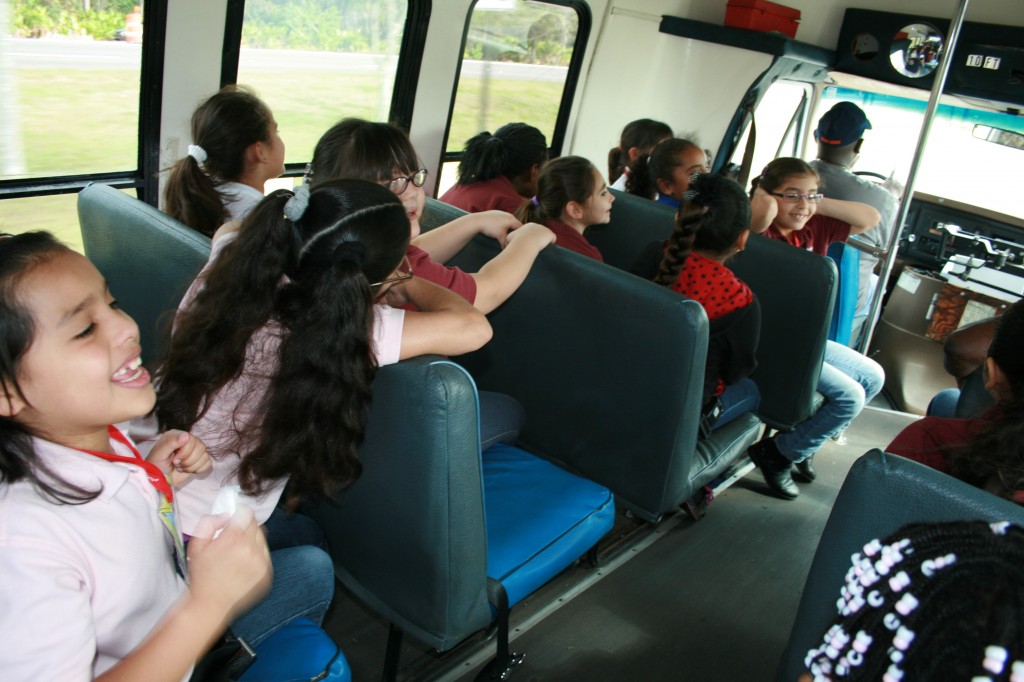
Sixteen students from Just For Girls Academy take a bus trip recently to the country to take part in a horse therapy program that uses the animals to help teach life lessons, such as building trust and reading body language. The girls also learn to have fun.
The ability to cater to a particular learning style or need is what’s fueling the growth of charter schools in Florida and beyond. Across the country, there are now more than 6,000 charter schools, including 529 that opened in August. In Florida, more than 200,000 students are enrolled in 574 charter schools across 44 school districts.
The schools are funded with public tax dollars based on enrollment, like traditional public schools, and sometimes supplemented with private donations. They have their own school boards. They can hire and fire teachers. They set their own hours.
But what really makes the schools attractive for many parents and students is the freedom to design unique curriculum and programs, says Eric Paisner, the vice president of knowledge and partnerships at the National Alliance for Public Charter Schools. (more…)
Ryan Wallace left his big, cliquish high school last spring for The Foundation Academy, a non-denominational Christian school with vegetable gardens and an aquaponic farm. “I wanted a chance to try something new,’’ said Ryan, now a 17-year-old junior planning a dodge-ball fundraiser for his class president campaign.

Boys in Aaron Unthank's single-gendered fifth- and sixth-grade class learn from each other, too. The setup gives Unthank more freedom to cater classes to meet boys' learning styles.
Twelve-year-old Marc’Anthony Acevedo came to the academy as a second-grader after being bullied at his old school. This year, he’s part of a single-gendered class of fifth- and sixth-grade boys. “Sometimes we have arguments, but we get over it,” he said. “We’re all friends.’’
For Cori Hudson, the Foundation was his last shot at a diploma. He messed up at the school district’s option of last resort. “I come to school every day now,’’ said the 16-year-old. “I feel like school is the most important thing to me.’’
These transformations are exactly what principal Nadia Hionides hoped for when she started the academy near Jacksonville Beach, Fla. nearly 25 years ago.
With a style that’s part Montessori, part Waldorf, the Foundation offers hands-on, project-based learning with a college-preparatory curriculum based on the philosophy that everyone learns differently.
The school has 280 students in kindergarten through 12th grade; 100 are in high school. They share a 23-acre campus that Hionides and her husband, a ship deck builder and painter, bought in 2008 for $600,000. The couple spent another $5 million for eight, prefabricated steel structures, which include a front-office foyer where the floor is made from vinyl records.
Tuition starts at $6,000 a year. But 81 students receive tuition assistance from Step Up For Students, the nonprofit that administers Florida’s tax-credit scholarship program for low-income kids and co-hosts this blog.
The academy separates students into groups of two grade levels - kindergarten and first-graders, second- and third-graders, etc.
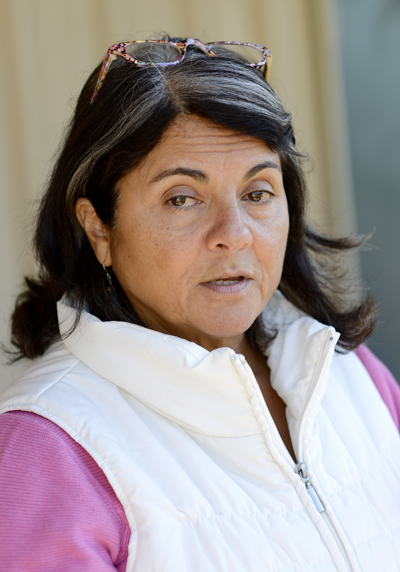
Hionides
“Because that’s real life,’’ Hionides said. Also, “they push each other to shine.’’
It seems to work in the fifth- and sixth-grade boys’ class – for the students and their teacher.
“It’s fantastic,’’ said Aaron Unthank, a longtime private school music teacher and baseball coach. “There’s a different kind of camaraderie as a class and there’s a lot more freedom I have as a teacher to talk about guy things.’’
The younger boys learn from the older boys, and the older boys gain confidence, Unthank said. He paraphrased Einstein: “You don’t know a thing well enough unless you can talk about it.” (more…)

Students at Franklin Middle School in Tampa.
Vouchers need more accountability. So say David R. Colburn, director of the Askew Institute at the University of Florida, and Brian Dassler, chief academic officer for the New Orleans Center for Creative Arts, in this exclusive op-ed for the Tampa Bay Times. Response here from the Heartland Institute, which says parental satisfaction is “a more effective form of accountability than extending mindless bureaucratic oversight to the private sector.”
New charter school to focus on “Latin and logic.” Tampa Bay Times story here. The applicant for the school is Anne Corcoran, the wife of state Rep. Richard Corcoran. He’s a future House speaker and a strong proponent of private school choice, too.
Threats to single-gender learning options. U.S. Sens. Kay Bailey Hutchison and Barbara Mikulski are considered to be on opposite ends of the political spectrum, but in this op-ed for the Wall Street Journal they unite in defense of single-gender options in public schools. (They single out Florida as one of the states where such options have been under legal fire.) It’s worth noting that in our own backyard, old lines of division have also faded over this issue. Last year, John Kirtley, who chairs Step Up For Students, donated $100,000 to the Hillsborough County School District to support single-gender academies at two public middle schools. The Walton Family Foundation kicked in another $100,000.
More on race-based achievement goals. The New York Times writes today about the state Board of Education’s decision last week to set different academic achievement targets for black, white, Hispanic and other subgroups. The targets incorporate steeper rates of improvement for groups with lower proficiency rates, but they have nonetheless caused a ruckus. The parents group Fund Education Now weighs in. So does Naples Daily News columnist Brent Batten, who hears from Collier County education officials that this is “much ado about nothing.”
by Kelly Garcia
My all-boys classroom didn’t look like a Norman Rockwell. There were boys tapping pencils. Boys squeezing stress balls. Boys pacing while reading independently. Even boys sitting on their desks.
But despite what some people may think from that description, it was also full of boys learning.
In the past few weeks, there has been a renewed flurry of articles and discussions (see here, here and here) about the value of single-gender education, which has grown to classrooms in more than 500 public schools since the Department of Education eased federal requirements in 2006. After completing my first year of teaching at the all-boys Franklin Middle Magnet School in Tampa, Fla., I can say this with confidence: Single-gender schools are not for every child. But in the age of expanding school choice, they are a valuable option.
Most boys benefit from frequent movement. I gave my students the option to move out of their desks during class time. In his articles, Leonard Sax, a leading proponent of single-sex education, often shares the scenes of organized chaos he sees when visiting some all-male classrooms. In my first few days of professional development, the thought of having boys tapping, drumming, walking and standing up during class time was enough to make me cringe. But, within a few weeks of working with my middle school boys, I realized that when the boys are comfortable, they are more engaged and less easily distracted.
Most boys are stimulated by action. One of the best tips I learned as a reading teacher for engaging boys in texts is to introduce a new book by reading the most action-packed scene first. I introduced Gordon Korman’s “No More Dead Dogs” by reading a scene where a male character leaps on top of a stuffed dog that is ready to blow up. I can’t say the novel was a huge hit with the boys, but starting with the action first certainly was.
Most boys are motivated by competition. I can remember the teachers at my all-girls high school passing tests back, as we quietly peeked at our grades and tucked them into our folders. I didn’t want to brag about a great grade and cause anyone to feel bad about her own grade. And I certainly didn’t want to feel deflated if I realized everyone did better than me. Many girls in high school felt similarly. I learned quickly that passing tests back to the boys was a time for them to leap for joy, shout that victory was theirs and throw themselves into overt celebratory moves. These boys regarded each test as a way to prove they were smarter than their peers.
I harnessed the spirit of competition when it came time to review for final exams. (more…)

