 For the past two decades, hundreds of thousands of mostly disadvantaged students have enrolled in private school choice programs, usually seeing some improvement in their academic outcomes while saving taxpayers money.
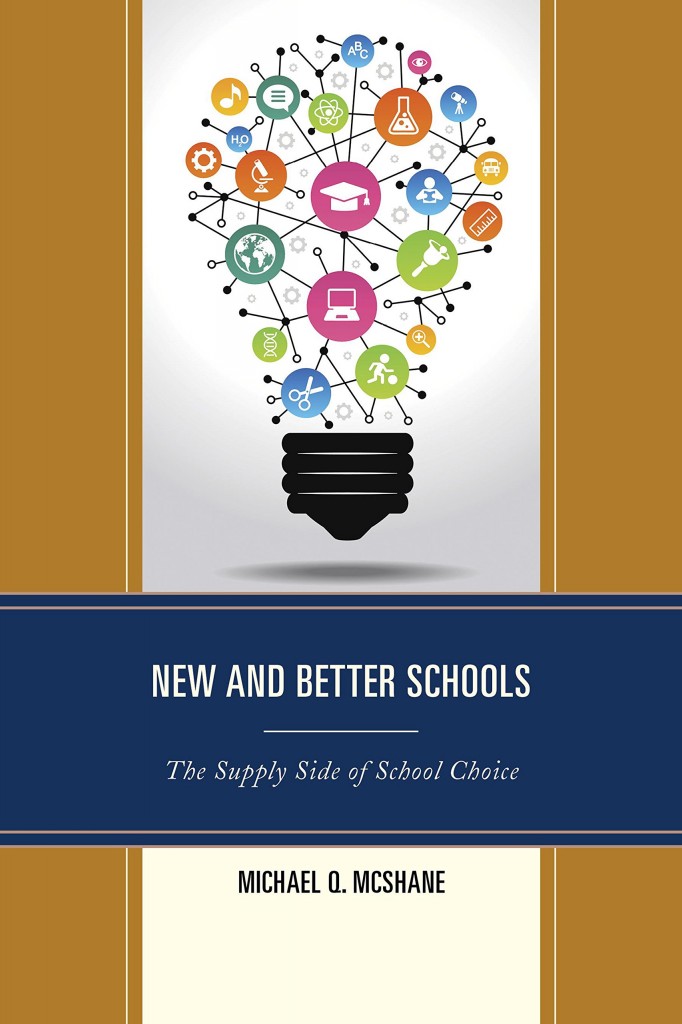
But the programs have yet to create the kind of systemic transformation sought by proponents of market-based education reform. As Michael McShane writes in the opening chapter of New and Better Schools: the Supply Side of School Choice (which he edited): "Arguing that performing marginally better than struggling public schools is a victory is defining success down."
The volume, released late last year, and an earlier symposium at the American Enterprise Institute, reflect a growing sense among school choice proponents that simply giving students access to private schools that may previously have been out of reach won't, on its own, create the kind of quality and efficiency improvements they say the education system urgently needs.
For the forces of creative destruction to drive real improvements in education, the thinking goes, more high-quality schools need to open — the faster, the better. Creating an environment where new private schools can thrive will require new forms of school financing, new teacher education programs to train a new breed of entrepreneurial educators, and a new approach to school regulation.
Whether you agree with the framing analysis or not, the volume may offer a window into the parental choice debates of tomorrow. Contributors contemplate schools financed by investors who only get paid if they improve student outcomes, private school networks that draw lessons from the best public charter schools, and programs that give parents accounts they can use to shop not just among a range of different education providers to create a customized learning plan for their children.
Hess
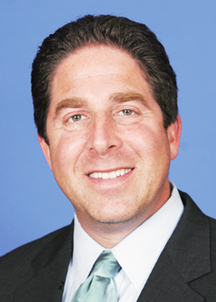
For those who dismiss the potential upside of for-profits in education, Rick Hess asks them to consider virtually every other aspect of their lives.
"Think about other big investments people make: their house, their car, their tablet or smartphone," wrote Hess, director of education policy studies at the American Enterprise Institute, in a live chat on redefinED today. "If you told folks that they could get a house or car made by a nonprofit, they wouldn't think it was better - odds are, they'd look at you like you were nuts."
"Fact is, in most of American life, something being a for-profit is generally regarded as a good thing - and government-provided services are frequently regarded as mediocre, or suspect. It's not immediately clear to me that it ought to be expected to be different in education."
We asked Hess to join us because he has co-edited a new book on for-profits in education, “Private Enterprise and Public Education.” But over the course of an hour, he weighed in on a wide range of topics. Among the highlights:
On Jeb Bush, his presidential ambitions and Common Core: "Jeb's got a remarkable track record on education. But, especially in GOP primaries, his full-throated backing of Common Core could trump the rest."
On President Obama and his administration's lawsuit against vouchers in Louisiana: "It's a good move if Obama is trying to score points with the teacher unions and traditional education establishment, or if he's trying to extend the reach of the federal government in education. It's a bad move for the affected kids in Louisiana or if he's interested in trying to claim bipartisan support for his education agenda."
On Florida, Common Core and PARCC: "I think it's likely Florida will drop PARCC. Will be interesting to see what follows. ... This is the fascinating thing about the Common Core; for it to deliver on its promise, a ton of stuff has to go right. For it to not deliver, only a couple little things have to go south."
On a criticism school choice supporters should take to heart: Don't dismiss suburban parents who don't want their schools to invite in low-performing students through choice plans. "Choice advocates have denounced such parents and communities, and even implied they're racist. It might be useful to recognize that they've worked hard, played by the rules, and sought to provide their kids a good education ... Empathetic reform would start by taking these issues seriously, and asking how to frame a win-win agenda."
You can replay the chat here:

Fuller
Count legendary school choice activist Howard Fuller among those who don’t have a problem with for-profit entities in education reform.
At the Black Alliance for Educational Options symposium in Orlando on Thursday, Fuller, who is BAEO’s chair, told several hundred participants at a first-timers orientation that “you also need to not have, at least in my opinion, a knee-jerk reaction to for-profits.”
“At the end of the day, judge something by what it does,” he said. “Don’t start by judging the label.”
The participation of for-profit companies is often raised by critics in parental choice debates on everything from virtual and charter schools to parent triggers and tutoring providers. It's also an issue to some extent within the choice community. A few months ago, Rick Hess from the American Enterprise Institute and Ben Austin with Parent Revolution engaged in a back-and-forth on the issue after Austin suggested nonprofits are more likely to put children first.
Fuller weighed in after letting attendees know BAEO supports effective public private partnerships. Here’s the full text of his remarks, as best as I could hear them: (more…)
Ben Austin of Parent Revolution and Rick Hess of the American Enterprise Institute have been engaging in a civil dialogue on the merits of educators and parents being able to purchase instructional and management services from for-profit corporations. Austin opposes allowing parents and educators to have this option, while Hess is a supporter.
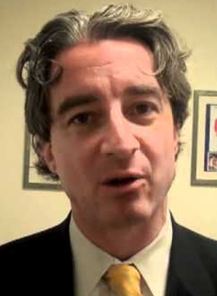
While Ben Austin (pictured here) is clearly well intentioned, his argument is based on ideology and politics, and not good public policy.
Austin’s advocacy of parental empowerment derives from his belief that public education too often puts adult needs over the needs of children. He thinks giving parents more influence over how their children are educated will move students to the center of educational decision-making. But Austin opposes allowing parents to contract with for-profit corporations because he thinks these companies will be more concerned with profit than children’s needs. A summary of Austin’s position was recently posted on the Parent Revolution blog: “Because we believe children need to be put first in every decision, it is far better to have non-profit organizations – accountable to parents, taxpayers and a stated mission – than a for-profit organization, which by definition is accountable first and foremost to investors and shareholders … ”
Hess argues that for-profit corporations already provide billions of dollars of products and services to school districts every year, and if parents decide a for-profit company can best meet their children’s needs, they should be allowed to work with it.
I agree with Hess. While Ben Austin is clearly well intentioned, his argument is based on ideology and politics, and not good public policy. Parents should be free to contract with providers that best meet their children’s needs.
The ad hominem aspect of Austin’s argument is troubling. While I was doing my holiday shopping this year, the gender, sexual orientation, race and ethnicity of the salespeople I talked to was irrelevant, as was their employer’s tax status. What was relevant was the quality and price of the products or services they were selling. I suspect Ben has these same priorities when he shops, and he likewise does not consider a corporation’s tax status when he purchases products and services for his family and friends. (more…)
The American Enterprise Institute brought together some luminaries in academia and policy yesterday to ask whether vouchers "force public schools into a zero-sum game by redirecting public funds and promising students to private schools? Or do school-choice options spur healthy competition by pressuring public schools to improve." The forum was built, in part, around the research of Northwestern University economics professor David Figlio, who recently found that the Florida Tax Credit Scholarship program boosted the academic performance of the public schools faced with the threat of losing students to the program. (Disclosure: the editors and contributors of redefinED work for the nonprofit that administrates the Florida program) Other panelists included Grover J. Whitehurst of the Brookings Institution, Nada Eissa of Georgetown University and Jane Hannaway of the Urban Institute.
The video here runs nearly 90 minutes:
Indiana Gov. Mitch Daniels is planning to sign two sweeping education bills into law today -- one that will create the nation's most expansive school voucher program, another aimed at expanding charter schools. During a talk yesterday at the American Enterprise Institute, Daniels said that no longer will Indiana "incarcerate any family's kid in a school that they don't believe is working, having tried it for at least one full year." That portion of his talk is below. The full hour-long discussion can be found here at AEI's Web site.

