by Allison Hertog
 Charter schools often have an awkward, if not contentious, relationship with their local districts. That makes sense, as the public charter school movement is essentially a reaction to what can be a cookie cutter way of educating kids in neighborhood schools. Yet charter schools are part of the very same district (or state) that funds the neighborhood schools. It’s as if they’re siblings - they have the same parents but are often rivals - vying for funding, control, students, and political power among other things. Some district/charter relationships are cooperative, but others are rancorous, as illustrated by recent disputes in New York City and Pennsylvania. Not surprisingly, both those disputes involved special education to some extent – probably the most complex, expensive and controversial area of teaching.
In most states, charter schools have the option of freeing themselves from these and other disputes by essentially becoming their own districts (legally termed Local Education Agencies or “LEAs”). But the vast majority of charters, even in states like California, where they have the option of becoming their own LEAs, have not taken on the responsibility of fully controlling their own special education programs – possibly out of fear, ignorance or politics. Fortunately, many of the more competent and high-achieving California charters - like KIPP, Aspire, and Rocketship - have chosen the path of autonomy and accountability and are leaving behind special education disputes with districts.
Where I work in Florida, where essentially charter schools don’t have the option of becoming their own LEAs (as is also the case in places like Virginia, Maryland and Kansas, and in New York for special education purposes), these special education disputes are problematic for many reasons. They’re terribly inefficient; they come at the expense of children; and they fly in the face of the charter school movement’s supposed commitment to autonomy and accountability.
To illustrate why it makes sense that some of the most competent charters are choosing to become their own LEAs and take full responsibility for special education, I’m going to use a business analogy that doesn’t carry the emotional baggage of disabled children.
Imagine a young entrepreneur who runs a new and successful Italian restaurant called “Vagare.” Vagare (i.e., the charter school in this story) has grown to serve roughly 300 customers a day. But in this city there’s a local corporate giant: “The Italian Restaurant Company” (i.e., the district). Founded in the late 1800’s, the IRC has virtually cornered the market on Italian restaurants. It serves thousands of customers daily, owns hundreds of locations, and controls restaurant supply firms and food supply chains. You get the picture.
The IRC has contracted out some of its locations and provides certain supplies to Vagare and other smaller restaurants. Vagare locally sources most of its ingredients except for Parmigiano Reggiano cheese, which, by contract, it is required to obtain from the IRC, which buys it in bulk from Italy. (more…)
Florida might find itself with more KIPP, YES Prep and RocketShip Education charter schools if a legislative proposal makes its way through the 2014 session.
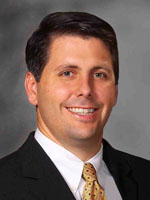
Rep. George Moraitis
The House Choice & Innovation Subcommittee has introduced a draft bill for the upcoming session to align charter school applications with the state’s new standard charter contracts (which passed last session). But the bill also includes a provision (page 27) that could give some out-of-state operators a coveted designation that would make it easier for them to expand in Florida.
The “high-performing” designation is reserved for charter school operators who have established a successful record in the Sunshine State. It’s a status approved by the state Board of Education, and one that comes with benefits such as money-saving multi-year contracts, additional student capacity and limited restrictions on opening more schools.
It’s not clear, yet, what criteria the out-of-state networks might have to meet in order to earn the designation, and how it would differ from the requirements for in-state networks. But Florida education leaders have told lawmakers they need the incentives. And some lawmakers say it’s a step toward attracting some of the country’s most successful charter school outfits to some of Florida’s poorest neighborhoods.
“We’re trying to induce people to come into the state to do business,’’ Rep. George Moraitis, a Republican member of the subcommittee, told redefinED. “This would be for excellent operators.’’
For the past three years, the state has focused on reeling in renowned operators. A few, such as The Seed Foundation and KIPP, set up shop. But Florida can and should do more, said State Board of Education Chairman Gary Chartrand. (more…)

Tuthill: The obstacles we face trying to improve public education, especially those related to generational poverty, are daunting. But I’m optimistic about the progress we’re making.
The latest Florida Department of Education report on the tax credit scholarship program, and my summer discussions with scholarship parents, students and teachers, have led me to some conclusions. These thoughts are not new, but sometimes it’s important to remind ourselves of things we know but occasionally forget.
How can Florida attract highly regarded charter schools outfits like Rocketship and Yes Prep? Some of the state’s top education leaders hope to figure that out as they begin looking more closely at why those high-impact schools aren’t in Florida now.
“We need to do a better job, in my opinion as the state Board of Education chair, of serving our neediest children,’’ Gary Chartrand told redefinED Tuesday. “We need charter school operators that are really serious, cause-minded folks ready to do the hard, hard work of working in the toughest neighborhoods.”
Chartrand joined Gov. Rick Scott and Florida’s school choice director, Mike Kooi, in Orlando on Friday for a meeting with five of the country’s leading charter school operators (KIPP, Yes Prep, The Seed Foundation, Rocketship Education and Scholar Academies) and five superintendents from the state’s largest school districts (Orange, Miami-Dade, Duval, Hillsborough and Pinellas counties).
The group also included representatives from the Walton Family Foundation and the Florida Philanthropic Network, which includes the Helios Education Foundation and the Bill & Melinda Gates Foundation, Chartrand said.
The goal: identify the roadblocks for such schools and work toward solutions. There are a lot of variables, including per-pupil funding, which Chartrand said presents a significant challenge.
Florida ranks near the bottom nationwide, with an average of $9,572 spent per pupil, according to a recent Education Week analysis. By comparison, Vermont spends $18,924 per pupil and Utah $7,042.
“It does cost more to serve the highest-needs areas,’’ Chartrand said.
Chartrand helped bring KIPP to Florida and serves on the board of directors for the Jacksonville school (Chartrand donated $1 million toward the middle school and helped raise $9 million from the local business community). KIPP offers a longer school day and year, after-school programs and highly-qualified instructors to teach an academic program that focuses on college prep and character development.
Since KIPP was founded in 1994, more than 90 percent of its students have graduated high school and more than 80 percent have attended college. Of those, 40 percent have obtained college degrees.
The state wants to lure similar schools “by making long-term sustainability … a reality,’’ Chartrand said.
That might mean reducing startup costs, he said, perhaps by giving the schools access to the state’s Charter School Growth Fund. The fund is a $30 million reservoir created by federal Race to the Top dollars and philanthropic groups to benefit high-performing charters serving low-income students.
Another way to help is to streamline the charter school authorization process, Chartrand said.
In Florida, where there is no state authorizer, charter school operators apply through individual districts. But the process could go smoother if districts, state school choice officials and charter operators collaborate more closely on the front end, he said.
Sonia Sotomayor, Supreme Court justice, might never have blossomed in the Bronx without the help of a faith-based school, a Catholic oasis called Blessed Sacrament. Sotomayor herself says so. Asked by Anderson Cooper if she would have become who she is without the school, Sotomayor said, “Doubtful.”
Sadly, Blessed Sacrament is closing this year, felled by the same social and economic forces – and education policies - that contributed to the shuttering of 1,300 Catholic schools in the past 20 years. There is tragedy and irony in its passing. You don’t have to be religious to feel it.
For most of this country’s history, faith-based schools have been a fundamental part of the American experience. But now, as the nation continues to wrestle with how best to get academic traction with poor and minority kids, its 21,000 religious schools continue to shrink, and continue to be mostly overlooked as a potential piece of the solution.
Here’s the tragic part. Eleven of 12 gold standard research studies find positive academic outcomes for students using vouchers to attend private schools, the vast majority of them religious schools. More recently, William Jeynes, a researcher at California State University, Long Beach, found via a meta-analysis of 90 studies that students in religious schools were on average seven months ahead of their peers in traditional public and charter schools. This was after controlling for race, gender, poverty and parental involvement.
Faith-based schools are a financial bargain, too – for all of us. Average tuition is thousands of dollars less than per-pupil funding for public schools, so collectively, taxpayers are saving tens of billions of dollars a year.
All this isn’t to say faith-based schools are the end-all, be-all. They range in quality just as charter and virtual and traditional public schools do. But in this era of customization, they offer more options, and in this time of desperation, more hands on deck. There is no good reason to bar them from the mix of educational alternatives that is helping parents and educators find the best fit for each and every child. (more…)
Texas: Sen. Dan Patrick's school choice bill makes an ambitious attempt to expand charter schools, lifting the statewide cap on the number of charters and requiring school districts to sell or lease underutilized classrooms or other facilties to charter operators (The Texas Tribune). More on the bill, including possible concessions by Patrick on the charter cap ( American-Statesman). Patrick cries in committee as he advocates expansion of school choice (Associated Press).
 Louisiana: A $5 million federal training program offers $50,000 grants to teachers to help turn around failing schools. The program will serve either as a stop-gap while more charter schools ramp up to provide students with better learning options, or as an alternative approach to fix a failing system with the selected district schools operating similar to charters (Education News). A mother's struggle to find a quality school for her sons points to a key failure in New Orleans’ lauded choice-based system: options abound, but they're not always reputable ones (The Lens).
Arkansas: A Senate committee votes down a proposal for a tax credit scholarship program (Associated Press).
Florida: A parent trigger bill clears a third House committee and heads for a House floor vote (redefinED). Charter school lobbyists focus this legislative session on winning state money for maintenance and facilities, or, the right to use empty space in traditional public schools free of charge (Tampa Bay Times).
Tennessee: A voucher bill forwarded as a broader alternative to Gov. Bill Haslam's proposal is withdrawn (Associated Press). But the debate continues over how many children the program should serve (Memphis Commercial Appeal). Pressed with the need for charter operators in his district, one state lawmaker is considering a proposal to allow for-profit charters; Rep. John DeBerry says the idea is to help well-meaning operators with the business-side of running charter schools (The Tennessean). The Walton Family Foundation is investing $1 million to help create four new charter schools in Memphis (Memphis Business Journal).
Georgia: A parent trigger bill is pulled amidst concerns from Republican lawmakers (Atlanta Journal Constitution). Proposed legislation could force school districts to consider parent petitions to turn non-failing public schools into charters (Atlanta Journal-Constitution). A proposal to expand the state's tax credit scholarship program clears a key House committee (Atlanta Journal Constitution). (more…)
California: A parents group in Los Angeles is using the state's landmark parent trigger law to force the school district to reform a low-performing school. (Los Angeles Times). More from the Associated Press and Education Week. A national report finds the state continues to lead the nation in charter school growth, despite funding disparities and access to facilities (Huffington Post). Oakland district officials say the American Indian Model Schools, a charter network touted for its academic successes, suffers from "corrupt fiscal practices" and should be shut down (Oakland Tribune).
 Michigan: A new report finds the typical Michigan charter school student school gained more learning in a year than a district school peer, amounting to about an additional two months of reading and math learning (The Detroit News).
Texas: Key state lawmakers are looking at the franchise tax on businesses as a vehicle to fund private-school scholarships for low-income students (Austin Business Journal). Critics of a proposed voucher program say all it will strip the public school system of funding and state leaders should instead restore $5.4 billion cut from education in 2011 (KUT News). Similar arguments in stories from KX11.com and the Associated Press.
Florida: Magnet schools continue to grow on the school choice landscape (redefinED). A new bill would require emergency response agencies to notify private schools just like they do public schools (redefinED). In response to the Newtown tragedy, private schools and charter schools are considering additional security measures too (redefinED).
Georgia: Tax credit scholarships are used at private schools that bar gay students (New York Times). (more…)
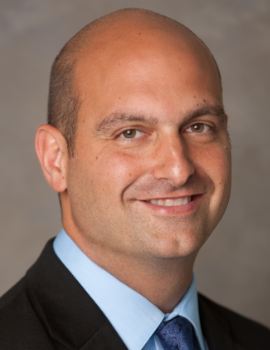
Vitti
To appreciate the significance of what Nikolai Vitti is saying about parental choice, one must first read his resume. He’s a 36-year-old with a Harvard education doctorate who served as chief academic officer to nationally recognized Miami-Dade school superintendent Alberto Carvalho before being chosen in the fall to run the Duval County school district, the 22nd largest in the nation.
So Vitti is, by anyone’s definition, a comer on the national public education scene.
And he says this: “I support choice because I think parents need options, especially those that do not have the financial means to go to a private school.”
And this: “I just don’t believe that anyone should tell a parent where they should send their child to school. I’m vehemently opposed to limiting options, especially to parents whose children are in lower performing schools or parents who don’t have the financial means to have the same flexibility that a parent would have of means. And that’s historically what’s happened with our public education system.”
These statements, in an enlightening podcast posted to this blog on Monday, are all the more impressive given that the school district he now commands has an uneasy history with private school choice. The pressure on him to continue to wage high-profile war is certainly great. But Vitti comes from a place, and perhaps a generation, where choice is not a dirty word. He openly praises charter operators such as KIPP, even borrowing from some of their practices while in Miami, and asserts that competition is making school districts up their game. In one of his first meetings on the new job, he recommended, and the school board approved, 12 new charter schools.
Vitti, then, is owed more than a pat on the back. He is also trying to break through the political divide to encourage open-minded debate on how to make choice actually work. Toward that end, he brings legitimate concerns to the table and needs to be heard. (more…)

Laurie Lee
One of Arkansas’s top school choice advocates, Laurie Lee, is on the road this month in her home state, visiting 28 cities in four weeks to spread the gospel of education reform.
Arkansas ranked No. 5 among states in an Education Week report that gave it a B- overall. The national average was a C.
But look closer at the findings, said Lee in a phone interview, as she headed toward Mountain View. Arkansas netted a D for its K-12 achievement. Its graduation rate is 70 percent. And of those students who do graduate, 18 percent aren’t ready for college coursework, Lee said.
“Overall, our state’s economy is waning,’’ she said. “We’re losing jobs and foreclosure is high. And you can tie it all back to education.’’
That’s what led Lee to organize The Arkansas Reform Alliance or TARA, a grassroots nonprofit coalition that represents parents, educators and community leaders who want to increase school accountability and improve student success.
Expanding school choice is high on its list.
“We need more options,’’ said Lee, the alliance’s executive director. Her daughters were enrolled in public schools before she switched them to private, virtual and home education in search of the best fit.
Arkansas is home to 18 open enrollment charter schools and 14 district-conversion charter schools, public schools that were converted into charter schools, according to the state Department of Education website.
But to Lee’s group and others, that’s nowhere near enough. They want fewer restrictions on public school transfers. They want more charter and virtual programs. And they want tax-credit scholarships and vouchers. (more…)
 Washington: Supporters of a charter school ballot initiative raise $5 million in six weeks, including another $2 million from Bill Gates (Associated Press).
California: A judge rules that parents who won a parent trigger battle can open a charter school next fall (Los Angeles Times).
Florida: A new initiative to put more students into STEM fields taps students in traditional, magnet and charter schools (redefinED). A long-troubled Imagine charter school continues to test the patience of the school board in Pinellas County (Tampa Bay Times). In Palm Beach County, thousands of parents and students show up for a school choice showcase that includes magnet and charter schoools (Palm Beach Post).
Pennsylvania: Republican lawmakers postpone discussion on a proposed statewide authorizer for charter schools (Pittsburgh Post Gazette). The U.S. Department of Education questions how state education officials revised rules to gauge whether charter school met academic standards (Philadelphia Inquirer). A bill to toughen oversight of charter schools dies in the state House (Associated Press).
Georgia: State senate candidates are divided over charter schools and a charter school ballot initiative (Douglas County Sentinel).
New Jersey: Charter schools tied to the highly regarded KIPP network are gearing up to expand (NJSpotlight.com).
Louisiana: An effort to recall lawmakers who supported the state's new voucher program fizzles (Associated Press). (more…)

