 The film classic Jurassic Park includes a scene in which Jeff Goldblum’s Dr. Ian Malcolm grows frustrated after touring around for the better part of a day without seeing much. Speaking into a remote camera in his tour vehicle, Malcolm asks, “Now, eventually you do plan to have dinosaurs on your dinosaur tour, right?”
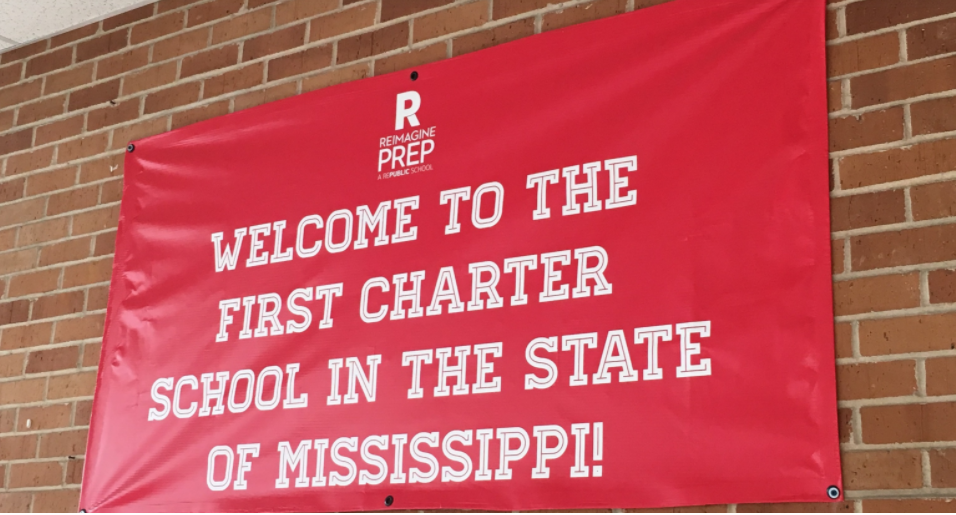
I had a similar feeling when I saw Mississippi’s charter school authorizer recently declined all applications to open new charter schools in Mississippi’s tiny charter school sector. Mississippi families deserve better than a charter-light charter school law.
My skeptical view of the Mississippi charter law is a bit out of step with some. The National Alliance for Public Charter Schools, for instance, ranked Mississippi as having the 6th ranked charter school law. That sounds impressive until you find out that the Mississippi law passed in 2013 and that only seven charter schools operate in the state. That works out to fewer than one charter opening per year.
Florida, which falls one spot below Mississippi in the same rankings, has 654 charter schools. You can imagine the state might view this ranking exercise with skepticism as it pushes forward to a 100 to 1 advantage over the state oddly ranked ahead of it.
The phenomenon of highly ranked laws producing very few charter school opportunities is not limited to the Magnolia State. The National Alliance ranks Washington state third, despite the state having only 12 charter schools; and Alabama fifth, despite having only two charter schools.
Obviously, the rankings are not focused on outcomes. Instead, they focus on adherence to a model law. This could be problematic, especially if the model law doesn’t fit the needs of states well, or simply isn’t perhaps as good as imagined.
The Brookings Institute measured the percentage of the school-age population that has one or more charter schools operating in its zip code in 2015. This isn’t a perfect measure, but it does tell a lot about the amount of access being provided by the state’s charter sector.
Arizona ranked first, with 84% of students having one or more charters operating in their zip code. Mississippi tied for last at zero and would rank only a bit better today.
Arizona also demonstrates that the quantity of charter schools is not incompatible with the quality of outcomes. The state has the largest charter school sector in the country with almost 22% of public-school students and leads the nation in academic growth for both low-income and middle- and high-income students in national data compiled by the Educational Opportunity Project at Stanford University.
Beyond outperforming the districts on academic growth, Arizona’s charter schools deliver meaningful variety in schooling across communities in the state. Arizona charters vary from back-to-basics, classical education, STEM, and a variety of specialized programs.
Unlike Mississippi’s restricted statute, Arizona charter schools include urban, suburban, towns, and rural communities. All Arizonans pay their taxes, all deserve access to both district and charter schools. A 2019 parental satisfaction poll found that Arizona charter school parents ranked their schools higher than either district or private school parents. Family demand drives which schools replicate and plays the primary role in closing low-demand schools.
Americans have developed a bad habit of looking at test scores in an unsophisticated way and then referring to some schools as “good” and some as “bad.” A better way to think about it would be to ask, good or bad for whom?
We have no shortage of students in schools with high average levels of performance who are miserable, getting into trouble, and who (rationally) yearn to be elsewhere. The real world doesn’t operate on averages; it’s about real children, and getting as many of them as possible the knowledge, habits, and skills necessary for success in life.
“Diversity. Pluralism. Variety,” the late Senator Daniel Patrick Moynihan, an icon of American progressives wrote in 1978. “We cherish these values, and I do not believe it excessive to ask that they be embodied in our national policies for American education.”
Mississippi should embody these values in state policy as well.
Montana: House Republicans endorse three school choice bills - one to authorize charter schools, another to create a modest tax credit scholarship program and a third to create an education savings account program for students with disabilities (Independent Record). A day later, several defect on the charter school bill and it goes down - though maybe not permanently - on a 50-49 vote (Billings Gazette). The tax credit scholarship bill clears the Senate (The Missoulian).
Florida. U.S. Sen. Marco Rubio, R-Fla., introduces legislation to create a national tax credit scholarship program (redefinED). A parent trigger bill that was defeated last year in a dramatic tie vote is back this year (redefinED).
 Colorado: Two bills to expand private school choice through tax credits go down to defeat (Ed News Colorado). A student is in limbo after his mother withdraws him from a charter school to send him back to his zoned district school but the district says it's too late (9News.com).
Arizona: Charter schools would have to follow state purchasing laws and those that use management companies would have to post salary information under a bill filed in the wake of a newspaper investigation (Arizona Republic). Lawmakers nix a bill that would have required mailers be sent to parents informing them of school choice programs (Arizona Daily Sun).
New Mexico: Public schools, including charter schools, would be barred from contracting with private entities under a bill supported by critics who fear "a Trojan horse-type assault on the state to divert public education funds" (Santa Fe New Mexican).
Idaho: Lawmakers consider equitable funding for charter schools (Idaho Reporter).
Washington: The state public schools superintendent asks legislators to put charters under his watch, a move that conflicts with the new law voters recently approved that calls for a separate supervisory panel (King5).
California: The San Francisco school district triples the rent for charter schools, after charging less than other districts for years, prompting an outcry from some charters (San Francisco Chronicle). (more…)
Tennessee: Gov. Bill Haslam proposes a voucher that's limited to low-income students in low-performing schools, with additional state funding for those schools to boot (KnoxNews). More from timesfreepress.com and Nashville Public Radio. Haslam reiterates that his proposal won't affect funding for public schools (Nooga.com). Both supporters and opponents find details to criticize (KnoxNews). Haslam's administration is also backing a bill that would cap enrollment at a virtual charter school run by K12 Inc, reports timesfreepress.com.

Florida: At a National School Choice Week event, new Florida Education Commissioner Tony Bennett gives some school districts credit for expanding public options such as magnet schools and career academies (redefinED).
Louisiana: The teachers union in New Orleans asks for the names of teachers in the city's charter schools in the hopes of organizing them (The Lens).
Arkansas: Former Florida Gov. Jeb Bush makes an appearance during National School Choice Week, urging lawmakers to expand charter schools and other choice options and calling education reform both the civil rights and economic issue of our time (Associated Press). More from the Arkansas Press-Gazette.
Virginia: Democratic lawmakers kill a charter school bill and snub their party's national platform in the process (Watchdog.org). More from the Associated Press. A bill to allow home-schoolers to play sports in public schools - a so-called "Tebow" bill - passes the House but must still clear the Senate (Associated Press).
Georgia: The state charter schools commission holds its first meeting since being revived by passage of a constitutional amendment (Atlanta Journal Constitution). More than 1,000 charter school supporters gather to celebrate the amendment's passage (Atlanta Journal Constitution).
South Carolina: State Superintendent of Education Mick Zais says at a National School Choice Week event that he supports a legislative proposal for tax credit scholarships (SCNow.com).
North Carolina: An expansion of charter schools brings debate about quality (Durham Herald Sun).
Mississippi: A bill backed by Gov. Phil Bryant to create a tax credit scholarship program clears the Senate education committee (Associated Press).
Texas: A charter school chief executive testifies in a trial about education funding that low state spending is hurting charters too (San Antonio Express News). The Amarillo school district joins others in supporting an anti-voucher resolution (NewsChannel 10). Gov. Rick Perry backs expansion of charter schools and a proposal for tax credit scholarships (Dallas Morning News). (more…)
 Editor's note: "Blog stars" is our occasional roundup of thoughtful stuff from other ed blogs and sometimes a newspaper or two.
Don't forget course choice
From a Shreveport Times op-ed: Nearly all of us have had an experience where we were stuck in a class in which no matter how many times the teacher explained a concept, we just couldn't grasp it. Our friends around us may have understood, but it just didn't make sense to us. The class whisked along, we fell further behind, and the frustration mounted. What if we had had the chance to take the class online, at our own pace, with concepts explained multiple ways until we grasped it?
Louisiana students now have that option.
Thanks to Act 2, a law that Gov. Bobby Jindal signed into law in the spring of 2012, a student attending one of the state's lowest performing schools — those with a grade of C, D, or F — now has the right and the funding to take courses from any of the 45 state-approved high-quality course providers, so long as the student takes at least one course in her "home" district school. Students at schools graded an A or B will also have the right to take any online course that their local school does not offer, thereby expanding a student's course options, and a district could also decide to allow a student to take any online course through the program. ...
As every parent knows, every child has different learning needs at different times. If we hope to have all children succeed in school and life, then we need a system that can personalize for their different needs. While the world has changed, however, our schools have not. Instead we have an education system that mandates the amount of time students spend in class but does not expect each child to master her learning. The result is that students don't receive the support they need to master each subject before they move on to the next one. This creates gaps in every child's learning — gaps that haunt them later in their schooling. Full op-ed here.
Private schools funded through students jobs
From Jay Mathews' Class Struggle blog: Twelve years ago, I stumbled across a story that seemed too good to be true. A Catholic high school in Chicago ensured its financial survival by having students help pay their tuition by working one day a week in clerical jobs at downtown offices.
This was a new idea in U.S. secondary education. New ideas are not necessarily a good thing, because they often fail. But the creator of Cristo Rey Jesuit High School was an educational missionary named John P. Foley who had spent much of his life helping poor people in Latin America. I was not going to dump on an idea from a man like that without seeing how it worked out.
Now I know. The Cristo Rey network has grown to 25 schools in 17 states, including a campus in Takoma Park, where more than half the students are from Prince George’s County and more than a third are from the District. It is blossoming in a way no other school, public or private, has done in this region. ...
More than 90 percent of the students at the original Cristo Rey school were from low-income families. Few had been subjected to the pressures of big-city offices. But they received proper training for their clerical assignments. As the experiment proceeded, they realized the writing, reading and math skills they were learning in school were relevant to their new jobs — and their work experience would help them find jobs to pay their way through college. Full column here.
Revolution hits the universities
From Thomas L. Friedman at the New York Times: LORD knows there’s a lot of bad news in the world today to get you down, but there is one big thing happening that leaves me incredibly hopeful about the future, and that is the budding revolution in global online higher education. (more…)

Gov. LePage
New Hampshire: The ACLU and Americans United for Separation of Church and State file suit against the state's new tax credit scholarship program (New Hampshire Public Radio). More from Associated Press.
Maine: State Education Commissioner Stephen Bowen points to problems in the process after the state charter school commission rejects four of five applicants (Bangor DailyNews). Gov. Paul LePage tees off on the commission and the teachers union after the rejections (Portland Press Herald). Supporters of virtual charter schools are also upset (Portland Press Herald). The teachers union blasts LePage for wanting to lift the cap on charter schools (Portland Press Herald). Public school administrators say charters should have to feel effect of education budget cuts too (Bangor Daily News).
Kansas: Vouchers, tax credit scholarships and an expansion of charter schools are all expected to be part of the legislative discussion this year (Wichita Eagle.)
Kentucky: A bill is filed to allow a limited number of charter schools to open in the state for the first time (Kentucky Public Radio).
California: Parents at Desert Trails Elementary School finally succeed in using the parent trigger law to get a charter school to take over their school (Los Angeles Times). More from Hechinger Report and Education Week.
Georgia: A state representative is planning to file a parent trigger bill for the session that begins today (Associated Press).
Mississippi: Business leaders are backing the legislative push for charter schools (Associated Press). Racial divisions and mistrust are at play in debate over charter schools (Hechinger Report). (more…)
Mississippi: State lawmakers are expected to try again this year to pass charter school legislation, but some suburban Republicans continue to have concerns (Desoto Times Tribune). Lt. Gov. Tate Reeves says there's bipartisan support for charter schools (Associated Press). More from the Memphis Commercial Appeal. At least one lawmaker is talking about the possibility of tax credit scholarships (GulfLive.com)
 Florida: Jonathan Hage, CEO of Charter Schools USA, is named Florida Trend magazine's Floridian of the Year for 2012. A new state lawmaker works in public schools as an assistant principal, but supports publicly funded private school choice options (redefinED).
Arizona: The state's education savings accounts program expands to include students from the lowest-performing public schools (Arizona Republic.)
Oregon: The founders of a charter school chain are accused of racketeering and money laundering and charged with scamming $17 million from the state (The Oregonian).
Washington D.C.: Charter schools in the district expel students at far higher rates than traditional public schools (Washington Post).
Indiana: Lawmakers will look at expanding the state's voucher program during the upcoming legislative session (Associated Press).
Louisiana: The legal challenge against the state's voucher program heads to the state supreme court (New Orleans Times Picayune). (more…)
 Florida: Tony Bennett is selected the state's new education commissioner (redefinED). He tells reporters afterwards that he champions school choice first and foremost because of the social justice component (redefinED). A new group headed by T. Willard Fair, co-founder of the state's first charter school, aims to create a pipeline of black executives and entrepreneurs to help lead private and charter schools (redefinED). The Miami-Dade school district ranks No. 10 in the country for school choice, according to a new report from Brookings (redefinED). A Catholic school in Tampa is at the heart of a University of Notre Dame project to revitalize Catholic schools, particularly for Hispanic students. (redefinED).
Louisiana: Voucher parents are worried in the wake of the legal ruling that puts the program in limbo (advertiser.com). Gov. Bobby Jindal makes a pitch for vouchers at a Brookings Institution event in Washington D.C. (Huffington Post).
Washington: More than 150 teachers, parents and administrators attend a charter school conference in the wake of the successful passage of a charter school ballot initiative (Tacoma News Tribune). (Full disclosure: The conference was sponsored by the Washington Charter School Research Center, which was founded by Jim and Fawn Spady. Fawn Spady chairs the board of directors at the American Center for School Choice, which co-hosts this blog.)
Michigan: The education adviser to Gov. Rick Snyder presents the governor's sweeping public school choice proposal to business and education leaders (Grand Rapids Business Journal). (more…)
 Florida: State education commissioner Gerard Robinson, a former president of the Black Alliance for Educational Options, resigns amidst tumult over the state's accountability system (Tampa Bay Times). Robinson says the move was for family reasons (Tampa Bay Times). Critics of Florida's education reforms see an opportunity to change direction (News Service of Florida).
Louisiana: There are far more applicants than seats available in Louisiana's new voucher program, leaving thousands of parents and students out of luck. (New Orleans Times-Picayune)
Wisconsin: Private school vouchers are a central issue in a Democratic primary for a state assembly seat in Milwaukee. (Milwaukee Journal Sentinel)
Maine: On the birthday of school choice champion Milton Friedman, choice proponents in Maine promise another legislative push for an expansion of learning options. (Bangor Daily News)
Mississippi: Gov. Phil Bryant pushes for charter schools as part of his education reform package (Jackson Clarion Ledger). Lt. Gov. Tate Reeves also says he'll continue pushing for legislation to boost charter schools despite the failure of a charter school proposal during the last session (Memphis Commercial Appeal).
North Carolina: The state board of education is set to consider allowing 25 new charter schools across 13 counties next year. (Associated Press)
South Carolina: Parents and teachers talk up the positives of a new charter school in the Myrtle Beach area. (Myrtle Beach Online)
Nevada: A state lawmaker proposes a voucher bill that would give parents half of the state's per-student funding to send their children to private schools. (Las Vegas Review Journal)

