 Graduation rates: The U.S. graduation rate hit a record 82 percent in 2014, according to the U.S. Department of Education. That's up three points from 2011, when the department began calculating the rate by the number of students who graduated with a regular diploma within four years. Florida matched the national average with an 82 percent graduation rate. Minority and low-income students also show gains, but continue to lag behind the average. Education Week.
Retention issues: Sarasota School Superintendent Lori White says the problems with retention for third-graders this year is prompted by the difference in the ways parents are dealing with testing. Last year, she says, the parents complained about the state's standardized testing, and then their children took an alternate test, went to summer school or did more work to bolster a portfolio. This year, a few parents have rejected the options of further testing or submitting a portfolio. Gradebook.
Individualized learning: Patricia Levesque, head of the national Foundation for Excellence in Education and the state-focused Foundation for Florida’s Future, says Florida's leaders should alter education policies to accommodate individualized learning in schools. Her remarks came at an education summit in Orlando, hosted by the Florida Chamber of Commerce. Politico Florida. Also at the conference, hotel developer Harris Rosen encourages other philanthropists to offer free pre-K and college scholarships in low-income neighborhoods. He has financed such a plan in the Tangelo Park neighborhood for the past 22 years. Politico Florida.
AP computer science: Florida is below the national rate for students passing AP computer science passing the AP Computer Science exam, according to the College Board and the National Center for Education Statistics. Bridge to Tomorrow. (more…)
School choice. School choice helps low-income students succeed, former Gov. Jeb Bush writes in a Medium post with a Florida shout-out.
PLSAs. The Senate sends legislation expanding Personal Learning Scholarship Accounts to an empty House, likely sealing its fate. redefinED. Times/Herald. The program is administered by organizations like Step Up For Students, which co-hosts this blog and employs the author of this post.
Tax credit scholarships. Florida's largest private school choice program gets a hefty boost. Gradebook. Lakeland Ledger. Step Up also administers this program.
Charter schools. The parent company starts its own investigation of an Escambia charter facing scrutiny. Pensacola News-Journal. Charter schools are public schools, a Naples Daily News letter-writer reminds readers.
Legislation. A bunch of school choice bills and other issues are likely dead this year. Gradebook. Early learning advocates are frustrated. Florida Times-Union. A safe-walks-to-school bill survives. Naples Daily News. A contentious high school sports bill is likely done for. Northwest Florida Daily News.
Testing. How will the state's new testing system affect third-grade retention decisions? Tampa Bay Times. Hillsborough teachers say they don't get testing data quickly enough to use it. Gradebook. Bay's superintendent holds out for more testing changes. Panama City News Herald. More on testing from the Naples Daily News.
Digital learning. Schools should use technology to make "time the variable and learning the constant," Patricia Levesque writes in Ed Next. (more…)
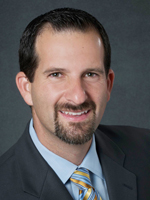
Bileca
The Florida House this morning unanimously approved legislation that would expand access to the state's newest parental choice program for children with special needs.
The legislation would allow children with muscular dystrophy and a broader range of students with autism to use Personal Learning Scholarship Accounts, a cutting-edge program created last year.
The legislation would also open the program to three- and four-year-olds, expand the services that can be paid for with the accounts, increase oversight for the nonprofit organizations that administer the program, and allow them to collect administrative fees.
The largest such organization is Step Up For Students, which co-hosts this blog and employs the author of this post.
Last year, Florida became the second state in the country to create an education savings account program, which allows parents of special needs children to use state education funding to pay for a range of education-related services, from private school tuition to therapies and textbooks.
Rep. Mike Bileca, R-Miami, backed the creation of the program last year, and helped shepherd this year's bill, which no legislator has voted against. He said he's been hearing from parents who have begun using the accounts.
"It's been nothing short of life-changing," he said before the bill passed 114-0. "Of all things that I've done personally on education in this chamber, there's been nothing more powerful for me than being able to talk with these parents and hear their stories."
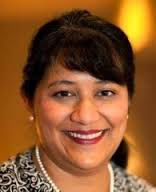
Levesque
A prominent figure in Florida's education reform movement has been tapped to help oversee the largest private school choice program in the country.
Patricia Levesque last month was elected unanimously to the governing board of Step Up For Students, the non-profit that administers tax credit scholarships and Personal Learning Scholarship Accounts for more than 70,000 students (and co-hosts this blog).
Levesque is CEO of the Foundation for Excellence in Education, which Jeb Bush founded before he was elected Florida's governor.
Before joining the foundation in 2007, she was a key member of the legislative staff that helped enact Bush's first-term education agenda. She then joined the governor's office as an education policy adviser in 2002.
Doug Tuthill, president of Step Up, said Levesque was recruited for the position because she's "one of the country's leading thinkers when it comes to personalized learning," which he believes is important terrain for the future of education policy.
This year, she was an outspoken advocate for legislation creating the scholarship accounts, which gives families of students with significant special needs a way to pay for a mix of educational expenses, from therapies and private school tuition to curriculum and private tutoring.
"A more customized approach – whether choosing the school, supports or services that meet a child’s needs – is a good thing," Levesque said in a statement. "It breaks down barriers to success and gives parents the power to help their children reach their full potential.”
Florida is the second state to create a personal scholarship account program. Many advocates view similar programs as part of the next wave of parental choice.
Levesque joins an eight-member, all-volunteer governing board, which last year added former Democratic state Sen. Al Lawson.
Florida's teachers union announced a lawsuit Wednesday aiming to block a new law that, among other things, expands eligibility for tax credit scholarships and creates the second-in-the-nation personal learning scholarship accounts program.
The suit doesn't argue the programs themselves are unconstitutional. Like a recent challenge of Alabama's tax credit scholarship program, it focuses on how the law was passed.
The six-page complaint filed in Leon County Circuit Court argues lawmakers violated the state's "single-subject" rule by combining the school choice measures into a larger education bill that expanded collegiate high schools, created an "early warning system" for struggling middle school students, and grew incentives for schools to offer career education programs.
"It is an outrage that corporate voucher expansion was tacked into an unrelated bill and slipped into law on the final day of session," Florida Education Association Vice President Joanne McCall said, as reported by the Tampa Bay Times/Miami Herald.
The lawsuit drew a sharp response from Patricia Levesque of the Foundation for Excellence in Education, who tried to put the focus on the students who would benefit from the new options.
"There are those who believe families should have options and trust parents in those decisions for their kids," she said in a statement. "And sadly there are those who find educational choices threatening to their political power."
That's what at stake. But since the lawsuit itself is about the nuances of legislative procedure, here's some background.
The single-subject rule. Florida's constitution requires every law to "embrace but one subject and matter properly connected therewith, and the subject shall be briefly expressed in the title." The union's legal complaint argues the various provisions of SB 850 "are not related to each other, except in the broad sense that all have something to do with education." (more…)
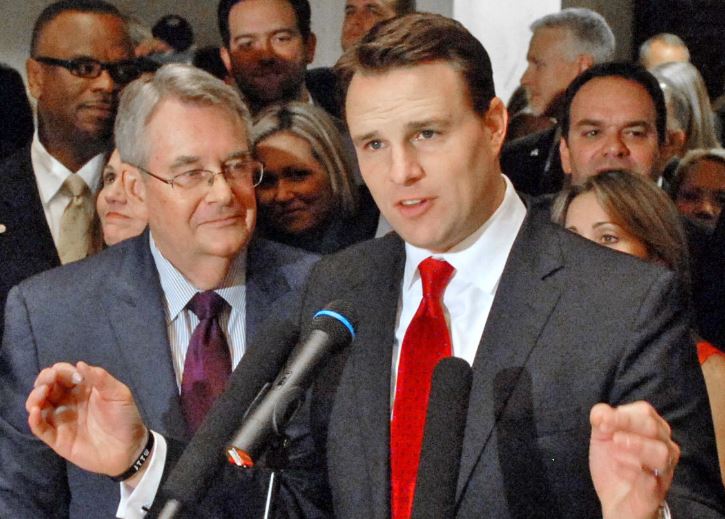
President Gaetz (left) and Speaker Weatherford
One called for more expansion. The other, for more accountability.
This spring, intentionally or not, Florida legislative leaders highlighted twin themes for the state's parental school choice programs that not only marked the session that ended last week, but will define many more to come.
It was House Speaker Will Weatherford who stressed the former. He touched off one of the most rancorous debates of Florida's 2014 legislative session when, more than a month before it began, he called for a "massive expansion" of education options for parents.
And it was Senate President Don Gaetz, halfway through the session, who offered the yin to Weatherford’s yang, explaining the Senate's push for new accountability measures for the tax credit scholarship program.
“The program has grown to a place where it is no longer an experiment,” he told the Associated Press. “It is no longer a pilot. It is an accepted way for families to exercise choice in education.”
Whether they're talking about charter schools or private-school scholarships, that's been the reality for the past two legislative sessions under Gaetz and Weatherford: School choice is no longer an experiment. It’s now mainstream. It will continue to grow. But as it does, questions have shifted from whether parental choice programs should be allowed to expand to how best to regulate them, how to create more attractive options in the traditional public school system, and what the next phase of experimentation should look like.
These are questions that will increasingly emerge in other states, but Florida is ahead of the curve. It ranks at or near the top in enrollment for charter schools, virtual schools and private schools via vouchers and tax credit scholarships, and there are no signs of slowing.
The shifting focus cuts across all sectors. Take charter schools.
This year, the Senate opted not to pass a major charter school bill. Sen. John Legg, R-Trinity, the chairman of the Senate Education Committee, said that was in part because lawmakers were waiting to see the effects of changes they passed last year, including a bill requiring the Department of Education to create a model charter contract for school districts.
Last year's law also brought charters under more financial scrutiny. The effort was supported by some charter school advocates who wanted to prevent cases, like a handful of high-profile ones from Central Florida, from damaging a movement that is getting more attention as it takes on a larger share of Florida's school enrollment.
"I think the growth of charter schools is going to bring more scrutiny to the charter schools themselves," Wayne Blanton, executive director of the Florida School Boards Association, said in an interview. "They're going to come eventually under the same microscope that we are."
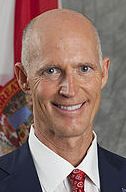
Gov. Scott
Common Core is okay. But the new, multi-state tests aligned to them may have to go.
So suggests Florida Gov. Rick Scott in documents set for release today.
In a draft executive order, Scott says "Floridians will not accept Federal government intrusion into the academic standards that are taught to our students." The order then says the tests being put together by the Partnership for Assessment of Readiness for College and Careers, better known as PARCC, "do not meet the needs of our students or the expectations of state leaders" in terms of cost, test length and testing requirements - and constitute "excessive involvement by the United States Department of Education." It says the state education commissioner shall recommend to the state Board of Education that the board terminate Florida's role as the fiscal agent for PARCC and establish a competitive bidding process for new tests.
In a draft letter to U.S. Education Secretary Arne Duncan, Scott also criticizes PARCC, saying it "has become a primary entry point for the involvement of the federal government" in many state and local education decisions.
But the letter also notes the state BOE adopted Common Core standards in 2010 after a process that began under former Gov. Jeb Bush and continued under former House Speaker Marco Rubio.
"This process resulted in the highest academic standards that could move our students and teachers away from 'teaching to the test' and toward a more independent, analytical approach to reading, writing and math," the letter says.
Here is a copy of the letter to Duncan. Here is a copy of the executive order. And here is a letter to BOE Chair Gary Chartrand.
Statement from Patricia Levesque at Foundation for Florida's Future here. Statements from six of seven BOE members here.
Other coverage: Tampa Bay Times, Tampa Bay Times (editorial), Education Week, Sunshine State News, South Florida Sun Sentinel, Palm Beach Post, Orlando Sentinel, Associated Press, Pensacola News Journal, Gradebook, The Buzz, StateImpact Florida, Daytona Beach News Journal, Fort Myers News Press, Sarasota Herald Tribune, John Romano, The Answer Sheet, Florida Current, NPR, Bridge to Tomorrow, Wall Street Journal.
Charter schools. A Lake County charter will get money to stay open despite an unfavorable audit that showed problems with record keeping for enrollment. Orlando Sentinel.
 Common Core. The Manatee school board votes to release students early on one Wednesday a month next year so teachers can have more time to train for Common Core. Bradenton Herald.
ALEC. ALEC and Patricia Levesque respond to Progress Florida's report suggesting ALEC has run amok in Florida ed policy. StateImpact Florida.
School spending. Business leaders propose cost-saving measures for the Pinellas district, including limiting sick leave payouts. Tampa Bay Times. Pinellas may also consider transferring its internal police force to the Pinellas County Sheriff's Office to save money. Tampa Bay Times.
School grades. The Ocala Star Banner writes up fears of falling grades this year.
Teacher conduct. A Pinellas teacher is charged with felony child abuse after reportedly telling one student to put another in a choke hold. Tampa Bay Times, Tampa Tribune.
Transparency. The Pinellas school district isn't publicly posting a number of key items up for consideration by the school board. Gradebook. An appeals court rules that a Broward whistleblower fired after reporting corruption may be able to get her job back. South Florida Sun Sentinel.
School choice. Pasco Superintendent Kurt Browning says the district's record in providing more school choice has been "abysmal." Gradebook.
Charter schools. The principal of a YMCA charter in Venice is put on leave for undisclosed reasons. Sarasota Herald Tribune.
School turnarounds. Seven teachers who applied to keep their jobs at struggling Lacoochee Elementary in Pasco are not selected. Tampa Bay Times.
School rankings. Newsweek says 115 of the nation's 2,000 best high schools, including five of the Top 20, are in Florida. StateImpact Florida. Nine Volusia schools make the list, reports the Daytona Beach News Journal.
School spending. Miami Herald: "On Wednesday, the Miami-Dade School Board voted to explore the establishment of a trademark and licensing program that would create official district merchandise and at the same time outlaw pirate products." The Lake County School Board looks at a slew of cuts to close a $16 million budget deficit, reports the Orlando Sentinel. The Marion school board rejects pay raises for teachers and paraprofessionals through the end of this year, reports the Ocala Star Banner.
Legislative wrap-up. Parent trigger aside, Patricia Levesque sees a lot of positive changes. Orlando Sentinel. (more…)
Charter schools. The Pinellas school district could lose $6 million next year if the school board approves a new charter school and the proposed expansion of several others. Gradebook.
 Jeb Bush. Digital learning, Common Core and empowering the parents of students with disabilities top the legislative agenda for Jeb Bush's Foundation for Florida's Future, says executive director Patricia Levesque. StateImpact Florida.
School spending. Lawmakers consider bringing back the "critical needs" millage, reports Gradebook. The Lee school district is auctioning off two unused buildings, reports the Fort Myers News Press.
School safety. Lawmakers are poised to pass legislation that would allow school nurses to use EpiPens for students without a prescription. Tampa Bay Times. (more…)

