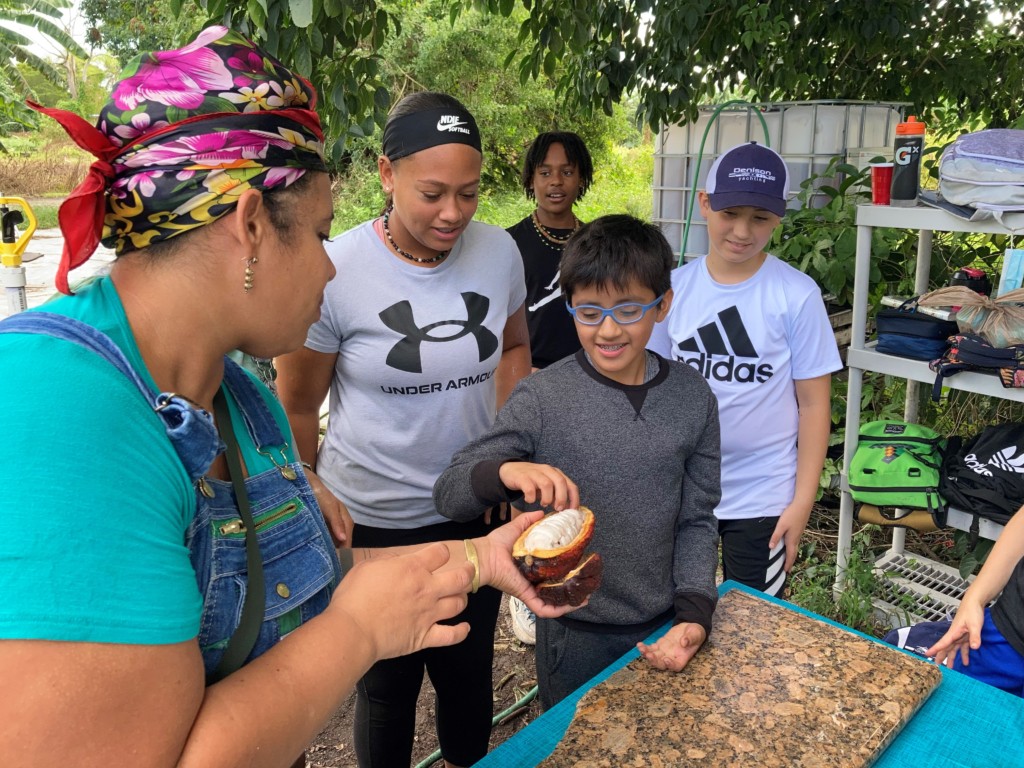
Shiren Rattigan, foreground, founded Colossal Academy in the Miami-Fort Lauderdale area for curious and active tweens and teens. The experiential learning microschool aims to utilize inquiry and students’ natural curiosity to help them navigate their learning.
The expanding number of states making flexible spending accounts (ESAs) accessible to their public education students is accelerating the transition from school choice to education choice as families spend their ESA funds on a variety of educational services and products beyond schools. As more education providers enter the public education market and public education increasingly occurs outside of schools, a transition from school districts to education districts also seems inevitable.
This transition will change the role of districts in the public education market from providers of instruction to market facilitators and regulators.
A diverse array of independent teachers, autonomous schools and collaborative educator networks will take responsibility for delivering instruction. Farms, parks, zoos, businesses, museums, libraries and community centers will offer learning experiences or resources to families in this public education market. And education districts will help families and educators thrive in this dynamic ecosystem and protect the public interest by providing leadership, support, regulatory oversight, and connective tissue.
This new role for government in the public education market is like the current role government plays in important markets such as housing, health care, and food. Government is not our country’s primary owner and provider of housing, health care, or food. Government facilitates, supports, and regulates these essential services and products, but independent individuals and entities are the primary providers in these markets.
In the United States the management of public education is primarily a state and local responsibility. Consequently, the pace and character of a transition from school districts to education districts will differ across states and local communities. Here is speculation about how a future education district might function in my local community.
The date is Sept. 24, 2054. A new school year has not begun in Pinellas County, Florida because the previous one never ended. Public education is continuous and ubiquitous in 2054.
The operational focus of our educational district has shifted from owning and managing schools to leading, facilitating, and supporting publicly funded teaching and learning wherever and whenever it occurs. This is a shift many school district leaders had long advocated for.
Our county government now owns and maintains buildings and other property our school district once owned. Our county sheriff’s office is responsible for safety and security in these buildings, and local businesses provide meals for students and educators.
Our school district transportation system has merged into our regional public transportation system, which now transports students to educational and childcare sites throughout the county. This expanded regional system includes vehicles ranging from small cars and mini-vans to 50-seat buses, ride-sharing services, and autonomous driving vehicles. Transportation in all these vehicles is safe, reliable, and transparent. Families always know where their children are and may communicate with them at any time.
Our PreK-12 students have flexible spending accounts (ESAs) containing public funds their families use to pay for state-approved educational products and services. All students have customized learning plans that include their current learning priorities. Families regularly update these priorities to help them decide how they spend their children’s ESA funds.
Families are using state-approved e-commerce sites to access and pay for state-approved educational services and products with their ESA funds. These sites contain information about available services and products and include feedback from other families about their experiences with each service and product provider.
Most of our education service providers are not government owned or managed, but the education district ensures these venders are safe and provides comprehensive information about their services. The district also helps arbitrate customer service disputes between providers and families.
While our education district does not own or maintain education facilities, it is responsible for allocating the space in these facilities. Some Florida education districts auction off leases to space in their buildings. We don’t. Education organizations apply to our district for space, and the district leases space based on criteria we think best serve the students and each facility. We are particularly thoughtful about the ages of students in each facility and the educational models the various providers are using. Most facilities house multiple education organizations of varying sizes.
Our education district helps education providers find space in privately-owned buildings when space in county-owned facilities is not available. Our district also collaborates with our county commission to determine future space needs and with our regional transportation agency to help ensure students’ future transportation needs are met.
Our education district sells administrative services to education providers who prefer to outsource their administrative needs, including payroll, insurance, IT support, procurement, and health benefits. In some instances, our district employs personnel for education providers and then leases those employees back to them.
Our local teachers union expanded its business model and now provides incubator and administrative services for union members who are starting new businesses such as micro and hybrid schools and tutoring services.
Our preservice and in-service teacher education programs have added entrepreneurship to their core curricula. Most teachers, like all other professionals, prefer working for others, but all benefit from understanding how to run a successful education business.
Looking back, it’s clear the administrative burdens we placed on school districts over the past 200 years were overwhelming. Well intentioned and hardworking professionals did their best to make school districts in 2024 work, and they did lots of good. But these systems with their roots in the early-to-mid 1800s were not designed to consistently deliver educational excellence and equal opportunity in the 21st century. Education districts are enabling teachers, district administrators, and local school boards to focus solely on supporting teaching and learning. An aspiration most have had for many years.
Meanwhile, back in 2024, the transition from school districts to education districts, while perhaps inevitable, will be messy politically and operationally. Progress usually is.
Gabriel Lynch III was born five months early and weighed 1.8 ounces when he entered this world fighting for his life. He spent his first three months in an Orlando hospital.
When he was just weeks old, he was removed from an incubator and airlifted to a Tampa hospital for heart surgery. By then, Gabriel already had surgery on his eyes. He developed a grade 4 brain bleed, which doctors told his parents, Krystle and Gabriel II, could lead to cerebral palsy.
It didn’t.
“He had a lot of issues,” Krystle said, “but God is good.”
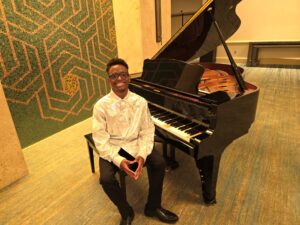
Gabriel Lynch used the ESA from his PEP scholarship for piano and guitar lessons.
Krystle chronicled it all in her book, “Miracles do Happen. A mother's journey through preterm birth, loss and triumph.”
A picture of tiny Gabriel dominates the cover. He is hooked up to tubes with bandages over both eyes. He’s barely bigger than the length of his mom’s two hands as she holds him.
A current photo of Gabriel might include a piano, which he can play.
Or him holding the book about his faith, which he wrote when he was 13.
Or a cap and gown.
Gabriel, who turns 19 in August, graduated high school in May, having been homeschooled during the past school year with the help of the Personalized Education Program (PEP) that comes with the Florida Tax Credit Scholarship (FTC). The FTC is managed by Step Up For Students.
Signed into law in 2023 as part of HB1, PEP provides an Education Savings Account (ESA) for students who are not enrolled fulltime in a public or private school. The ESA allows parents to customize their children’s education by spending their scholarship funds on a variety of approved, education-related expenses.
“The PEP scholarship has been a blessing,” said Krystle, who along with her husband is a pastor at a local non-denominational church.
All three of her sons received PEP scholarships last year. Before that, they received FTC scholarships and attended private schools near their Apopka home. Gabriel will attend Seminole State College in Lake Mary this fall, while his younger brothers – Kingston (eighth grade) and Zechariah (sixth grade) will continue to receive PEP scholarships.
“There were just certain things about their education that my husband (Gabriel II) and I needed to take control of,” Krystle said. “As a parent we know, and we want to control their education, so we decided to homeschool them.”
What Krystle wanted more than anything else was the ability to tailor the education toward each of her sons’ interests and needs.
“They all have different learning paths,” she said.
For Gabriel, that was an opportunity to use the ESA for dual enrollment. He took English, psychology, and music appreciation courses through the dual enrollment program at Oklahoma Christian University.
He also used his ESA for piano, guitar, and voice lessons and a tutor he worked with three times a week. His curriculum included Spanish I and II, music, statistics, and personal finance.
Kingston has improved in math since being homeschooled because he now has access to a tutor, both during and after school. He will take computer science and coding this school year. Krystle would like him to dual enroll once he reaches high school.
Zechariah is academically gifted, according to his mom. He studied above grade level as a fifth-grader and will do so again this year when his course load will include advanced classes. Krystle is trying to prepare him for advanced placement classes when he reaches high school.
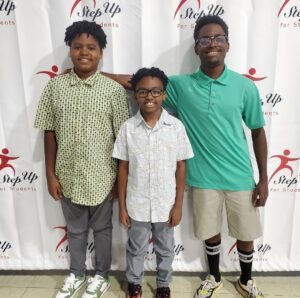
Kingston, Zechariah and Gabriel have thrived academically with the help of the PEP scholarship.
Krystle is also researching hybrid learning opportunities for Kingston and Zechariah.
“That's a game-changer right there because my kids want social interaction, but I don't want them to be in school all five days,” Krystle said. “I can send them to school once or twice a week and they can learn a subject during that time, but then the rest of the subjects I teach at home.”
All PEP students are required to take a yearly state-approved norm-referenced test. (The list of tests can be found here.) The boys took the Stanford Achievement Test Series, Tenth Edition (SAT10).
“We just love the fact that PEP gives students the opportunity to be their best selves,” Krystle said. “They can have guitar lessons. They can have singing lessons. They can have acting lessons. They can have reading tutors, language arts tutors.
“The sky’s the limit, and we just love that.”
 Music is a big part of Gabriel’s life. He played the piano in an AdventHealth commercial and placed first in the Sacred Heart Music Competition in May.
He would like to be a composer.
“I’ve had a passion for music since I was 8,” he said.
He also has a passion for social media, with more than 17,000 followers on TikTok and nearly 5,000 on Instagram (GABE4_christ). He has a YouTube channel and a podcast.
His book, “The Destined Place of Living,” is about his faith. He is an ordained minister and a motivational speaker for youth.
Through the Florida Parent-Educators Association, which serves homeschooled families, Gabriel was able to attend a prom and participate in a graduation ceremony in May at the Gaylord Palms Resort and Convention Center in Kissimmee. That’s also where he won the music competition.
It brought an end to his high school education and his one year being homeschooled.
“I will say that homeschooling was one of the best decisions that my parents have made,” Gabriel said. “It gave me more freedom to study music.”
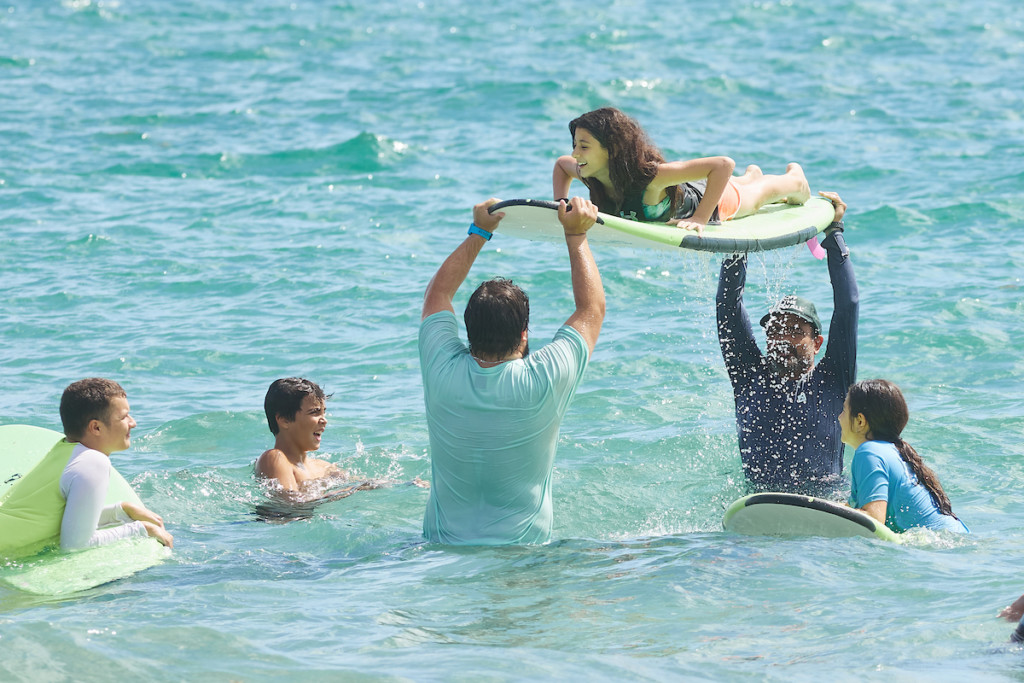
Organizations like Surf Skate Science pioneering new approaches to collaboration in public education. Photo credit: Chris Aluka Berry AlukaStorytellingPhotography.com
Despite calls for reform and waves of attempted transformation, key features of American schools have been remarkably stable for more than a century.
Students spend six or so hours a day, five days a week, sitting in rows of desks with other children about the same age, receiving instruction from their teachers in specific subjects: language arts, math, science and social studies. At the end of the year, they advance to the next grade. In high school, they socialize while standing next to banks of lockers, and the varsity football teams play on Friday nights.
These conventions persist despite their flaws. Students are frequently passed along to the next grade despite gaps in their academic foundations, leading them to graduate unprepared for life after school and few opportunities to close those gaps. If political leaders decide new knowledge or skills will be essential for students to thrive as adults — computer science, say, or financial literacy —cramming new subjects into the existing curriculum is a major headache.
The more time students spend in conventional schools, the more bored and disengaged they become. Some of the most engaging parts of schools have been relegated to the periphery—career academies, extracurriculars, sports, drama or music programs— where common schooling conventions hold the least sway. These are the places where students form deep relationships, develop lasting memories, and hone skills like creativity or teamwork.
So why do these conventions persist? Innovation researchers at the Clayton Christiansen Institute coined a term for one set of hidden forces that can keep an existing system in place despite pressure for change: A value network.
Textbook publishers and education technology companies design their products for conventional schools. Construction firms specialize in building them. Colleges train teachers to work in them. Complex webs of afterschool programs, summer camps, tutoring centers, and youth sports leagues all design their programs around conventional assumptions about when students will be in school. Parents and employers design the workweek around it.
These interdependent forces pose huge hurdles for any innovative educator who wants to break from convention. So, Christiansen's Thomas Arnett argues it’s best not to try within the confines of the existing system.
Instead, he advocates creating not just new learning experiences for children, but entirely new value networks that can allow new assumptions to take shape.
In Florida, and in in pockets all over the country, this is starting to happen. Here are two promising places to look for the value networks of the future.
Homeschool parents and community institutions
Some of the most valuable learning assets in most communities lie wholly or partially dormant during school hours. Museums. Parks. Zoos. Community centers. Science centers. Aquariums. Libraries. Performing arts theaters.
Their role in the value network of a conventional school system is relegated to the periphery: Hosting field trips, afterschool programs, or summer camps.
This is a huge missed opportunity. A single day a student spends at a place like this can often be the highlight of their school year. And while field trips are often rare and logistically complicated, there is evidence they not only help boost students’ academic learning, but help them develop character skills such as empathy and conscientiousness.
One group of students gets to experience these places more frequently, a way that is more central to their learning experience: Homeschoolers.
A growing number of community institutions, like libraries and science centers and museums, now offer dedicated programs for homeschool students.
If a trip to the aquarium could be the highlight of a student’s year, why not take them every month, or every week? Show them behind the scenes. Let them go deep learning about specific sea creatures or oceanic habitats and how they change over time. Offering learning opportunities of this sort would squarely align with an aquarium’s mission of increasing public understanding and appreciation of aquatic ecosystems.
Homeschool families are partnering with these community institutions (many of them public, by the way) to create new value networks that don’t relegate community assets to the periphery, and instead make them a central part of more children’s learning experiences. Over time, more children may benefit from these pioneering efforts.
Schools that partner by design
Right now, if an innovative educator creates a new way to teach chemistry through cooking, or math through music, or electrical engineering specifically for girls, they have three main options to find an audience for their idea: Start a whole new school, figure out how to sell their program to schools and districts, or create an option on the periphery—designing an afterschool program or summer camp and marketing it to families who pay out of pocket.
Each of these options is daunting. The existing education value network stifles the creativity of would-be entrepreneurs and keeps potential contributions of countless community members on the sidelines.
But here again, the efforts of a few pioneers have begun giving rise to new value networks, in this case by launching learning that are more inter-operable with other partners than conventional schools.
Like an old ship that creates a new home for coral, some of the earliest microschools and homeschool co-ops in South Florida have given rise to entire ecosystems of educators who create specific offerings and partner with smaller, more flexible learning environments to deliver them to students, as my colleague Ron Matus has documented.
The value network of the future
Other societal forces are creating pressure for new value networks in education. More parents than ever are working remote and flexible jobs. Scholarship programs allow more public education funding to follow students to whatever learning environment they choose. Information, which was scarce for most of human history, is now abundant.
If existing conventional schools find a way to adapt to these realities, it will likely be because they find ways to connect to entirely new value networks created by entrepreneurs working outside it.
As we prepare to say goodbye to 2023, it is worth noting what an extraordinary year it was for parental choice advocates. As recently as 2022, no states had statewide choice policies with broad eligibility. A few months later, the informal NextSteps “Robusto Private Choice” map is looking much better.
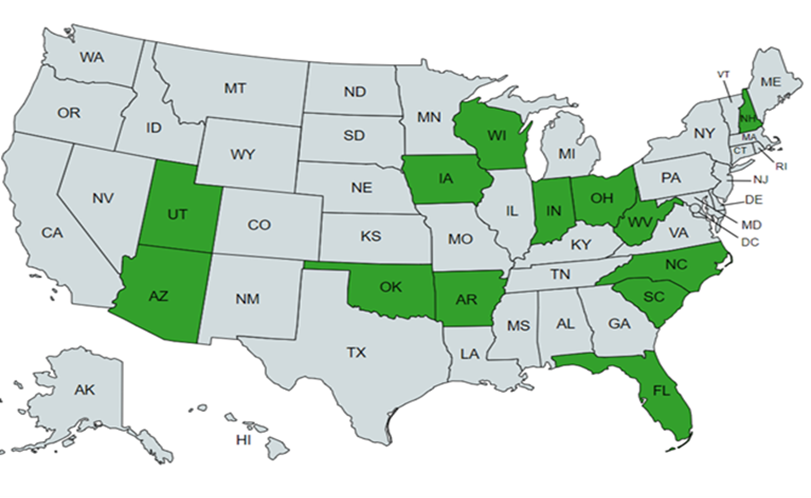
Expect to see more states “going green” in 2024.
Note on the map for instance that all the not-as-yet green states in the Southeastern Conference footprint border one or more green states. States with universal choice programs with formula funding did not only pass choice programs for the families living in their states, but also for anyone willing to become a family living in their states. Alabama and Georgia lawmakers should consider remaining competitive or else northern Florida might start looking extremely attractive to young families in southern Alabama and southern Georgia.
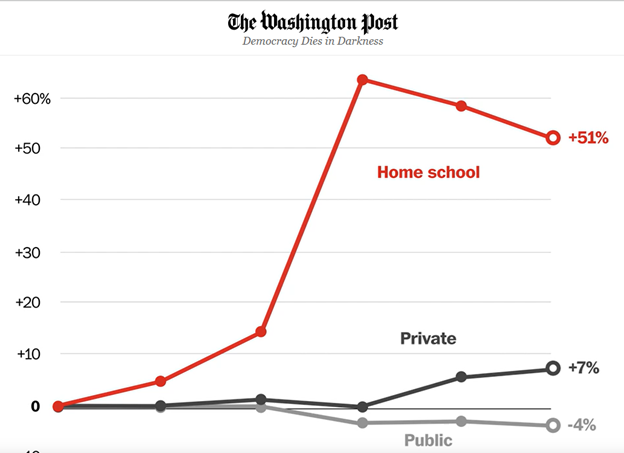
Meanwhile, despite unprecedented growth, the private choice movement will have to stomp on the gas if they are going to catch up to the homeschooling movement:
Stay tuned to this channel for more exciting developments in the months ahead.

